
Dutch vs. Nature Aquarium vs. Iwagumi: Deciding Your Tank’s Ultimate Look
Hello fellow aquarists! Standing before your aquarium, you might feel stuck choosing a layout-each style offers a unique beauty, but which one truly fits your life and vision?
This guide cuts through the confusion by comparing these three popular approaches head-to-head. You’ll get a clear breakdown of:
- The strict, colorful geometry of Dutch aquascaping and its plant-heavy demands.
- How the Nature Aquarium style builds living, miniature landscapes that evolve over time.
- The profound simplicity of Iwagumi, where a few stones create immense visual impact.
- Direct comparisons on initial investment, weekly upkeep, and selecting fish that enhance the scene.
My years of experience running complex planted systems and breeding fish give me practical, tested advice to share with you.
What is Aquascaping and the Three Main Styles?
Think of aquascaping as underwater gardening combined with landscape design. You’re not just filling a tank with pretty plants and rocks; you’re intentionally creating a living, breathing work of art. The hum of the filter provides the background music for your miniature ecosystem, where every leaf and stone has a purpose. The goal is to craft a scene that evokes emotion, whether it’s the vibrant chaos of a flowerbed or the profound silence of a mountain range. The core principles of aquascaping design—balance, contrast, depth, and a clear focal point—guide every decision you make. Understanding them helps you turn a collection of plants and rocks into a cohesive, emotive scene.
While there are many interpretations, three foundational styles have shaped the hobby: the color-dense Dutch style, the nature-inspired Nature Aquarium style, and the minimalist Iwagumi style. Choosing one is less about picking the “best” and more about matching a philosophy to your own taste and maintenance commitment.
Core Principles of Each Aquascaping Style
Dutch Style: The Aquatic Flowerbed
Originating in the Netherlands, this style prioritizes the lush growth and cultivation of many aquatic plant species. It’s less about mimicking land and more about celebrating horticulture. You’ll see tall stems in the back, medium bushes in the midground, and low carpets in the front, all arranged in distinct, contrasting groups called “streets.” The Dutch aesthetic relies heavily on creating dramatic contrasts in leaf color, texture, and shape, much like planning a terrestrial flower garden.
In my own Dutch-inspired tanks, I spend more time trimming than any other task. You need high light, consistent CO2 injection, and a rigorous fertilization schedule to keep those plant groups dense and prevent them from growing into each other. It’s a high-tech, high-maintenance labor of love. A classic Dutch tank often uses little to no hardscape (rocks or driftwood), putting all the focus on the plants themselves.
- Focus: Terrestrial gardening principles applied underwater.
- Key Elements: Massive plant diversity, contrasting leaf groups, defined pathways, minimal hardscape.
- Maintenance Level: High. Demands frequent pruning, precise nutrient dosing, and strong lighting.
- Best For: The avid plant grower who loves color, structure, and a formal, organized look.
Nature Aquarium Style: A Piece of the Wild
Pioneered by Takashi Amano, this style seeks to recreate an idealized terrestrial landscape-like a forest floor, a mountain slope, or a river valley-inside your aquarium. It uses the Golden Ratio and the rule of thirds to create a focal point that feels naturally harmonious. The magic of a Nature Aquarium lies in its ability to tell a story and evoke a specific sense of place, inviting you to imagine yourself within the scene.
This style masterfully combines all elements: hardscape (driftwood and stones) as the “bones,” plants as the “flesh,” and schooling fish as the “soul.” The water should be crystal clear, letting you appreciate every detail from the texture of the wood to the shimmer of scales in a tight shoal. It’s balanced but dynamic, often requiring CO2 and good filtration to maintain the pristine, wild feel.
- Focus: Replicating the beauty and feeling of natural landscapes.
- Key Elements: Strategic hardscape as the foundation, plant groupings that complement it, open negative space, a clear focal point.
- Maintenance Level: Moderate to High. Requires careful balancing of hardscape and plant growth to maintain the intended composition.
- Best For: The artist who wants to create an emotive, storytelling scene with a perfect balance of hardscape, flora, and fauna.
Iwagumi Style: Zen and Stone
Iwagumi is a minimalist sub-style of the Nature Aquarium, governed by strict, ancient rules of Japanese stone arrangement. The layout typically uses an odd number of stones (three being most classic) arranged in a specific hierarchy: a large main stone (Oyaishi), a secondary stone (Fukuishi), and a tertiary stone (Soeishi). The resulting composition feels profoundly peaceful, where the placement of a single pebble carries as much weight as the largest rock.
The planting is almost always a single, low-growing carpet species like dwarf hairgrass or Monte Carlo, which represents water or mist flowing around the stones. Fish stock is limited to a single, small schooling species to avoid visual competition. I’ve found Iwagumi the most challenging style to get right because any flaw in stone selection, balance, or algae control is glaringly obvious. It’s the ultimate exercise in restraint.
- Focus: Minimalism, balance, and the spiritual essence of stone.
- Key Elements: Odd-numbered stone arrangements with strict roles, low carpeting plants, vast open space, ultra-clear water.
- Maintenance Level: Very High. Algae control is critical, and carpet plants demand high light and CO2.
- Best For: The minimalist seeking a serene, contemplative tank that emphasizes flawless composition over abundance.
Key Elements: Hardscape, Plants, and Layout Design
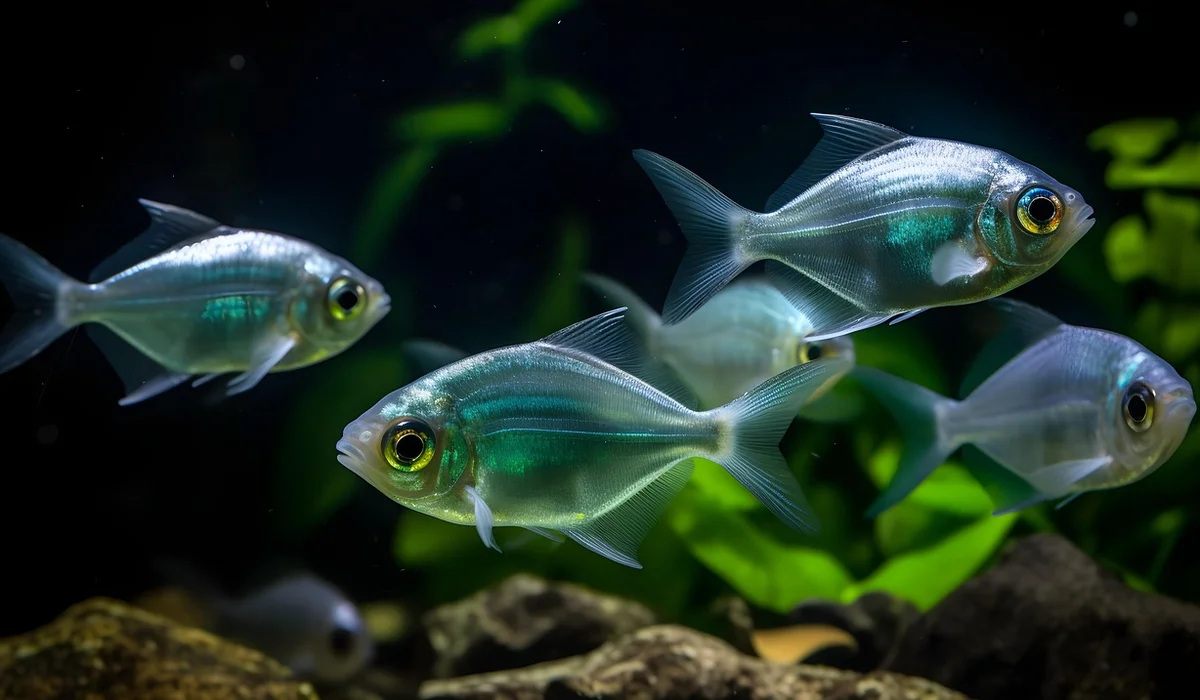
Choosing an aquascaping style is like picking a genre of art—each has its own rules for the materials you use. The interplay between hardscape, plants, and their arrangement defines the entire feel of your underwater canvas. Think of it as a beginner’s guide to styles—nature, Dutch, iwagumi, and more. These options help you decide what to emphasize in your tank.
The Role of Hardscape: Rocks and Driftwood
Hardscape is the bones of your aquascape. In an Iwagumi setup, stones are the sole artistic focus, where every rock’s shape, texture, and placement is loaded with meaning. You typically use odd numbers of the same stone type, like Seiryu or Ryuoh, with the largest ‘Oyaishi’ stone forming the heart of the layout.
Nature Aquariums treat hardscape as the skeleton. Driftwood like Spiderwood or Malaysian, combined with stones, creates the structure that plants will eventually soften. The goal is to mimic a natural landscape, so the hardscape must look weathered and purposefully placed, as if by wind or water.
Dutch style famously rejects this entirely. You’ll find no visible rocks or driftwood here. The hardscape is purely functional-the substrate and maybe some hidden terraces-completely cloaked by immense plant density.
Plant Selection for Visual Impact
Plants are your paint. For a Dutch aquarium, think about color, leaf shape, and texture. You’ll use stem plants like Rotala rotundifolia for reds and Lobelia cardinalis for greens, arranged in distinct, contrasting blocks. Plant selection is about creating a vibrant, organized tapestry where no single species touches another of the same color or leaf form. To grow and propagate aquarium plants successfully, keep lighting steady and nutrients balanced. Regular trimming helps maintain the color blocks as they fill in.
In a Nature Aquarium, plants follow the hardscape. Mosses glued to driftwood, delicate Hydrocotyle tripartita creeping over stones, and carpeting plants like Monte Carlo tie everything together. You choose plants based on their growth habit and how well they can create a sense of ancient, organic life. This is a key part of a complete guide on choosing the best plants for your aquarium. By matching growth forms to lighting and tank size, you can craft a cohesive, thriving aquascape.
Iwagumi plant lists are minimalist. Typically, only one or two species of low-growing carpet plants, such as Eleocharis parvula or Glossostigma elatinoides, are used. The plants serve as a living canvas, emphasizing the stonework without competing for attention.
Creating Balance and Focal Points
Layout is where the magic happens. Iwagumi relies heavily on the Golden Ratio, placing the main stone at an approximate 2:3 point in the tank to create an instinctively pleasing focal point. The supporting stones and carpet guide the viewer’s eye in a deliberate flow.
Nature Aquariums often use the ‘triangle’ rule or winding ‘Iwagumi-inspired’ paths. You’re directing sight lines to create depth in a small space, using plant mass and hardscape to lead the eye from the front to a vanishing point at the back.
Dutch layouts use something called “plant streets”-diagonal lines of taller plants in the back that create depth. Balance is achieved through contrasting blocks of color and height, creating a bustling, garden-like harmony rather than a single focal point.
Technical Requirements: Lighting, CO2, and Substrate
The beauty you see is powered by the tech you don’t. Each style has different demands on your equipment, and skimping here is where most beautiful scapes fail.
Lighting Intensity and Photoperiod
Dutch and high-tech Nature styles need powerful, full-spectrum LED or T5 lighting to drive dense growth and bring out red pigments. I run my Dutch-style lights for 8 hours daily, with a 1-hour ramp up and down to simulate dawn and dusk, which helps stabilize plant growth and discourage algae.
Iwagumi, despite its simplicity, often needs medium-high light to keep the carpet thick and compact. Too little light, and your carpet grows vertically, destroying the minimalist illusion. A consistent 7-8 hour photoperiod is key.
Low-tech Nature Aquariums are the most forgiving. Moderate lighting for 6-7 hours is sufficient for slower-growing plants like Anubias and Java Fern. How long should aquarium lights stay on for fish and plants? A common range is 6-8 hours per day, adjusted to prevent algae and suit your plant growth.
CO2 Injection and Nutrient Dosing
For a pristine Dutch or lush Nature Aquarium, pressurized CO2 is non-negotiable. You’re aiming for a stable 20-30 ppm of CO2, which I check daily with a drop checker; this consistency is what allows plants to outcompete algae for resources. To set up a planted-tank CO2 system, start with a reliable regulator, a quality diffuser, and a timer to maintain steady dosing. Also check for leaks and calibrate with a bubble counter for accuracy.
This demands a rigorous fertilizer dosing schedule. I use the EI (Estimative Index) method for my Dutch tank, feeding macro and micronutrients on alternating days to ensure nothing runs out.
Iwagumi carpets also greatly benefit from CO2 injection. You can attempt a low-tech Iwagumi, but be prepared for a much slower, often patchier carpet that requires immense patience.
Substrate Choices and Depth
Your substrate is the pantry for your plants. For planted styles, nutrient-rich active substrates like ADA Aqua Soil or Fluval Stratum are the gold standard. In a Dutch tank, I use a substrate depth of at least 3 inches in the back, sloping to 2 inches in the front, to accommodate massive root systems.
Nature Aquariums often use a richer base layer like powder-type soil under a main cap, especially for slopes and terraces. This depth, sometimes 4 inches or more in raised areas, is crucial for anchoring hardscape and promoting deep root growth.
Even an Iwagumi needs a fertile base. A 2-3 inch layer of planted tank substrate, sometimes with root tabs, ensures your carpet can spread and thrive without melting away.
Maintenance and Care for Each Style
Think of maintenance as the rhythm of your aquascape, the regular tune-up that keeps the living art vibrant. Each style dances to a different beat.
Pruning and Trimming Techniques
Your scissors are your paintbrush here, and the technique is everything.
- Dutch Style: This is high-precision topiary. You’ll be trimming weekly to maintain defined “street” layers and prevent plants from shading each other. I use sharp, curved aquascaping scissors and trim stem plants just above a leaf node to encourage bushy growth. The constant, careful snipping is what maintains that stunning, colorful block effect.
- Nature Aquarium: Pruning follows the natural growth habit. You’re guiding, not controlling. Trim stem plants in staggered heights for a rolling hills look. For carpeting plants like Monte Carlo, I gently trim the tops to encourage lateral spread. It’s more forgiving-a missed week won’t ruin the composition.
- Iwagumi: The focus is on the carpet. You’ll use nano trimmers to meticulously shear carpeting plants like Dwarf Hairgrass or Glossostigma, keeping them millimeter-perfect. Any overgrowth on the stones is carefully plucked by hand. This style demands a surgeon’s steady hand to preserve its minimalist intent.
Water Parameters and Algae Control
Water chemistry is the invisible foundation. Algae is the uninvited guest at the party, and your style dictates how you manage it.
- Dutch: With so many fast-growing plants, nutrient levels (nitrate, phosphate, potassium) must be consistently rich yet balanced to avoid deficiencies. I test twice a week. Algae is outcompeted by plant mass, but any imbalance in light or nutrients can trigger brush algae on slow-growing stems.
- Nature Aquarium: This style is more resilient. The diverse plant mass and organic hardscape help buffer the system. Algae on dragon stone is often left to add a patina of age. You manage algae through plant health, CO2 stability, and a cleanup crew like Amano shrimp.
- Iwagumi: This is the most sensitive. Sparse plant mass means algae has little competition. You must have immaculate, stable CO2 diffusion and lean nutrient dosing. Even a slight phosphate spike can cause a green dust algae outbreak on the open substrate. Patience and near-laboratory precision are your best tools for Iwagumi water care.
Routine Cleaning and Equipment Checks
A quiet hum and clear water mean a happy tank. Your routine adapts to your scape’s needs.
- Filter Maintenance: For plant-heavy Dutch and Nature tanks, clean filter media every 3-4 weeks in old tank water to preserve beneficial bacteria. For Iwagumi, I check weekly for flow obstruction-any debris is glaringly obvious on the open sand.
- Glass Cleaning: Dutch and Nature styles need front glass cleaned weekly for unimpeded viewing. In Iwagumi, you’re cleaning all glass panels almost daily to maintain that crystal-clear, infinite look.
- Water Changes: All styles need regular changes, but the volume varies. I do 50% weekly on my Dutch tank to export excess nutrients and keep colors bright. For Iwagumi, I perform smaller, 30% changes twice a week to avoid parameter swings.
Listening to your equipment-the hum of the filter, the consistent bubble count from your CO2 diffuser-is the first line of defense against bigger problems.
Choosing Your Style: A Guide for Beginners and Beyond
This choice is deeply personal. It’s about matching a philosophy to your lifestyle, space, and what brings you peace when you sit down to watch.
Assessing Your Tank Size and Goals
Your tank’s dimensions are your canvas size, and they directly influence what you can paint.
- Small Tanks (Under 10 gallons): Iwagumi can shine here, creating a vast mountain landscape in miniature. A simple Nature-style scape with one focal point stone and some moss is also wonderfully manageable.
- Medium Tanks (20-40 gallons): This is the sweet spot for beginners. You have room for a beautiful, low-tech Nature Aquarium or a simpler Dutch approach with a few color blocks.
- Large Tanks (55+ gallons): True Dutch displays come alive here. Large-scale Nature layouts with dramatic hardscape also become possible. Ask yourself: do I want a colorful underwater garden (Dutch), a serene mountain stream (Iwagumi), or a wild forest corner (Nature)?
Comparing Time and Cost Commitments
Be honest with yourself about what you can sustain. This chart lays it out plainly.
| Style | Weekly Time | Initial Cost | Ongoing Cost |
|---|---|---|---|
| Dutch | High (1-2 hrs pruning/trimming) | High (many plant species, strong lights, CO2) | Medium (fertilizers, plant replacements) |
| Nature Aquarium | Medium (30-60 mins maintenance) | Medium-High (quality hardscape, CO2 optional) | Low (plants often self-propagate) |
| Iwagumi | Low (15-30 mins cleaning) | Low-Medium (few plants, but CO2 is mandatory) | Low (but requires high stability) |
The Iwagumi’s low time commitment is a trap for newcomers-its technical difficulty demands more knowledge, not more hours.
Making the Decision and Transitioning Styles
You can always change your mind. Aquascaping is an evolution.
- Start Simple: If you’re new, begin with a low-tech Nature Aquarium style. It teaches you plant growth and balance with the most forgiveness.
- Transitioning Gradually: You can morph a Nature tank into Dutch by slowly adding more stem plants and defining sections. Turning any tank into Iwagumi usually means a complete tear-down.
- Follow Your Joy: Which images make you pause and stare? That’s your clue. Your tank should be a source of relaxation, not a daily chore that fills you with dread. Choose the style that matches the shimmer you want to see every day.
FAQs
What defines the Iwagumi style?
Iwagumi is a minimalist aquascaping style governed by strict Japanese stone arrangement principles. It typically uses an odd number of stones, such as three, with designated roles like the main stone (Oyaishi), set against a low carpeting plant like dwarf hairgrass. This style focuses on creating a serene, zen-like composition with immense visual impact through simplicity and balance.
How do lighting and CO2 needs vary by style?
Dutch and high-tech Nature Aquarium styles demand strong lighting and consistent CO2 injection to fuel dense plant growth and vibrant colors. Iwagumi requires medium-high light for compact carpets but less overall plant mass, while low-tech Nature Aquariums can thrive with moderate lighting and may forego CO2. Always match your equipment to the style’s plant density and growth rates for success. In an honest comparison, high-tech setups push dense growth and vivid color but cost more and require more maintenance. Low-tech systems favor simplicity and reliability.
What plants are commonly used in Dutch style?
Dutch aquascaping relies on stem plants like Rotala rotundifolia for red accents and Lobelia cardinalis for green contrast, arranged in distinct blocks. Carpeting plants such as Hemianthus callitrichoides are used upfront, while species like Hygrophila difformis add texture. The goal is to create a colorful, organized tapestry with diverse leaf shapes and hues. A step-by-step guide can help you translate this concept into a thriving planted aquarium. It covers layout planning, substrate selection, planting order, and ongoing maintenance.
How should you choose an aquascaping style for a beginner?
Beginners should opt for a low-tech Nature Aquarium style, as it offers flexibility and teaches foundational skills without high maintenance. Assess your tank size, time commitment, and budget; for instance, smaller tanks suit simple Iwagumi, but Nature styles are more forgiving. Also, do choose the right aquarium size for your fish species, as adult size and activity level matter. A tank that fits the species helps maintain stable water conditions and reduces maintenance. Select a style that aligns with your desired aesthetic and routine to ensure a rewarding experience.
Finding Your Tank’s True Personality
Let your space, skill, and the shimmer of scales you want to see guide you: choose the structured artistry of a Dutch tank, the wild narrative of a Nature Aquarium, or the minimalist peace of Iwagumi. The right style is the one that makes you smile every time you walk into the room and fits the life you can reliably provide for your aquatic pets. Whether you want a species-only tank or a community setup, let that choice guide your stocking and layout. Your setup style should align aesthetics with what you can reliably care for.
Remember, every beautiful aquascape rests on the foundation of stable water and healthy fish, so pair your vision with diligent research and consistent care. The most stunning tank is a thriving one, where patient learning and a commitment to your ecosystem’s balance become part of the hobby’s daily reward.
Further Reading & Sources
- Aquascaping Styles: Nature Aquarium, Iwagumi, Dutch Aquarium – Aquascaping Love
- Aquascaping Styles: Nature Aquarium, Iwagumi, Dutch Aquarium – Nature Aquariums USA
- Top 5 Best Aquascaping Styles – School Of Scape
- Exploring Different Aquascaping Styles: Dutch, Iwagumi, and Nature
- Iwagumi – | Aquasabi | Aquasabi – Aquascaping Shop
Lia is an expert in aquarium and pet fish care. Having worked in the marine industry and having cared for multiple pet fish, she has acquired first hand expertise on aquarium care, maintenance and setup. She always brings her practical expertise and science to help solve any aquarium related queries.
Aquascaping