
Spring Water vs Tap Water for Your Aquarium: The Real Scoop for Healthy Fish
Hello fellow aquarists! That moment of hesitation at the sink or store, wondering which water is safe for your tank, is a common rite of passage-and your fish’s vitality depends on the answer.
This clear-eyed guide cuts through the confusion by comparing:
- The true mineral makeup of spring water and its stability for sensitive species
- Tap water’s chemical treatment and reliable methods to make it instantly safe
- A straightforward cost-benefit analysis for your budget and routine
- Actionable water testing and conditioning steps for any setup
I base this advice on years of hands-on experience running complex planted systems and breeding fish like the feisty Crowntail Betta and social Oranda Goldfish in my own tanks.
The Great Water Debate: Why Your Choice Matters
Picking your aquarium’s water isn’t just a chore; it’s one of the most defining choices you’ll make for your underwater world. The source of your water sets the stage for everything, from the shimmer of fish scales to the lush growth of your plants. I’ve seen tanks transform simply by getting the water foundation right. In this complete beginners guide to managing aquarium water parameters, you’ll learn the basics of testing and balancing key metrics. We’ll cover pH, ammonia, nitrite, nitrate, hardness, and temperature—plus how to keep them stable.
Water quality directly dictates your fish’s stress levels and their ability to fight off illness. Clear, stable water allows fish like Captain Fin to show his full iridescent glory, while poor water can dull colors and suppress natural behaviors. That constant foraging from Goldie? That’s a sign of a healthy environment supported by good water.
Many new aquarists feel anxious about this step, worried they’ll make a fatal mistake. Let’s ease that fear by breaking down the options with practical, experience-based advice you can trust.
Water: The Foundation of Aquatic Life
Think of water as your tank’s lifeblood, not just a space filler. Every parameter, from pH to mineral content, influences how your fish breathe, eat, and interact. In my tanks, I’ve watched shy Shadow become more active when the water conditions mimic his natural soft, slightly acidic streams.
Plants are just as responsive. The right mineral balance in the water feeds roots and leaves, creating a thriving ecosystem that reduces your maintenance work. It’s all connected.
Stability Over Perfection
Chasing a “perfect” pH or hardness number can do more harm than good if it leads to constant change. Fish thrive on predictable consistency far more than on an ideal but unstable reading on a test kit. Sudden swings from switching water sources can shock sensitive systems.
Imagine if Captain Fin’s feisty personality was met with a completely different water chemistry every week. Consistent conditions prevent stress, which is the root cause of many health issues for fish like bettas and corydoras. Find a good, stable baseline and stick with it.
Breaking Down the Basics: Spring Water and Tap Water Explained
Let’s clarify what we’re actually talking about. Spring water and tap water come from different journeys and arrive in your bucket with different histories. Knowing that history is the first step to making an informed choice for your aquarium.
What is Spring Water?
Spring water is groundwater that flows naturally to the surface, collecting dissolved minerals like calcium and magnesium along the way. This natural mineralization can be beneficial, but the levels vary wildly from brand to brand, even between bottles from Walmart. One brand might be soft, another very hard.
It typically lacks added chlorine, which is a plus. However, “natural” doesn’t always mean safe, as springs can contain traces of heavy metals or nitrates depending on the surrounding land. You must test every bottle or jug to know what you’re really adding.
What is Tap Water?
Tap water is municipally treated water designed for human consumption, not fish. Treatment plants add chlorine or chloramine to kill pathogens, which are toxic to fish and beneficial bacteria in your filter. This is the single biggest hurdle with tap water.
Its composition is a direct reflection of your local geology and infrastructure. Your tap water could be soft and acidic or liquid rock, and it can change seasonally, which is why testing your own supply is non-negotiable.
Key Differences at a Glance
| Aspect | Spring Water | Tap Water |
|---|---|---|
| Availability | Must be purchased; limited by store stock. | Unlimited, on-demand from your faucet. |
| Cost | High long-term cost for large tanks. | Extremely low, essentially just the water bill. |
| Common Treatments | Usually filtered, but no chlorine/chloramine. | Contains chlorine/chloramine; requires conditioner. |
| Typical Starting pH | Often neutral to alkaline (7.0-8.5), but variable. | Can range widely from 6.5 to 8.5 based on location. |
| Typical Starting GH (General Hardness) | Moderate to high, but inconsistent. | Can be very soft or very hard; stable for your area. |
This table shows that tap water offers convenience and cost savings, but demands treatment, while spring water removes the chlorine concern but introduces cost and variability. Your local tap water report is a valuable free resource.
Water Chemistry 101: Parameters That Keep Fish Thriving

Think of your aquarium water as a complex soup where every ingredient matters. Getting the recipe right is less about perfection and more about creating a stable, hospitable environment where your fish can thrive. Stability in these parameters is almost always more critical than chasing a theoretically perfect number that swings wildly with every water change.
pH: The Acidity Scale
pH measures how acidic or basic your water is on a scale from 0 (battery acid) to 14 (drain cleaner), with 7 being neutral. Most aquarium fish flourish in the 6.5 to 7.5 range. A stable pH is vital because sudden shifts stress fish, damaging their internal organs and slime coat, making them vulnerable to disease. Understanding pH helps you create a stable, healthy habitat and is a core part of proper aquarium care. Regular checks and adjustments prevent surprises and keep your fish thriving. My betta, Captain Fin, does best in slightly acidic, softer water around 6.8, while Goldie the goldfish is far more adaptable and doesn’t mind a neutral to slightly basic pH.
Hardness and Alkalinity: GH and KH
General Hardness (GH) refers to the concentration of dissolved minerals, primarily calcium and magnesium. Carbonate Hardness (KH), also called alkalinity, is your water’s buffering capacity. Imagine KH as a sponge that soaks up acids; a high KH sponge is big and prevents pH crashes, while a low KH sponge is tiny and gets overwhelmed easily. These values matter in aquariums. This water hardness and alkalinity guide explains how to test, adjust, and keep them stable.
Fish have evolved for specific hardness levels; soft-water species like tetras struggle in liquid rock, while livebearers like guppies need harder water to maintain osmotic balance and bone health. Shadow and other corydoras often prefer softer water that mimics their native riverbeds.
The Invisible Threats: Chlorine, Chloramine, and Nitrogen Compounds
Municipal water adds chlorine or chloramine to make it safe for us, but these chemicals brutally attack fish gill tissue, causing them to suffocate. They must be neutralized with a water conditioner before any tap water touches your tank.
Beyond that, you must understand the nitrogen cycle: fish waste produces toxic ammonia, which bacteria convert to still-toxic nitrite, and finally to less-harmful nitrate. This is why the nitrogen cycle is crucial for your aquarium: it prevents toxic buildup from waste. A well-cycled tank minimizes ammonia and nitrite spikes, protecting fish and other inhabitants. Testing for ammonia and nitrite is non-negotiable for new tanks and a critical check during emergencies, as these compounds are invisible but deadly at low concentrations.
Total Dissolved Solids (TDS)
TDS is a readout of everything dissolved in your water-minerals, salts, organics. It’s a fantastic overall snapshot. A sudden spike in TDS often signals a problem, like decaying matter or a mineral overdose, while very low TDS indicates soft, mineral-poor water that may lack buffering. It’s a useful tool for spotting trends your other tests might miss.
Testing the Waters: How to Assess Your Source
You wouldn’t blindly trust a stranger to babysit, so don’t trust an un-tested water source with your aquatic family. The only way to make an informed choice between spring and tap water is to test both yourself, as results vary wildly by brand and zip code.
Step-by-Step Water Testing Guide
- Gather a reliable liquid test kit for pH, GH, KH, ammonia, nitrite, and nitrate. Add a separate chlorine/chloramine test strip for tap water.
- Test for chlorine/chloramine first in tap water. Spring water should read zero. If tap water has chloramine, ensure your conditioner treats it.
- Measure the pH, GH, and KH for both your tap water and the bottled spring water you’re considering.
- Check both sources for any baseline levels of ammonia, nitrite, or nitrate. Some well water or spring sources can have surprise ammonia.
- Record all results in a simple logbook or note on your phone. This history is priceless for troubleshooting future issues.
Interpreting Your Test Results
Now, match your numbers to your fish’s needs. Here’s a quick reference:
| Fish Type | pH Range | GH Range (dGH) | KH Range (dKH) |
|---|---|---|---|
| Soft Water (Tetras, Bettas, Discus) | 6.0 – 7.0 | 1 – 6 | 1 – 4 |
| Hard Water (Livebearers, African Cichlids) | 7.5 – 8.5 | 8 – 20+ | 4 – 10+ |
| Adaptable (Goldfish, Corydoras) | 6.5 – 7.8 | 5 – 12 | 3 – 8 |
Your goal is to find the water source that requires the least adjustment to hit your tank’s target range, ensuring long-term stability with minimal effort.
Choosing Spring Water: What to Look For
Not all bottled water is equal. Always read the label. You must avoid “distilled” or “purified” water (it has zero minerals and will dangerously leach salts from your fish), and absolutely reject any “flavored” or “electrolyte-enhanced” products. Look for “spring water” and check the mineral analysis on the back. Even then, test it. I’ve tested store-brand spring waters with perfect parameters and expensive brands with a sky-high pH. The bottle doesn’t guarantee suitability.
Making Water Safe: Conditioning and Treatment Steps

Preparing water for your aquarium isn’t just a chore; it’s the foundation of a thriving ecosystem. You must neutralize harmful chemicals and fine-tune mineral levels, whether you’re using tap or spring water, to match your tank’s delicate balance. I always keep a test kit handy to verify parameters before any water change. Regular testing helps you maintain proper water parameters for your aquarium and prevent swings. By testing before each water change, you can adjust as needed to keep levels stable.
Rushing through water changes is a common pitfall that can spike stress in your fish. Take a slow, methodical approach to mixing and temperature matching, which prevents the cloudy water and lethargic fish I’ve seen from hasty additions. Let me share some hard-earned tips to keep things smooth. After you finish the change, take a moment to acclimate your fish to the new water conditions by slowly matching temperature and chemistry before any reintroduction. A calm, staged transition helps prevent shock and keeps the tank in balance.
Conditioning Tap Water for Aquarium Use
Your faucet delivers water laced with chlorine or chloramine, compounds that kill beneficial bacteria and burn fish gills. A quality water conditioner is your first line of defense, instantly binding and neutralizing these toxins to make tap water safe. I never perform a water change without my trusty dechlorinator bottle within reach.
Dose the conditioner directly into your clean water change bucket before adding it to the tank. Follow the label instructions precisely-usually a few drops per gallon-and give it a gentle stir to ensure even distribution throughout the water. Letting it sit for five minutes allows the treatment to fully circulate and any temperature difference to diminish.
Adjusting Spring Water Parameters
Spring water can be too pure, lacking the dissolved salts and carbonates that stabilize pH and support fish health. Test every new bottle or jug for KH (carbonate hardness) and GH (general hardness), because water that’s too soft invites dangerous pH crashes. I learned this after a batch of spring water caused my tank’s pH to plummet overnight.
If your test shows low mineral content, add a small bag of crushed coral to your filter media. This slowly releases calcium and carbonates, boosting hardness and buffering capacity without sudden shifts that shock your fish. Always retest the water 24 hours after any adjustment to confirm stability.
The Acclimation Process: Introducing New Water Safely
Even perfectly conditioned water can shock fish if added too quickly. Slowly trickle the new water into your tank using a clean cup or a siphon hose with a flow control valve over at least 15 minutes. This gradual mix lets temperature and chemistry equalize, which is vital for sensitive species like Shadow the Corydoras.
I always float my water change bucket next to the aquarium for a bit to help temperatures align. Avoid pouring water directly onto substrate or plants, as it can stir up debris and release trapped gases that harm bottom dwellers. The peace of mind from a smooth transition is worth the extra minute.
Matching Water to Your Fish: Species-Specific Guidance
Your fish’s origins are the best guide for water selection, simplifying your choices dramatically. Replicating key aspects of their natural habitat, from mineral content to pH, encourages natural behaviors and vibrant colors. When I matched Captain Fin’s water to his native streams, his feisty personality shone even brighter.
Soft-Water Fish Like Bettas and Tetras
Species like bettas and many tetras evolved in soft, acidic blackwater environments with minimal dissolved minerals. Some commercially available spring waters naturally have this soft, low-pH profile, making them a convenient choice for a betta tank. If using tap water, I filter it through peat moss or mix it with reverse osmosis water to soften it effectively.
Maintain a pH between 6.0 and 7.0 and a GH under 8 dGH for these fish to truly thrive. Captain Fin’s iridescent scales seem to shimmer more under the gentle light when his water is softly acidic and free of hard minerals. Avoid using decorative limestone or coral in their tanks, as these will steadily increase hardness.
Hard-Water Fish Like Livebearers and Goldfish
Guppies, mollies, and goldfish like Goldie originate from waters rich in calcium and magnesium. Most treated tap water has sufficient inherent hardness, making it a practical and cost-effective option for these robust species. Goldie the Oranda forages contentedly in my tap-water setup, provided I keep nitrates in check with regular partial changes.
Target a pH of 7.2 to 8.0 and a GH above 10 dGH for optimal health and digestion. Goldfish, in particular, benefit from the mineral support for their scale and bone development, but you must vigilantly control waste buildup with strong filtration. I perform twice-weekly water tests to ensure nitrate levels stay below 20 ppm for my goldfish.
Bottom Dwellers and Sensitive Species
Catfish like Shadow and other sensitive bottom dwellers demand exceptionally stable, clean water with negligible toxins. Regardless of your water source, prioritize consistency and cleanliness above all else, as these fish are often the first to show signs of stress from poor conditions. I use a fine, smooth sand substrate to protect Shadow’s delicate barbels from abrasion.
Keep nitrates as low as possible, ideally under 10 ppm, through frequent, small water changes. Test your water at least twice a week for ammonia, nitrite, and nitrate, because clear water isn’t always chemically safe water. Adding Indian almond leaves to their tank provides soothing tannins and mimics the murky, soft waters of their home rivers.
Aquatic Plants and Water Chemistry
Live plants are active participants in your tank’s chemistry, absorbing nutrients and subtly altering pH. In a planted tank, you need to find a middle ground where your water provides enough minerals for plant growth without pushing pH beyond your fish’s comfort zone. Some spring waters offer a beneficial blend of trace elements like potassium and iron that fuel lush plant growth.
Fast-growing stem plants and floating plants are excellent for consuming excess nitrates. I test my planted tank water weekly to decide on fertilization, finding that a balanced approach leads to crystal-clear water and thriving foliage. The gentle hum of the filter amidst a forest of green is a sign your water chemistry is in harmony.
Beyond the Tank: Cost, Convenience, and Sustainability
Choosing your aquarium’s water source isn’t just about chemistry; it’s about your wallet, your back, and your environmental footprint. Your daily routine with water changes will feel very different depending on whether you’re lugging bottles from the store or filling a bucket at the sink. I learned this the hard way when I first set up a tank for Captain Fin, my betta, and realized how quickly those gallon jugs added up in cost and clutter.
Let’s look beyond the glass and weigh the real-world factors that will affect your fish-keeping life.
Cost Analysis: Spring Water vs Tap Water
Break out the calculator, because the price difference here is stark. For tap water, you’re essentially paying your municipal bill plus a one-time bottle of water conditioner. A bottle of quality dechlorinator that treats hundreds of gallons often costs less than a single large bag of fish food. Your cost per gallon for treated tap water is a fraction of a cent.
Spring water from the store is a different story. Prices vary, but you can typically expect to pay between $0.80 to $1.50 per gallon. Now, picture a standard 10-gallon tank needing a 25% weekly water change. That’s 2.5 gallons each week, costing you $2 to $3.75. Over a year, that’s $104 to $195 just on water-more than the cost of the tank itself!
- Tap Water Cost: Virtually free water + ~$0.01 per gallon for conditioner.
- Spring Water Cost: $0.80 – $1.50 per gallon, every time.
- Example: Maintaining a 10-gallon tank with spring water can cost over $150 annually, while tap water costs just a few dollars.
Environmental Considerations
The environmental impact of bottled spring water is significant. Every plastic bottle has a carbon footprint from production and transportation, and many aren’t recycled. Using bottled water for a hobby that celebrates a natural ecosystem creates a conflicting cycle of waste. Imagine the pile of plastic bottles needed for a 50-gallon tank’s water change-it’s visually shocking and feels disconnected from caring for our aquatic pets.
If you must use spring water, please opt for large, recyclable jugs and refill them at water stations if available. Better yet, consider a reusable, food-grade barrel for transporting and storing water to cut down on single-use plastic entirely.
Convenience for Routine Maintenance
Convenience is king when you’re doing weekly tank chores. Hauling, storing, and opening numerous heavy bottles of spring water is a physical task that gets old fast. With tap water, you have an endless, on-demand supply right in your home, making partial water changes a quick and simple process. My personal hack is to keep a dedicated, clean 20-gallon trash can solely for aquarium use. I fill it with tap water, dose the conditioner, and let it sit with an air stone overnight. This way, I always have a large volume of perfectly tempered, gas-offed water ready for my tanks, whether it’s for Goldie’s goldfish tank or Shadow’s planted Corydoras home.
Your Personal Water Roadmap: Putting It All Together
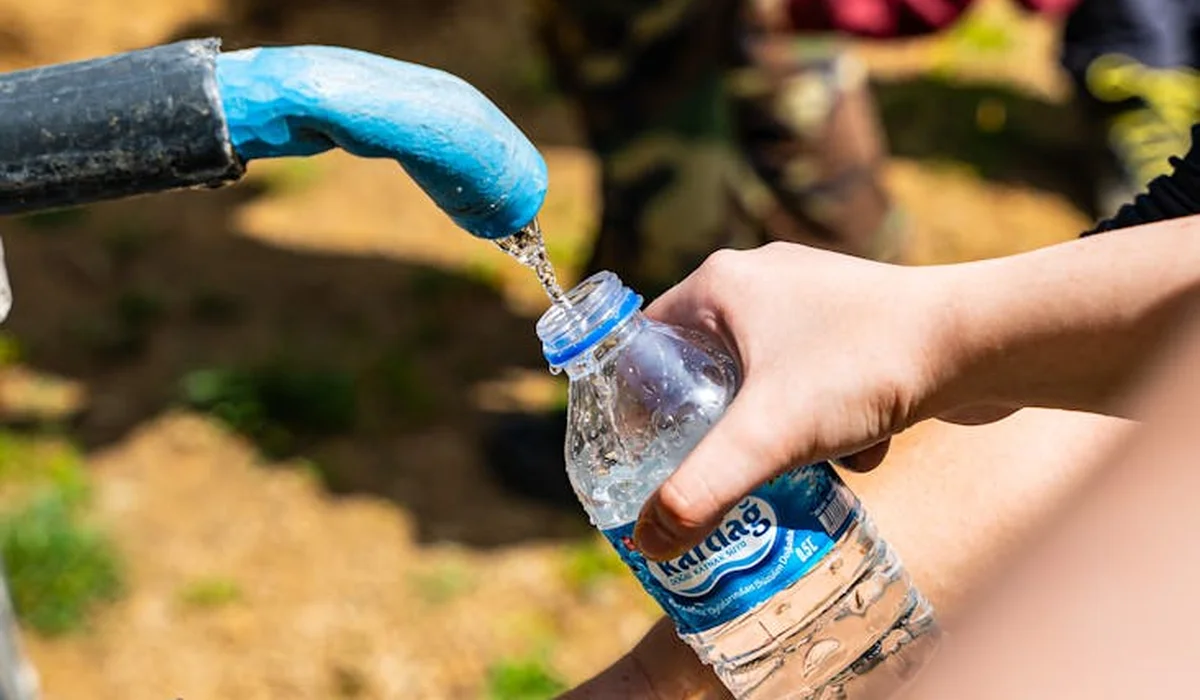
So, how do you decide? Your perfect water source depends on your local tap water, your fish’s needs, and your personal priorities. Think of this as building a custom water profile, not just picking a brand off the shelf. Here’s a straightforward framework to guide your choice without overwhelm. When you choose between tap water and RO water, you’re evaluating what truly benefits your freshwater tank. We’ll compare minerals, contaminants, and consistency to help you decide which option is best for you.
When to Choose Tap Water
Tap water, once properly conditioned, is the champion for most community aquariums. It’s my go-to for the bulk of my fish-keeping. You should confidently choose tap water if your home supply tests safe for chlorine, chloramine, and heavy metals after using a conditioner. It’s also the only practical choice for larger systems. In a brand-new setup, conditioning the water for new setup is part of the initial install. It keeps the water safe as you establish the tank’s balance.
- Your municipal water report shows stable, manageable levels of nitrates and minerals.
- You are keeping hard-water fish species like livebearers or African cichlids that thrive in your tap’s natural pH and GH.
- You have a large aquarium (over 20 gallons) where cost and volume make bottled water prohibitive.
- Your priority is a budget-friendly, low-hassle routine for weekly maintenance.
When to Choose Spring Water
Spring water serves as a specialized tool for specific situations. I keep a few gallons on hand for precise applications. Reach for spring water when you need a known, consistent baseline, especially for sensitive or delicate aquatic life. Always test the spring water’s parameters yourself, as brands vary.
- Your tap water is treated with persistent chloramine or contains high levels of nitrates or phosphates that conditioners can’t remove.
- You are keeping soft-water species like Cardinal Tetras or Discus in a small, specialized tank and your tap water is very hard.
- You are setting up a hospital or quarantine tank where absolute control over water parameters and the absence of medications is critical.
- You are doing a very small water change on a nano tank and the convenience of a single bottle outweighs the cost.
Blending Water Sources for Perfect Parameters
For advanced aquarists seeking ultimate control, blending is the answer. Mixing tap water with distilled, RO, or specific spring water lets you dial in the exact hardness and pH your fish require. I sometimes blend a softer spring water with my tap to create the ideal middle-ground for my community tank. You can also use pure Reverse Osmosis (RO) water and add a remineralizer salt, which is like creating a custom recipe for your aquarium. This method is fantastic for breeding certain species or maintaining ultra-sensitive plants. Remember, any blending requires vigilant testing with a liquid test kit before adding water to the tank, as even small ratio errors can cause dangerous parameter swings.
Common Questions
Is spring water safe for all types of aquarium fish?
Not necessarily. While spring water lacks chlorine, its mineral content (GH/KH) and pH can vary dramatically between brands and even batches. It may be perfect for soft-water species like Bettas but could be too soft for livebearers like guppies that require harder water. You must test each bottle’s parameters to ensure it matches your specific fish’s needs before using it.
Can I use bottled spring water in my aquarium right away?
You should never use any water source “right away.” While spring water doesn’t require dechlorination, you must always test its pH, GH, and KH first. You also need to temperature-match it to your tank by letting it sit or using a heater. Pouring in cold water or water with unknown hardness can shock your fish and destabilize the entire aquarium.
Is the spring water sold at Walmart okay for my fish tank?
It can be, but you cannot assume it’s safe without testing. Store-brand spring waters, including those from Walmart, have inconsistent mineral profiles. One jug might have ideal parameters, while the next could be too hard or soft. Always check the label for a mineral analysis and use a liquid test kit to verify the pH and hardness before adding it to your tank.
Do I need to treat or adjust spring water for my aquarium?
Often, yes. Many spring waters are too soft (low in KH and GH), which can lead to dangerous pH crashes. You may need to add a mineral supplement like crushed coral to increase hardness and stability. The need for adjustment is entirely dependent on your test results and the requirements of the fish and plants in your specific aquarium.
Your Clear Path Forward
For a thriving tank, prioritize water stability and safety over the water’s brand name. Conditioned tap water, with its predictable composition, wins for daily use because you can consistently replicate and control the environment your fish call home.
Great fish keeping is a commitment to lifelong learning and attentive care. Let your curiosity about water chemistry and animal behavior guide you to becoming a more confident and successful aquarist.
Further Reading & Sources
- What is the difference between tap water, spring water and mineral water?
- r/water on Reddit: What bottled water is safer – spring or purified?
- Bottled Water vs. Tap Water
- Types of Water: Purified, Tap, Spring, Distilled & Filtered Water
- Water Wars: Tap vs. Mineral Water – JUST WATER
Lia is an expert in aquarium and pet fish care. Having worked in the marine industry and having cared for multiple pet fish, she has acquired first hand expertise on aquarium care, maintenance and setup. She always brings her practical expertise and science to help solve any aquarium related queries.
Water Quality