
Your Guide to Safe Biofilm Removal for Shrimp and Sensitive Fish Tanks
Published on: February 15, 2026 | Last Updated: February 15, 2026
Written By: Lia Annick
Hello fellow aquarists. That mysterious, slimy film coating your wood or floating on the surface can be alarming, especially when you’re responsible for delicate shrimp or easily-stressed fish. You’ve found the right guide to tackle it without harming your aquatic friends.
This article walks you through everything you need to know, including:
What biofilm really is and why it suddenly appears, gentle, proven removal methods safe for sensitive inhabitants, and long-term strategies to prevent it from coming back.
I’ve successfully managed this very issue in my own heavily planted breeding tanks for years.
What Exactly Is Aquarium Biofilm?
Biofilm is that slimy, often clear or whitish layer you see coating surfaces in your tank, like driftwood, decorations, or even the glass. Think of it as a bustling bacterial city where microorganisms stick together using a protective slime, much like the plaque that forms on teeth. It’s a natural part of your aquarium’s ecosystem, especially in new setups or when you add untreated wood. In a new aquarium, this biofilm in a new aquarium is normal as beneficial bacteria establish themselves. If it grows excessively or persists, it can signal imbalances and may pose risks to your fish.
This film develops when bacteria and other tiny organisms colonize surfaces, feeding on dissolved organic compounds in the water. In my experience, biofilm often pops up in tanks with high nutrient levels, such as from overfeeding or decaying plant matter, and it thrives in stable water conditions with temperatures around 72-78°F and a pH near neutral. While it’s not always harmful, an overgrowth can reduce oxygen exchange and look unsightly. Cloudy or discolored water is a common sign of these blooms, since suspended bacteria and organic debris scatter light. The same nutrient buildup that fuels biofilm can cause turbidity, especially after overfeeding or decaying matter.
- Composed of bacteria, fungi, algae, and other microbes bound in a polymeric matrix.
- Common on porous items like new driftwood or in areas with low water flow.
- Can indicate excess organics, but also plays a role in biological filtration.
Spotting the Signs: Is It Biofilm or Something Else?
When you notice a film in your tank, check its color and texture closely. Biofilm typically appears as a thin, gelatinous layer that’s white, gray, or translucent and wipes away easily without leaving residue. If it’s fuzzy or cotton-like, you might be dealing with fungus, while green or brown patches often point to algae. If you’re seeing white fuzzy stuff in your fish tank, that’s a common sign of a fungal bloom or biofilm formation on surfaces. It helps to identify which type it is before cleaning so you don’t disturb beneficial bacteria.
I’ve confused biofilm with algae before, especially in my betta Captain Fin’s tank, where poor lighting made it hard to tell. If you’re wondering biofilm vs algae, what’s the difference, here’s how to tell them apart. To distinguish them, gently touch the film; biofilm feels slippery and uniform, whereas algae can be gritty or hairy, and it usually doesn’t dissolve when disturbed. Also, watch where it forms—biofilm loves still surfaces, while algae prefers well-lit spots.
| Feature | Biofilm | Algae | Fungus |
|---|---|---|---|
| Color | White, gray, clear | Green, brown, red | White, cottony |
| Texture | Slimy, smooth | Gritty or hairy | Fluffy, web-like |
| Common Locations | Driftwood, decorations | Glass, plants, substrate | Dead matter, fish eggs |
If you’re still unsure, test your water parameters—biofilm often correlates with elevated nitrates or phosphates. Also, test ammonia—[your aquarium results tell you](https://finandflux.com/how-to-test-for-ammonia-in-your-aquarium-and-what-the-results-mean) if the tank is cycled and safe for sensitive residents. If ammonia shows up, it signals water quality issues and may fuel biofilm growth. In tanks with sensitive residents like shrimp or my corydoras Shadow, I always verify by observing if the film dissipates with improved flow or manual removal, as persistent growths might signal underlying water quality issues.
Your Gentle Toolkit for Biofilm Removal
You don’t need harsh chemicals to win this battle. The right tools make the job safe and effective for your delicate tank residents.
- A clean, dedicated bucket used only for your aquarium.
- An airline tubing siphon for precise, low-flow cleaning.
- A soft-bristled toothbrush or an algae pad for scrubbing.
- A fish net to gently corral your livestock.
- A water conditioner to make tap water safe.
The most important tool in your kit is patience; rushing this process is the biggest risk to your shrimp and fish.
The Safe & Simple Step-by-Step Removal Process
Follow these steps in order to remove the biofilm without crashing your tank’s delicate balance.
Step 1: Prepare a Temporary Home for Your Shrimp and Fish
Before you start, fill your clean bucket with water taken directly from the aquarium. This ensures the temperature and water parameters are identical. Gently net your shrimp and fish and place them in this temporary home. Cover the bucket loosely with a lid or towel to prevent jumps and reduce stress.
Using existing tank water is non-negotiable for sensitive species, as it prevents shock from sudden parameter changes.
Step 2: The Gentle Surface Skim and Siphon
Use the airline tubing to create a very slow siphon. Carefully skim it across the water’s surface where the biofilm collects. The slow flow is powerful enough to pull in the film but gentle enough that it won’t accidentally suck up baby shrimp or fry.
This method gives you pinpoint control, allowing you to target the scum while leaving your beneficial bacteria on the substrate untouched.
Step 3: Carefully Clean Decor and Glass
Take out any decorations covered in biofilm and scrub them in the bucket of old tank water you just siphoned out. Use the soft-bristled toothbrush. For the tank glass, use your algae pad or a clean razor blade for stubborn spots, but only if you have a glass tank. Avoid any soaps or cleaners. This same approach also works for cleaning algae from aquarium rocks and other decorations. Rinse thoroughly in clean tank water before returning them to the tank.
I often leave a small amount of biofilm on a hidden part of a decoration; shrimp will happily graze on it as a snack later.
Step 4: Perform a Modest Water Change
Now, with the bulk of the biofilm removed, perform your standard water change. Do not change more than 25-30% of the tank’s total volume. Use a thermometer to match the temperature of the new water exactly to your tank’s temperature, and always treat it with conditioner before adding it.
A large, dramatic water change can shock your system, but a modest one refreshes the water column and dilutes any remaining dissolved organic compounds.
Step 5: Re-acclimate Your Shrimp and Fish
Do not simply dump your livestock back in. Pour some of the fresh, clean tank water into their bucket every 10-15 minutes for about an hour. This slow drip acclimation allows them to adjust to any minor shifts in water chemistry that occurred during cleaning.
This final, patient step is what separates a successful cleaning day from a tragic one, especially for creatures as sensitive as shrimp.
Keeping Biofilm at Bay: Smart Prevention Strategies
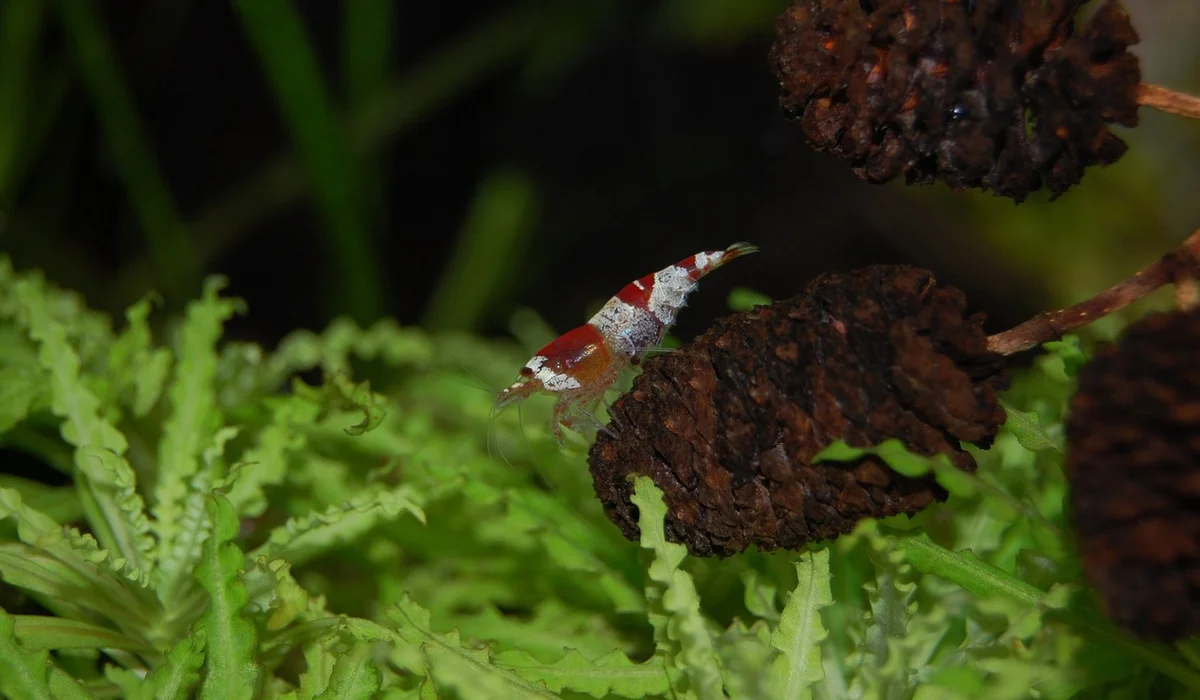
An ounce of prevention is truly worth a pound of cure in a delicate aquarium. Stopping biofilm from forming in the first place is far safer and less stressful for your shrimp and sensitive fish than trying to remove it later—especially since some clean-up crews can help control biofilm but are not a complete solution. A few simple habit changes make a world of difference.
Master Water Flow and Surface Agitation
Biofilm thrives on stillness. Your filter’s outflow should create a gentle ripple across the entire water surface. This surface agitation promotes vital gas exchange and physically prevents the biofilm’s slimy matrix from taking hold. Water flow is the other half of aquarium health: it distributes oxygen, nutrients, and pollutant-laden water so filtration can do its job. When flow and filtration work together, the tank stays better balanced and clearer. If your tank has dead spots, a small, adjustable powerhead can work wonders.
Fine-Tune Your Feeding Routine
Overfeeding is the single biggest contributor to biofilm. Uneaten food decomposes, releasing a feast of organic compounds. Feed only what your entire community can consume within two to three minutes, and you will dramatically cut down on the fuel source for biofilm. I use a small pipette to target food directly to my bottom dwellers like Shadow, my Corydoras, which keeps it out of the water column.
Quarantine and Prep New Additions
Any new hardscape or botanicals should be thoroughly cleaned before they enter your tank.
- Boil wood for at least 30-60 minutes. This not only sterilizes it but also helps it sink and leach out fewer tannins.
- Scrub rocks and stones with a brand-new, chemical-free stiff-bristled brush under hot water.
- For dried leaves like Catappa, a quick steep in boiling water will soften them and clean the surface.
Maintain Your Filter Correctly
Your filter is the heart of your tank, but a clogged one recirculates waste. Never clean your filter media with tap water, as the chlorine will wipe out your essential beneficial bacteria. Instead, gently swish the sponges or media in a bucket of water you’ve removed from the aquarium during a water change.
Troubleshooting Persistent Biofilm Problems
Sometimes, despite your best efforts, a stubborn biofilm case appears. When biofilm keeps coming back, it’s your tank’s way of signaling an underlying imbalance that needs your attention. Let’s diagnose the common culprits. Often, a bacterial bloom in fish tanks accompanies biofilm and can cloud the water. We’ll cover clear, safe steps to clear it and prevent it from returning.
Is Your Tank Still Cycling?
New tanks, or those that have had a bacterial crash, are biofilm hotspots. The immature bacterial colony can’t process waste efficiently yet. An established, stable nitrogen cycle is your best long-term defense, as the bacteria outcompete the biofilm for resources. Test your water for ammonia and nitrite; if they are present, focus on completing the cycle before worrying about the biofilm.
Check Your Water Parameters
Imbalanced water can encourage biofilm. Test for the following:
- High Nitrates (over 20 ppm): This indicates a buildup of organic waste. Increase your water change frequency.
- Water Hardness and pH: While not a direct cause, very soft, acidic water can sometimes be linked to certain types of bacterial blooms. Ensure your parameters are stable for your specific livestock.
Evaluate Your Bioload
You might simply have too many fish or shrimp producing waste for your tank’s size and filtration. An overstocked tank is a constant battle against organic pollutants, making it a perfect environment for biofilm to return again and again. Consider if your tank is appropriately stocked for its volume.
Look for a Hidden Decay Source
Conduct a thorough tank inspection. Is there a forgotten piece of food trapped behind decor? A decaying plant leaf or a dead snail hidden in the substrate can be a potent, localized source of nutrients for a biofilm outbreak. Remove any dying plant matter promptly and vacuum your gravel during water changes.
When to Consider a Clean-up Crew
For ongoing management in a shrimp tank, some species will graze on thin layers of biofilm. Nerite snails are particularly effective glass cleaners, and many shrimp, including Neocaridina and Amano varieties, will happily browse biofilm off hardscape and plants. They are not a solution for a major problem, but they are excellent maintenance partners.
Common Questions
Is biofilm dangerous for my shrimp?
Biofilm is generally not dangerous and is often a natural food source that shrimp will graze on. However, a very thick, excessive layer can potentially reduce oxygen levels at the water’s surface. For most healthy tanks, a light coating is harmless and even beneficial as a snack.
Do I always need to manually remove biofilm?
No, you do not always need to remove it manually. In a balanced tank, a thin layer of biofilm is normal and will often be consumed by your shrimp and snails. Manual removal is only necessary if the film becomes excessively thick, covers the entire surface, or is causing aesthetic concerns.
What is the safest way to remove biofilm from driftwood with shrimp in the tank?
The safest method is to remove the wood and scrub it gently in a separate bucket of old tank water. If the wood is too large or you cannot remove it, use a soft-bristled brush to dislodge the film during a water change and immediately siphon it out. This prevents the loose biofilm from decomposing in the water column.
Will adding more shrimp or snails help control biofilm?
Yes, many shrimp and snail species are excellent at grazing on thin layers of biofilm and can be a great part of your long-term maintenance crew. However, they are a management solution, not a cure for a major outbreak caused by overfeeding or poor water quality, which must be addressed at the source.
Your Path to a Crystal-Clear Tank
To keep your aquarium’s biofilm in check, remember that gentle manual removal and improving water flow are your most reliable tools. Focus on fixing the root cause—excess nutrients and stagnant water—instead of just fighting the visible slime. Regular maintenance and stable water conditions help prevent biofilm from coming back in your aquarium. Keep nutrient inputs balanced and ensure consistent filtration to reduce recurrence.
Staying observant and patient with your tank’s changes is the heart of great fish keeping. Every challenge, from biofilm to water chemistry, is a chance to learn more about the fascinating ecosystem you’re building.
Further Reading & Sources
- Biofilm In Our Aquariums. How to Remove | Shrimp and Snail Breeder
- Growing Biofilm in Shrimp Tanks | Shrimp Science
- r/Aquariums on Reddit: How do I get rid of biofilm on the surface?
- Biofilm “removal machines…”: Friends in the fight… – Tannin Aquatics
- What Is Biofilm and How to Maintain It in Fish Tank – hygger
Lia is an expert in aquarium and pet fish care. Having worked in the marine industry and having cared for multiple pet fish, she has acquired first hand expertise on aquarium care, maintenance and setup. She always brings her practical expertise and science to help solve any aquarium related queries.
Regular Cleaning