
Taming the Tank Tyrant: Your Step-by-Step Guide to Stopping a Single Aggressive Fish
Hello fellow fish keepers, has one fish in your community tank turned into a relentless bully, shattering the peaceful underwater world you worked so hard to create? Watching that constant chasing and fin-nipping is stressful, but you can absolutely restore the calm.
This guide will walk you through everything you need to know, covering: how to correctly identify the aggressive fish and its specific triggers, immediate steps to protect the other fish using temporary isolation, rearranging your tank’s layout and adding hiding spots to break established territories, and long-term strategies for reintroduction or finding a new home for the bully.
I’ve spent years maintaining high-tech planted tanks and breeding sensitive fish, giving me firsthand experience in resolving these exact conflicts.
Spotting the Signs: How to Identify an Aggressive Fish
You’ll often notice the problem long before any fins are torn. It starts with a feeling-the tank’s peaceful vibe is just gone. The constant, frantic dash of a chased fish is a dead giveaway, but the subtler signs are just as telling.
- Chasing and Cornering: This isn’t a quick, playful zip. An aggressive fish will relentlessly pursue a tankmate, often forcing it into a top corner or behind the filter, refusing to let it swim freely.
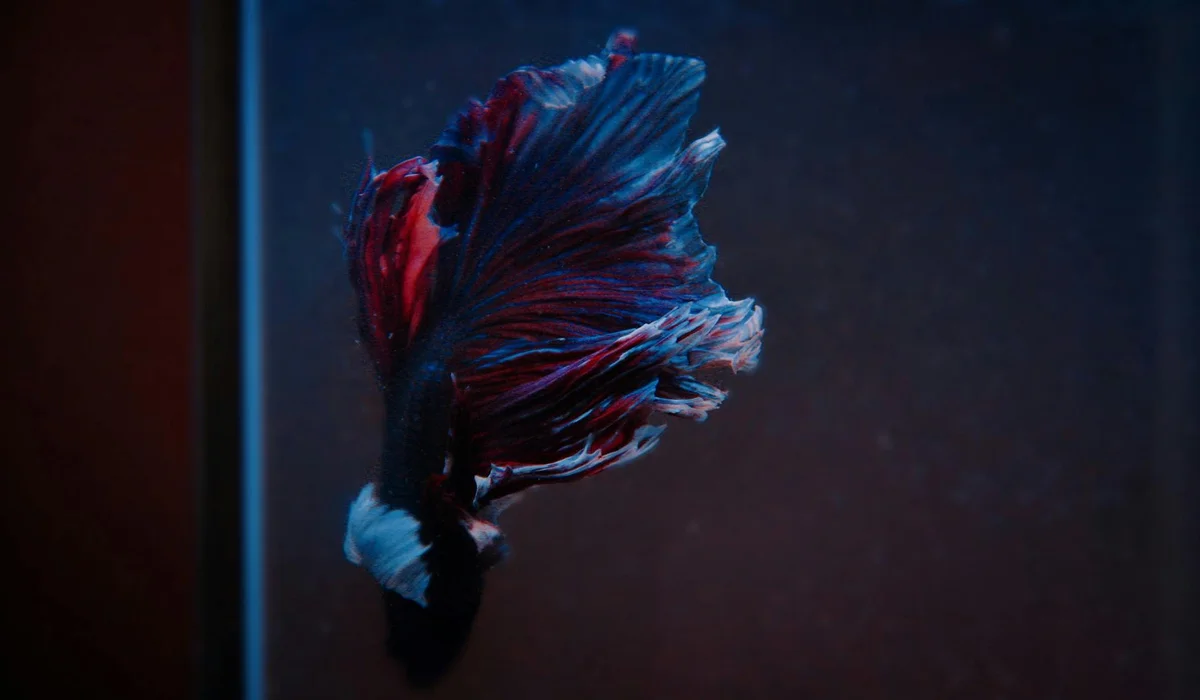
- Fin Nipping: You’ll see ragged, receding fins or clear bite marks, especially on slow-moving fish with long, flowing tails. My betta, Captain Fin, was a master of this before I moved him to his own palace.
- Food Area Guarding: The bully will aggressively charge any fish that dares to approach the feeding area, even after all the food is gone. They claim the entire surface or a section of the substrate as their own.
- Flaring and Posturing: Fish like bettas and some cichlids will flare their gills and fins to appear larger. It’s an unmistakable threat display.
- Constant Hiding by Other Fish: If you notice normally social fish, like my corydoras Shadow, spending all their time jammed into a cave or tucked deep within plants, they are likely hiding from a tormentor.
The best time to observe is during feeding and at “lights out.” Watch how the fish interact when they think you aren’t looking; that’s when the true hierarchy shows itself. Feeding time highlights resource guarding, while the dim evening light often reveals territorial disputes as fish settle in for the night.
It’s key to know the difference between play and aggression. Playful chasing is brief, with fish quickly returning to normal swimming. True aggression is persistent and targeted, often focused on one specific, weaker individual. The body language is stiff and deliberate, not the loose, darting movements of fish that are just establishing a harmless pecking order. Understanding these nuances can be quite helpful when observing fish interactions.
Root Causes: Why Your Fish Might Be Acting Out
Fish aren’t born bullies; something in their environment is triggering this behavior. Think of it as a cry for help, and your job is to play detective to figure out the root cause.
- Overcrowding and Lack of Hiding Spots: This is the number one culprit. Too many fish in too small a space is a recipe for stress and conflict. Fish need visual breaks and territories. Without enough plants, rocks, or driftwood to break lines of sight, they feel exposed and vulnerable, leading to aggression.
- Breeding Behavior and Hormones: A fish ready to spawn can become hyper-territorial, defending a chosen breeding site from every other creature in the tank. This is very common with certain cichlids, gouramis, and livebearers.
- Incompatible Species Mixing: You can’t put a feisty, territorial fish with a shy, passive one and expect peace. It’s like putting a wolf in a flock of sheep. Always research temperament and social needs before adding new fish.
- Insufficient Tank Size and Poor Layout: A long, well-scaped 20-gallon tank can feel more spacious than a tall, bare 30-gallon tank. Territorial fish need room to establish their own zones, and a good aquascape with defined areas helps create natural boundaries. Cramped quarters force constant, unwanted interactions.
- Water Quality Stress: Never underestimate the power of poor water. High ammonia, nitrite, or fluctuating pH levels irritate a fish’s gills and skin, putting them on constant edge. A stressed fish is far more likely to lash out. It’s a foundational health issue that manifests as behavioral problems.
Quick Fixes: Immediate Actions to Reduce Aggression
-
Step 1: Rearrange tank decorations and plants to disrupt territories
An aggressive fish is often a territorial fish. The moment you move their favorite cave or uproot that specific plant they guard, you reset the entire landscape. I do a major rescape about twice a year, and it’s fascinating to watch the social dynamics start over. The bully has to find a new home base and can’t just defend the same old corner. This is exactly the kind of scenario you’ll find explained in the guide to aquarium territorial behavior. It shows how to anticipate shifts, design layouts, and minimize fights.
-
Step 2: Adjust feeding strategies to distract the bully
Target feeding can be a game-changer. Try dropping a sinking wafer or pellet in one corner for the bully while you feed the rest of the school on the opposite side. This gives the other fish a peaceful moment to eat. Spreading food across the entire water surface also works wonders, forcing a dominant fish to chase scattered morsels instead of tank mates.
-
Step 3: Use tank dividers or temporary isolation if needed
For a persistently nasty fish, a physical barrier is your best friend. A simple mesh or plastic tank divider gives everyone a break. I’ve even used a large, clean breeder box floated inside the main tank to temporarily house the offender for a few days. This “time-out” often lowers their aggression when reintroduced.
-
Step 4: Increase hiding caves and visual barriers
Go to your local fish store and grab a few more ceramic caves or spiderwood pieces. You can never have too many. Creating a dense jungle of plants like Java Fern and hardscape breaks the line of sight, giving timid fish instant escape routes. A fish that can hide is a fish that feels safe, and that reduces stress for the entire community.
Tank Setup Tweaks: Creating a Peaceful Environment
-
Recommend ideal tank sizes and group numbers for community species
A cramped tank is a recipe for conflict. For most peaceful communities, start with a 20-gallon long tank as a minimum; it provides more horizontal swimming space. Schooling fish like Tetras or Corydoras need groups of six or more to feel secure and spread out any nipping behavior. A single fish of a species often becomes a target or becomes the bully itself out of stress. Beyond volume, tank shape matters. Long, low tanks often hold more fish than tall, narrow ones because they give more horizontal space.
-
Suggest plants and decor that provide safe zones and reduce stress
Tall, bushy plants like Hornwort and Amazon Sword create fantastic canopy cover. Floating plants like Frogbit dim the lighting, which has a remarkably calming effect. My go-to hardscape for peacekeeping is always driftwood with lots of nooks and tall rock structures that reach near the water’s surface. These structures create defined, multi-level territories that prevent a single fish from claiming the entire tank.
-
Explain how proper filtration and water changes support calm behavior
Dirty water is stressful water. The constant hum of a high-quality filter and the clarity it provides is the foundation of a healthy tank. Poor water quality, especially high nitrate levels, can make fish irritable and more prone to aggression. Sticking to a consistent weekly water change schedule of 25-30% removes these irritants and keeps your fish community calm and collected. Improving water quality is the cornerstone of a healthy aquarium and healthy fish. Regular testing and proactive maintenance help sustain ideal conditions for your inhabitants. Cloudy water can make fish feel exposed and vulnerable, triggering defensive behaviors.
Choosing Friends Wisely: Selecting Compatible Tank Mates

Think of your community tank like a shared apartment. You wouldn’t room a loud party-animal with a quiet bookworm. Fish have personalities, and some just don’t get along. The key to harmony lies in matching energy levels and environmental needs from the start. When you choose compatible fish for your community tank, you set the stage for harmony. Look for species that match in activity, temperament, and water requirements to avoid conflicts.
Aggressive vs. Peaceful: A Tale of Two Personalities
Aggressive fish often show strong territorial instincts. They might claim a cave or corner and defend it fiercely. Many are also fin-nippers, drawn to long, flowing tails. My betta, Captain Fin, is a perfect example; his feisty nature means he can’t have flashy neighbors.
Peaceful fish are typically schooling species that find safety in numbers. They are constant, gentle movers who spend their time foraging rather than fighting. They lack the desire to claim a territory. Peaceful fish often have shorter, less colorful fins, making them less of a target for bullies. They also benefit from the companionship of their shoal, as fish can get lonely when isolated.
Tips for a Smooth Introduction
How you add a new fish can make or break the peace. A sudden intruder is seen as a threat, but a gradual introduction is far less stressful.
- Turn off the tank lights when you first release the new fish. The dim environment helps reduce initial confrontation.
- Rearrange the tank decor slightly before the introduction. This disrupts established territories and makes the entire tank feel “new” to everyone.
- Feed your existing fish a small meal right before adding the newcomer. A full fish is a less aggressive fish.
- Use a clear breeding box inside the main tank for a day or two. This lets the fish see each other without physical contact, a process called “acclimating by sight.”
This slow-and-steady method allows your current fish to get used to the new one’s presence without feeling invaded.
Community Tank All-Stars
Here are some generally peaceful and adaptable fish that can co-exist well in many community setups. Always double-check individual species needs for water parameters.
| Fish Name | Temperament | Key Trait | Good With… |
|---|---|---|---|
| Corydoras Catfish | Peaceful, Social | Bottom Dweller | Almost all mid/top swimmers |
| Neon Tetra | Peaceful, Schooling | Mid-Water Swimmer | Other small, peaceful fish |
| Harlequin Rasbora | Peaceful, Schooling | Active Swimmer | Similar-sized community fish |
| Kuhli Loach | Timid, Nocturnal | Bottom Hider | Non-aggressive tank mates |
| Pygmy Corydoras | Extremely Peaceful | Nano Bottom Dweller | Shrimp and small tetras |
| Endler’s Livebearer | Active, Peaceful | Top/Mid Swimmer | Other fast-moving small fish |
The Last Resort: When to Consider Removing the Bully
You’ve tried everything-more plants, more caves, different food-but one fish is still a tyrant. It’s a tough decision, but sometimes, for the health of the entire community, the bully has to go. Removing a fish is not a failure; it’s a responsible choice for overall tank welfare.
- Monitor if aggression continues after other strategies. Watch for persistent chasing that prevents other fish from eating or causes physical damage like torn fins or missing scales. Occasional spats are normal, but relentless harassment is not.
- Set up a separate quarantine or rehoming tank. A simple 5 or 10-gallon tank with a filter and heater works. This isn’t a permanent palace; it’s a “time-out” tank. It gives the bullied fish a chance to recover and lets you observe the aggressor alone.
- Evaluate if the fish needs solo living or a species-only tank. Some fish, like many bettas or certain cichlids, are hardwired to be alone or only with their own kind. Your “bully” might just be behaving naturally in the wrong environment. A species-specific tank can be a beautiful and less stressful solution for them.
Keeping the Peace: Ongoing Monitoring and Care
-
Start each day with a five-minute tank watch right after your lights turn on. Look for fish that are hiding more than usual, have torn fins, or are being chased. This daily habit helps you spot stress or aggression before it becomes a serious issue. From my own tank, I notice Shadow, my corydoras, will stay buried in plants if Captain Fin is particularly feisty, signaling it’s time to intervene.
- Check for rapid gill movement or clamped fins, which can indicate poor water quality or bullying.
- Note any changes in appetite; a fish that avoids food might be intimidated.
- Watch swimming patterns-erratic darting or constant hovering in one spot can be a red flag.
-
Stick to a weekly water change of 20-25% using a gravel vacuum to remove waste and uneaten food. Regular water changes dilute stress hormones and toxins, creating a calmer environment for everyone. I use a simple calendar reminder to test pH and ammonia every Sunday, aiming for a stable pH around 7.0 and zero ammonia to keep fish like Goldie healthy and less prone to stress-induced aggression.
- Vacuum the substrate gently to avoid disturbing bottom dwellers like corydoras.
- Rinse filter media in old tank water monthly to preserve beneficial bacteria.
- Trim overgrown plants to maintain open swimming spaces and reduce hiding spots for bullies.
-
Observe your tank during feeding times and when lights transition on or off. Feeding behavior often reveals dominance struggles, so watch for fish that guard food areas or chase others away. I’ve found that using two feeding spots-one near the surface for Captain Fin and one on the bottom for Shadow-reduces competition. Keep light cycles consistent with a timer set for 10 hours on and 14 off; sudden changes can trigger aggression by disrupting natural rhythms.
- Note if aggressive fish like bettas flare gills or charge during feeding-this may require separate feeding strategies.
- Adjust light intensity gradually; a dimmer or floating plants can soften transitions and ease tension.
FAQs
What is aggressive fish management and why is it used?
Aggressive fish management involves proactive strategies to control a dominant or hostile fish’s behavior in a home aquarium. It is used to prevent injury, reduce stress for all tank inhabitants, and maintain a balanced, peaceful environment. This approach ensures the long-term health and stability of the community tank by addressing conflicts before they escalate.
What are the ecological risks of aggressive fish management?
In a closed aquarium system, aggressive management can disrupt the tank’s delicate ecological balance by altering social hierarchies or stressing other fish. Over-isolation or frequent removals may lead to new aggressors emerging or impact beneficial bacteria cycles. Careful implementation is key to avoiding unintended consequences like disease outbreaks or water quality issues.
How can aggressive fish management affect non-target species?
Non-target species, such as shy or peaceful fish, may experience heightened stress or behavioral changes due to management actions like isolation or tank rearrangements. These strategies can inadvertently cause shifts in territory or feeding dynamics, affecting their well-being. Common signs of stress in aquarium fish—such as rapid breathing, hiding, color fading, or erratic swimming—are often the first red flags. Recognizing these cues early can guide gentler, more targeted management actions to minimize distress. Monitoring all tank mates helps ensure that solutions do not harm innocent individuals.
What monitoring methods track the effectiveness of aggressive fish management?
Tracking effectiveness involves regular behavior observation, such as noting reduced aggression or improved fin health, and testing water parameters for stability. Maintaining a log of interactions, appetite changes, and social dynamics provides clear indicators of success. Consistent evaluation allows for timely adjustments to management strategies for optimal results.
Creating a Peaceful Underwater World
When a single fish becomes a bully, your best tools are a temporary isolation tank and a thoughtful rearrangement of the main aquarium’s decor. Removing the aggressor breaks its territorial hold, while changing the landscape resets the social dynamic for a more harmonious reintroduction. In a guide to community tank personalities, recognizing aggressive versus peaceful traits helps you plan compatibility and stocking. This approach supports a calmer, more cohesive community over the long term.
Responsible fishkeeping means being a proactive observer, ready to intervene for the well-being of your entire aquatic community. The most beautiful tanks are built on a foundation of continuous learning about fish behavior, water chemistry, and creating a balanced ecosystem.
Further Reading & Sources
- Aquarium Fish Aggression: Causes and Solutions
- Why is My Fish Aggressive, How Can I Get Them to Stop?
- Dealing With Aggressive Tank Mates | Livestock Management | AlgaeBarn
- 10 Most Aggressive Aquarium Fish & How To Deal With It
- How to Deal with Aggressive Fish in an Aquarium? – Aquarium Sphere
Lia is an expert in aquarium and pet fish care. Having worked in the marine industry and having cared for multiple pet fish, she has acquired first hand expertise on aquarium care, maintenance and setup. She always brings her practical expertise and science to help solve any aquarium related queries.
Fish Species