
Planted Tank Pitfalls: 8 Mistakes That Invite Algae to Move In
Hello fellow fish keepers! I see you there, staring at that green haze in your tank and wondering where your crystal-clear water went. You put in the work, but algae still creeps in, and I’m here to tell you it’s not your fault-it’s a few easy-to-fix missteps.
This guide breaks down the key blunders that fuel algae growth, so you can reclaim your aquatic masterpiece. We’ll cover:
- Overfeeding your finned friends
- Mismanaging your light schedule
- Skipping regular water changes
- Using the wrong fertilizer balance
- Ignoring CO2 levels
- Overstocking with too many fish
- Choosing poor plant varieties
- Neglecting filter maintenance
With years of hands-on experience running high-tech planted tanks and breeding everything from bettas to corydoras, I’ve learned how to spot and solve these issues before they spiral.
What Is Algae and Why Does It Grow in Your Tank?
Think of algae as the uninvited guests who show up to your aquarium party and refuse to leave. These are simple, photosynthetic organisms that thrive on the same core ingredients your prized plants do: light, water, and nutrients. Algae isn’t inherently bad, but when it multiplies out of control, it’s a clear signal that your tank’s balance is off. In your aquarium ecosystem, algae can be a good part of the balance in small amounts, helping with oxygen and nutrient cycling. But uncontrolled blooms signal an imbalance and can crowd out other life.
Algae flourishes in conditions that resemble a calm, sun-drenched sea with a steady food supply. In your tank, this translates to excess nutrients (like phosphate and nitrate), prolonged light exposure, and low water flow. It’s a perfect storm where these simple plants can outcompete your more complex aquatic flora for resources.
You’ll likely encounter a few main types of algae in your planted tank:
- Green Water: This turns your water into a murky, green pea soup. It’s caused by free-floating algae spores and often appears in new tanks or after a disturbance.
- Hair Algae: Looks like fine, wispy green threads clinging to plant leaves and decorations. It loves high light and fluctuating CO2 levels.
- Brown Diatoms: A dusty, brown coating that often appears on glass and substrate in newer setups. It typically feeds on silicates and will often fade away on its own.
- Blue-Green Algae (Cyanobacteria): This one is a slimy, smelly film that can spread rapidly. It’s not a true algae but a bacteria, and it indicates very low nitrate levels or poor water circulation.
- Black Beard Algae (BBA): The bane of many aquarists! It forms tough, blackish tufts on slow-growing plants and hardscape. It’s notoriously difficult to remove and is often linked to inconsistent CO2.
Lighting Blunders That Spark Algae Blooms
Your aquarium light is the sun for your underwater world, and just like the real sun, too much of a good thing causes problems. Algae is far less picky than your plants; it can photosynthesize efficiently across a wider spectrum and for much longer durations. For a planted aquarium, careful light management is essential to curb algae while helping plants thrive. Getting your lighting right is the single most effective way to slam the brakes on algae growth.
The duration your lights are on, known as the photoperiod, is critical. I always recommend mimicking a natural day cycle. Setting a consistent photoperiod of 6 to 8 hours is the sweet spot for most planted tanks, giving your plants what they need without overfeeding the algae. Use a simple timer plug-it’s a game-changer for consistency and takes the guesswork out of your daily routine. It’s also important to consider how long aquarium lights should be on for fish and plants to keep your aquatic environment healthy.
Here are the most common lighting mistakes I see:
- Leaving Lights On Too Long: Running your lights for 10, 12, or even more hours is an open invitation for algae. Plants can only use so much light before they’re “full.”
- Using the Wrong Bulb Types: Old, outdated T8 bulbs or lights with a spectrum that promotes more yellow/green light can encourage certain types of algae. Modern, full-spectrum LED lights designed for planted aquariums are your best bet.
- Placing a High-Intensity Light on a Low-Tech Tank: If you aren’t injecting CO2 and don’t have heavy fertilization, a powerful light will mostly just grow algae. Your light intensity must match your tank’s tech level.
- Inconsistent Lighting Schedules: Turning your lights on and off at random times each day stresses plants and creates an unstable environment where algae can get a foothold.
CO2 and Fertilizer Imbalances That Feed Algae
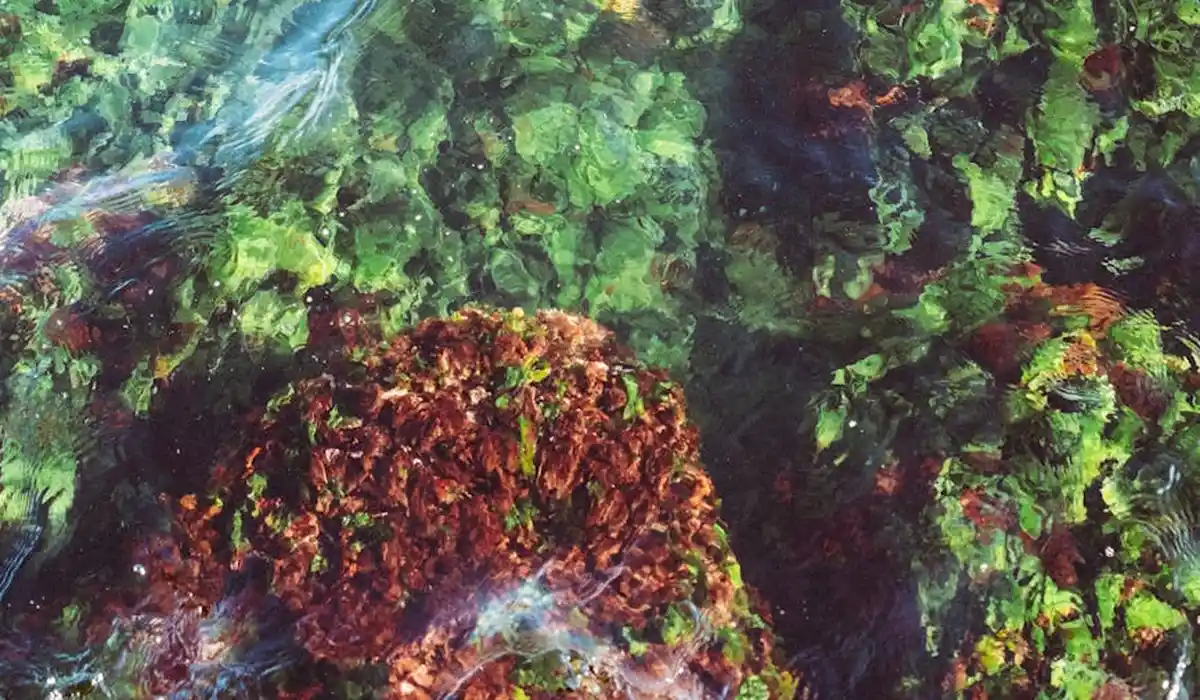
Getting your CO2 and fertilizer balance wrong is like accidentally setting a buffet table for algae. I’ve seen many beautiful tanks turn green overnight because of this.
The CO2 Deficiency Problem
When your plants don’t have enough carbon dioxide, they simply stop growing. Stagnant plants can’t outcompete algae for the other nutrients in your water. The most reliable sign of poor CO2 is an algae uprising on slow-growing plants and hardscape, even when your other parameters seem perfect. Your injection rate needs to be consistent from lights-on to lights-off.
A drop checker is your best friend here. Aim for a lime green color. If it’s blue, you’re starving your plants. If it’s yellow, you’re risking your fish’s health.
Nutrient Imbalances Are an Open Invitation
Think of your tank’s nutrients like a balanced diet. Your plants need both macronutrients (Nitrogen, Phosphorus, Potassium) and micronutrients (Iron, Manganese, Zinc). An excess or deficiency of any one creates an opportunity for algae. Balancing these nutrients correctly is crucial to keep your tank healthy and algae-free.
- Too much phosphate with low nitrates often fuels green spot algae.
- A lack of macronutrients causes plants to pale and weaken, giving hair algae a foothold.
- Dosing too much iron can lead to a nasty blue-green algae (cyanobacteria) outbreak.
A Simple, Stable Dosing Schedule
Consistency is more important than perfection. This is the simple weekly schedule I’ve used for years to keep my tanks stable and algae-free.
- Sunday: 50% water change. Dose macro fertilizers after the change.
- Monday: Dose micro fertilizers.
- Tuesday: Dose macro fertilizers.
- Wednesday: Dose micro fertilizers.
- Thursday: Dose macro fertilizers.
- Friday: Dose micro fertilizers.
- Saturday: Rest day. Test your water parameters.
This “feed the plants, starve the algae” approach provides a steady supply of food that your plants can reliably use up before algae can get to it. Essential nutrients are what healthy aquarium plants rely on to thrive. When dosed appropriately, they support vigorous growth and help keep algae in check. Start with the manufacturer’s recommended dosage and adjust based on your plant growth and test results.
Water Quality Issues That Invite Algae
Algae doesn’t crash the party in a stable, well-kept tank. It sneaks in when your water quality is inconsistent. The goal isn’t just “good” water, but predictable water, day after day. Regular water changes help keep that predictability by removing nutrients that feed algae. They also play a key role in algae prevention and control.
The Stability Trifecta: pH, Ammonia, and Nutrients
Your pH tells a story about your tank’s health. A sudden drop can indicate a CO2 spike or decaying organic matter, both algae triggers. Ammonia should always be zero; it’s a direct algae fertilizer.
Nitrates and phosphates are the big ones to watch. I keep my nitrates between 10-20 ppm and phosphates below 1 ppm for a lush, low-algae tank. Letting nitrates creep above 30 ppm is asking for trouble. Test these every single week without fail.
Make Water Testing a Ritual
Don’t guess, test. A liquid test kit is non-negotiable. Those test strips are often too inaccurate to be useful for managing a sensitive planted tank.
- Test for Ammonia, Nitrite, and Nitrate weekly.
- Check your pH and KH at least once a week to monitor stability.
- Test for Phosphate every two weeks, or anytime you see algae starting to form.
Catching a nitrate spike early gives you a chance to do a water change before the algae even notices the extra food. I test my tanks every Saturday morning with my coffee-it’s a peaceful routine that prevents major headaches.
Water Flow is Your Silent Ally
Stagnant water is algae’s favorite playground. Good circulation ensures nutrients are evenly distributed to all your plants and prevents detritus from settling and decomposing.
Your filter outlet should create a gentle but noticeable flow across the entire tank. You want to see all your plant leaves moving slightly, which prevents algae spores from settling and taking hold. If you have dead spots, a small wave maker or powerhead can work wonders. Just avoid turning your aquarium into a whirlpool. If the flow isn’t right, you can change or adjust your aquarium filter to tune it. A quick check of filter settings can help keep the current even.
Fish and Plant Choices That Upset the Balance
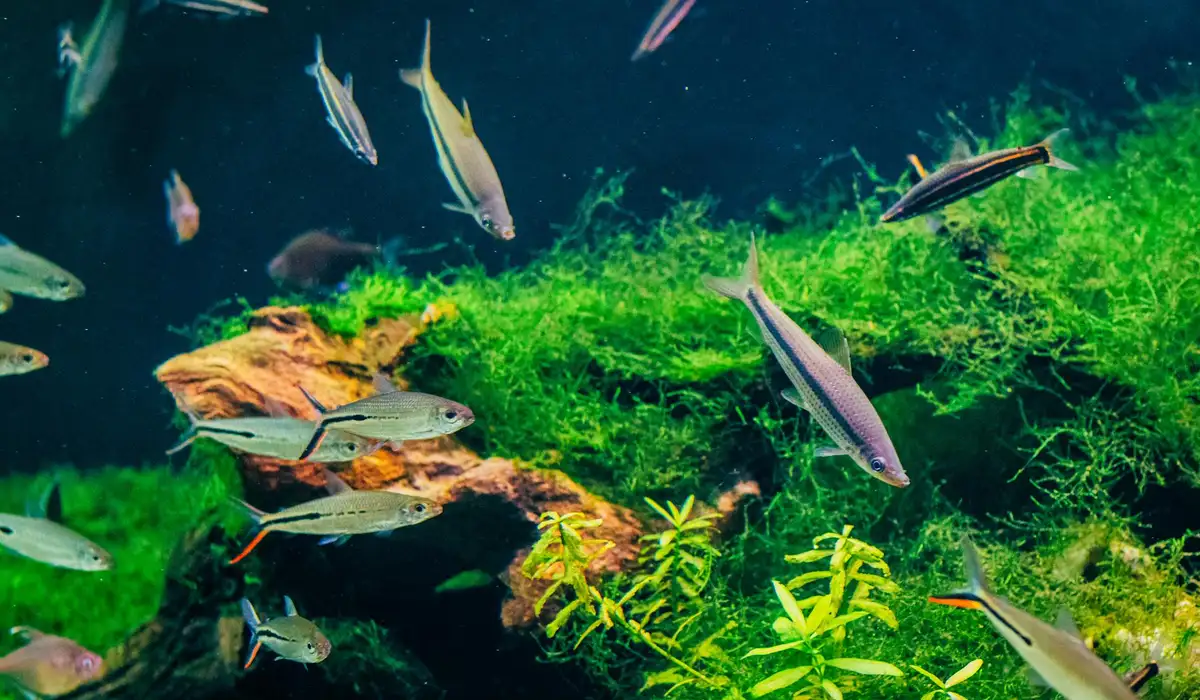
Overstocking your tank is like inviting too many guests to a small party – things get messy fast. Each fish, from my feisty betta Captain Fin to my social goldfish Goldie, produces waste that breaks down into nitrates and phosphates. Excess nutrients from overstocking feed algae blooms, turning your clear water green and murky. I’ve seen it happen when I added one too many bottom dwellers like Shadow; the nutrient spike was almost immediate.
Selecting plants with mismatched nutrient needs can leave extra food for algae. Fast-growing plants like hornwort or water wisteria suck up nutrients rapidly, while slow-growers like anubias need less. Pair heavy-feeding plants with your fish load to naturally balance the system and outcompete algae for resources. In my tanks, I mix floating plants like frogbit with stem plants to handle the waste from active fish. This approach is a key part of our complete guide to choosing the best plants for your aquarium. By weighing growth rates, nutrient needs, and lighting, you can select the best plants for your setup.
Compatible fish and plant pairings create a harmonious ecosystem that resists algae. Here are some combinations that work well:
- Bettas (like Captain Fin) with low-light plants such as java fern or anubias – they thrive in similar calm, shaded conditions.
- Schooling tetras with dense stem plants like rotala – the plants use the waste, and the fish enjoy hiding spots.
- Corydoras catfish (like Shadow) with carpeting plants like dwarf hairgrass – the plants anchor the substrate, and the cories sift without uprooting.
- Shrimp and snails with mosses or bucephalandra – these plants offer grazing surfaces and help keep algae in check.
Effective Strategies to Remove and Prevent Algae
When algae appears, gentle scrubbing preserves your plants while cleaning the tank. To keep the view clear, clean algae off aquarium glass effectively with a soft sponge or plastic scraper. Use a gentle touch to avoid scratching the glass. Follow these steps to tackle algae without harm:
- Turn off all equipment to avoid stirring debris into the water column.
- Use a soft algae pad or an old toothbrush to wipe glass and hardscape – avoid scraping plant leaves to prevent damage.
- For stubborn spots on plants, gently rub leaves between your fingers under water to dislodge algae.
- Siphon out loosened algae during a partial water change, aiming for about 25% volume replacement.
- Rinse filter media in tank water you’ve removed to preserve beneficial bacteria and restore flow.
Regular, gentle cleaning prevents algae from gaining a foothold and keeps your plants looking vibrant. I do this weekly in my setups, and the difference in water clarity is noticeable.
DIY hacks offer natural algae control using simple adjustments. Try these tricks I rely on:
- Add algae-eating crew like amano shrimp or otocinclus catfish – they graze constantly and reduce visible growth.
- Introduce floating plants like duckweed or salvinia to shade the tank and absorb excess nutrients.
- Adjust your light timer to 6-8 hours daily – too much light fuels algae, so use a simple outlet timer for consistency.
- Soak new decorations in a peroxide solution (1 part 3% peroxide to 4 parts water) before adding to kill algae spores.
Natural helpers like shrimp or floating plants can cut your cleaning time in half by handling algae before it spreads. When it comes to algae control, fish and shrimp are among the best cleaners for an aquarium. In my experience, a few amano shrimp in a community tank make a huge difference.
A routine maintenance schedule keeps algae at bay long-term. Stick to this plan for a balanced tank:
- Weekly: Test water parameters, change 20-30% of the water, and clean the glass with an algae pad.
- Bi-weekly: Trim overgrown plants and vacuum the substrate to remove detritus.
- Monthly: Clean filter media and check equipment for clogs or wear.
- Seasonally: Deep-clean hardscape and replant as needed to refresh the aquascape.
Consistency in maintenance is your best defense against algae – it’s easier to prevent problems than to fix them. I set calendar reminders for my tanks, and it’s saved me from many algae outbreaks.
Common Questions
How can I identify the different types of algae in my tank?
Different algae have distinct appearances. Green water makes your tank look like pea soup, while hair algae forms fine, wispy green threads. Brown diatoms create a dusty coating, and black beard algae appears as tough, blackish tufts on hardscape and slow-growing plants. Identifying the specific type helps you diagnose the underlying cause, such as nutrient imbalance or poor CO2.
Are algae-eating fish or shrimp a good solution for control?
Algae-eaters like amano shrimp or otocinclus catfish are excellent for managing minor growth, but they are a cleanup crew, not a cure. They cannot handle a major algae outbreak caused by fundamental imbalances in light, nutrients, or CO2. Relying on them alone without fixing the root problem will not solve the issue long-term.
Can the water source I use contribute to algae growth?
Yes, your tap water can be a significant source of excess nutrients. If your tap water is high in phosphates or nitrates, you are continuously adding algae food with every water change. Testing your tap water is crucial; if levels are high, you may need to consider using reverse osmosis (RO) water or specific chemical filtration media to remove these compounds.
How do I know if my anti-algae measures are working?
You will see a reduction in the rate of new algae growth on your glass, plants, and decorations. Your plants should begin to show healthier, new growth, and your water clarity will improve. This is a sign that your plants are successfully outcompeting the algae for light and nutrients, indicating your tank’s balance is being restored.
Your Clear-Water Path Forward
To keep algae at bay, focus on balancing your light and nutrients while performing consistent, small water changes. A stable, balanced tank is your best defense against the green tide.
Your fish, like my curious Captain Fin, rely on you to provide a healthy home, so stay curious and keep learning. The most rewarding aquariums are maintained by keepers who never stop observing and adapting.
Further Reading & Sources
- The Fight Against Algae – Prevention of Algae in a Planted Aquarium
- 8 Common Planted Aquarium Mistakes Beginners Make
- r/PlantedTank on Reddit: Algae all over my substrate and plants 🙁 what are some causes and solutions for this?
- Algae Management and Algae Myths in the Planted Aquarium
- The Ultimate Algae Guide | Green Aqua
Lia is an expert in aquarium and pet fish care. Having worked in the marine industry and having cared for multiple pet fish, she has acquired first hand expertise on aquarium care, maintenance and setup. She always brings her practical expertise and science to help solve any aquarium related queries.
Algae Control