
How Often to Feed Aquarium Fish: Your Straightforward Guide to a Balanced Tank
Published on: December 19, 2025 | Last Updated: December 19, 2025
Written By: Lia Annick
Hello fellow aquarium enthusiasts! That slight hesitation you feel before dropping in food flakes is completely normal-nailing how often to feed is one of the biggest keys to a healthy, clear-water aquarium.
This complete guide will take the guesswork out of your routine by covering:
- How fish species, age, and personality directly change feeding needs
- The surprising impact of your water temperature and tank setup
- Simple, effective daily and weekly feeding schedules you can start today
- How to spot overfeeding and underfeeding with clear visual cues
I’ve spent years running high-tech planted tanks and breeding everything from feisty bettas to graceful goldfish, so this advice comes from real tank time.
The Core Principles of Aquarium Fish Feeding
-
The golden rule I live by is to only feed an amount your fish can completely finish in two to three minutes. Watch your fish during this window-once their eager nibbles slow and food starts drifting untouched, you have given them plenty. This practice is your best defense against the murky water and algae blooms that come from decaying leftovers.
-
For a typical mixed-species tank, feeding once or twice a day forms a healthy, sustainable rhythm. Two small daily portions, perhaps with your morning coffee and evening wind-down, mirror natural foraging and keep your filter from being overloaded. If life gets busy, a single daily feeding is perfectly adequate for most community fish.
-
Consistency in your routine matters far more than clockwork precision. Fish feel secure with predictable patterns, but they are forgiving if a meal comes a bit early or late-what disrupts them is erratic, forgotten feedings. I tie my feeding time to another daily habit to make it stick, without stressing over the exact minute.
How Fish Species Dictate Your Feeding Schedule
Feeding Frequency for Popular Freshwater Fish
-
Betta Fish: Provide small meals once or twice daily, and always include one fasting day each week. My betta, Captain Fin, gets his specks of pellet in the morning, but skipping Sunday meals keeps his digestion sharp and energy high. For a complete feeding guide on bettas, this explains what to feed, how much, and how often. If you’re asking ‘do betta fish eat?’, you’ll find the basics of their diet and portions here. Their stomachs are no larger than their eye, so overfeeding is a fast track to health issues.
-
Small Community Fish like Guppies and Platys: Offer twice-daily feedings with portions so tiny they vanish in under a minute. You will see the shimmer of their scales brighten with this steady, minimal approach that leaves zero waste. I watch my guppy school dart for flakes-the action is over in seconds, which is exactly how it should be.
-
Bottom Feeders such as Corydoras and Plecos: Give sinking wafers or pellets once daily, ideally after the main tank lights go out. My corydoras, Shadow, becomes active at dusk; a single algae wafer placed near his hide satisfies him without disrupting daytime feeders. To properly feed plecos and Corydoras, observe their evening activity and tailor portions to their appetites. If you have more than one bottom feeder, you can offer a second small feeding later in the night to ensure all get a bite. This evening schedule aligns with their natural behavior and helps maintain substrate cleanliness.
-
Goldfish: They require multiple small feedings daily due to rapid metabolisms, but their high waste production demands caution. Goldie, my oranda, receives three pea-sized meals spread across the day, which dramatically cuts down on ammonia spikes compared to one large dump of food. Their constant foraging means you must pair feeding with diligent water testing.
Special Considerations for Carnivores, Herbivores, and Omnivores
-
Food type heavily sways how often you should feed: carnivores like many cichlids do well with protein-packed frozen meals every other day, while herbivores such as plecos need daily algae-based options to graze on. I switch between frozen bloodworms and high-quality pellets for my carnivores, which mimics wild variety and prevents dietary boredom. Omnivores, including most tetras and barbs, thrive on a flexible mix of both worlds.
-
A varied diet is critical to avoid hidden nutritional shortages. Rotating through flakes, blanched vegetables, and live foods each week ensures your fish get a full spectrum of vitamins and minerals. I treat it like a weekly menu-different foods on different days keep everyone interested and your aquarium ecology resilient.
Environmental Factors That Alter Feeding Needs
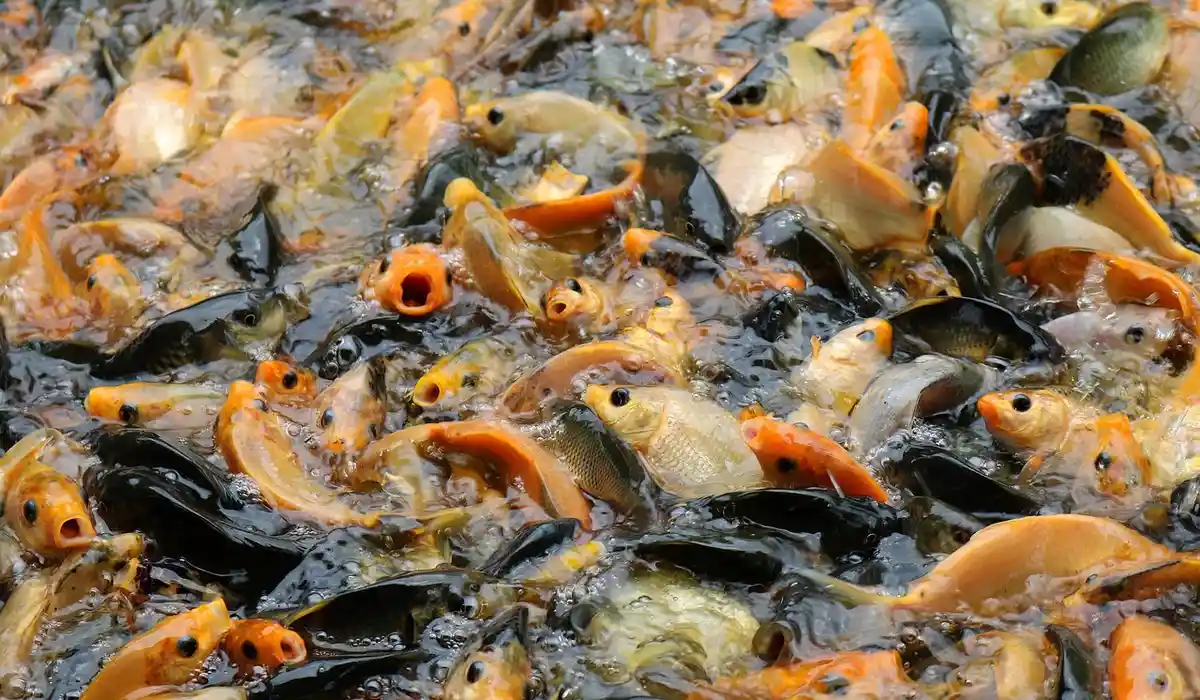
Your fish’s appetite isn’t just about the clock or the calendar. The world inside their glass home plays a huge role. Light, temperature, and crowding all change how much fuel they need.
Water Temperature and Fish Metabolism
Think of your aquarium heater like a thermostat for your fish’s engine. In warmer water, a fish’s metabolism and digestion speed up significantly. They burn through energy faster and will genuinely need more frequent meals. The opposite is true in cooler water, where everything slows down. That’s why aquarium temperature control is a core part of a complete guide to stable water. In the sections that follow, you’ll learn practical tips for maintaining a steady tank temperature using heaters, controllers, and proper placement.
I adjust my own feeding routines seasonally, noticing my betta, Captain Fin, becomes much more active and eager when his tank is at 80°F compared to 76°F. Here’s a simple guideline to help you adapt.
- Tropical Community Tanks (75-80°F): Stick to your standard, consistent feeding schedule. This is the metabolic “sweet spot” for most common species.
- Warmer Tanks (80-85°F): For discus or certain breeding setups, you may need to feed three or even four small daily meals to meet their energy demands.
- Cooler Tanks (65-75°F): Many danios, white cloud minnows, and fancy goldfish (like my Goldie) have slower digestion here. You can safely reduce to one small feeding per day or fast them one day a week.
Tank Size, Stocking Level, and Water Quality
More fish in a space doesn’t mean more food in the water. In fact, an overstocked tank demands a lighter touch with the fish food container. Each flake or pellet that isn’t eaten becomes a direct pollutant.
Leftover food decomposes rapidly, releasing ammonia and clouding your water, which stresses every inhabitant from the feisty top-dweller to the shy bottom-feeder like Shadow. Your filtration can only handle so much.
- In a heavily stocked tank, feed less per single feeding than you think you should. It’s better to have them finish everything in 30 seconds than to leave crumbs.
- Always observe water quality. If your nitrate levels creep up unusually fast between water changes, excess food is a likely culprit. Cut back the portion size immediately.
- Large, sparsely stocked tanks with powerful filters offer more forgiveness, but discipline is still key. That crystal-clear water you love starts with what you don’t put in.
Crafting Your Personalized Feeding Routine
Think of this as your aquarium’s meal plan. It’s not one-size-fits-all, but a flexible guide you build based on your specific tank’s cast of characters. Your goal is to match the food to the fish, creating a rhythm that keeps them healthy and your water pristine. Think of it as the water-side version of a meal plan. In a complete beginner’s guide to managing aquarium water parameters, you’ll learn to test and stabilize ammonia, nitrite, nitrate, pH, and temperature to keep the water healthy.
Step 1: Assess your fish’s species and life stage.
A tiny betta fry and a full-grown goldfish have wildly different needs. Start by grouping your fish. Are they carnivores like Captain Fin, omnivores like Goldie, or bottom-grazers like Shadow? Next, note their age. Juvenile fish (fry) need multiple tiny meals of high-protein food daily to support rapid growth, while most adults thrive on one or two. Feeding fry requires special attention, as their dietary needs differ significantly from those of adult fish.
Step 2: Choose your primary food and a weekly treat.
Your staple food should be a high-quality flake, pellet, or microgranule that fits your fish’s mouth. For variety, I always pick one “treat day.” This isn’t junk food—it’s nutritional boosting. Flakes, pellets, and gels each have different nutritional profiles and breakdown rates, so choose the form that best fits your fish’s digestion. Flakes dissolve quickly, pellets are dense and long-lasting, and gel foods can be highly digestible for picky eaters.
- Primary: Sinking wafers for catfish, small carnivore pellets for bettas.
- Weekly Treat: Frozen brine shrimp, a blanched pea, or a sliver of cucumber.
This combination ensures they get a full spectrum of nutrients and mimics the variety they’d find in nature.
Step 3: Decide on daily feeding times and stick to them.
Fish thrive on predictability. I feed my community tank once in the morning when the lights come on, and once in the early evening. This consistency regulates their metabolism and reduces stress. Observing them at these set times also becomes your best daily health check; you’ll instantly notice if someone is hiding or lacking appetite.
Step 4: Implement a weekly fasting day.
For most adult fish, skip feeding one day a week—I do Sundays. This gives their digestive systems a complete rest, helps prevent constipation, and encourages them to forage for microfauna in the tank. It’s a simple habit that significantly boosts their long-term health and lessens waste buildup, making it easier to clean your betta fish tank.
Step 5: Use tools for precise portion control.
Our eyes are terrible at judging “a pinch.” To avoid overfeeding, get tactical. A feeding ring contains floating food so it doesn’t scatter. For target feeding bottom dwellers or fussy eaters, a long aquarium pipette or turkey baster lets you place food right where it’s needed. These tools are game-changers for ensuring every morsel is intended for a mouth, not for polluting the water.
Spotting Trouble: Signs of Overfeeding and Underfeeding

Getting the food amount just right is more art than science, and your tank will give you clear signals if you’re off target. Learning to read these visual cues is your single best tool for dialing in the perfect feeding routine.
Visual Cues of Overfeeding
Overfeeding is the far more common mistake, and its consequences ripple through the entire ecosystem. Your first clue is often the water itself.
- Cloudy, Murky Water: This isn’t just dust. A persistent white or gray haze is frequently a bacterial bloom, fueled by a sudden surplus of rotting food.
- Uneaten Food on the Substrate: If you see whole pellets, flakes, or wafers sitting on the gravel or sand after five minutes, you’ve put too much in. Shadow, my corydoras, can’t keep up with a deluge.
- Persistent Algae Blooms: Excess nutrients from decomposing food are a feast for algae. If you’re fighting constant green water or furry surfaces despite your light schedule, look at your feeding habits first.
- Bloated Fish or Stringy White Feces: A fish with a swollen belly or trailing waste may have digestive issues from overeating. My betta, Captain Fin, will gorge himself if I let him.
Left unchecked, that uneaten food will decompose, clog your filter media with organic gunk, and can even cause a snail population to explode as they capitalize on the bounty.
Visual Cues of Underfeeding
Underfeeding is less common but just as serious, and its signs can be subtle until the situation becomes critical. You must observe your fish’s body shape and behavior closely.
- Sunken Bellies or Concave Body Profiles: A healthy fish like Goldie should have a gently rounded, full body. A pronounced dip behind the head or a pinched look is a major red flag.
- Lethargy and Lack of Interest: A hungry fish is usually an active forager. A fish that hangs listlessly in a corner or isn’t excited by feeding time may be energy-depleted.
- Increased Aggression or Frantic Competition: When food is scarce, the pecking order turns violent. You’ll see nipping, chasing, and shoving during meals that wasn’t there before.
Weight loss in aquatic creatures happens slowly, so comparing a monthly photo of your fish from the side can reveal a gradual thinning you might otherwise miss day-to-day.
Smart Food Choices for Healthy Feeding Habits
What you feed your fish is just as critical as how often you feed them. The right food format directly supports your feeding schedule, keeping your water crystal clear and your fish vibrant. I’ve seen tanks thrive or nosedive based on this simple choice.
Matching Food Format to Feeding Frequency
Think of food formats like tools in a toolbox-each has a specific job. Flakes dissolve quickly, which is great for fast eaters at the surface but can foul water if you overfeed. For my betta, Captain Fin, I use a few high-quality micro-pellets instead of flakes; they hold their shape longer, giving his feisty personality time to eat without polluting his home.
- Flakes are for quick consumption by top feeders, but they require careful dosing. Slow-sinking pellets, however, are a game-changer for bottom dwellers like Shadow, my corydoras. They drift down to his planted hideouts, matching his shy, foraging pace and ensuring he gets his share without competing at the surface.
- Frozen or live foods like bloodworms or brine shrimp are fantastic occasional supplements, not staples. I give Goldie, my oranda, a frozen treat once a week-it enriches her diet and satisfies her constant foraging instinct. Relying on them daily can lead to nutritional imbalances and degrade water quality.
Portion Control Hacks and Tools
Even with perfect food, portion size makes or breaks your tank’s health. My favorite trick is using a weekly pill organizer to pre-measure all my fish food for the week; it eliminates guesswork and prevents that “one extra pinch” that clouds the water. It’s a simple hack that saves time and keeps your feeding consistent.
- Pre-measure food into a weekly pill organizer. This visual system helps you stick to your planned schedule, whether you feed once or twice a day, and it’s a lifesaver for busy aquarists.
- Use a feeding ring to concentrate floating food. This little tool stops flakes from scattering across the surface, letting you monitor exactly how much Captain Fin eats in minutes. You’ll see uneaten food right away, so you can remove it before it sinks and decays.
Common Questions
Is there a feeding aquarium fish calculator I can use?
While there are online calculators and formulas based on fish body weight, they are often complex and require precise measurements. A more practical and reliable method is the “two-minute rule” combined with keen observation. Feed only what your fish can consume within two to three minutes and adjust based on whether any food is left uneaten. This hands-on approach is far more effective for maintaining water quality than a rigid calculation.
What does dreaming about feeding fish in an aquarium mean?
Dream interpretations vary, but in the context of aquarium keeping, such a dream often reflects your daily care routines and subconscious thoughts about responsibility. It might symbolize nurturing, a desire for tranquility, or even anxiety about the well-being of your pets. Consider if you’ve been worried about overfeeding or underfeeding, as your mind could be processing these practical concerns.
What is an aquarium fish feeding tube used for?
A feeding tube, often a long pipette or turkey baster, is a precision tool for target feeding. It is invaluable for delivering food directly to shy, slow-moving, or bottom-dwelling fish like catfish, ensuring they get their share without competition. It’s also perfect for placing liquid fry food or spot-feeding coral in reef tanks without polluting the entire water column.
Where can I buy an aquarium feeding ring in the UK?
Aquarium feeding rings are widely available from UK-based aquatic retailers. You can find them in local fish stores, large pet chains, and on major online marketplaces like Amazon, eBay, and specialist websites such as Aquarium Gardens or Maidenhead Aquatics. They are an inexpensive tool that dramatically improves feeding control for surface-feeding fish.
Happy Fish, Healthy Tank
The clearest path to a thriving aquarium is consistent, mindful feeding—offer small portions once or twice daily, and always watch how your fish respond more than you watch the clock. A fish’s appetite is your most honest water quality meter and health indicator.
Mastering mealtime is a wonderful first step in your journey as an aquarist, but remember it’s woven into the larger tapestry of tank maintenance and observation. Your commitment to learning directly shapes the vibrant, shimmering world you’re building behind the glass.
Further Reading & Sources
- How Often Do You Feed Fish (and How Much)? | Guide to Feeding Fish – Aquarium Co-Op
- r/aquarium on Reddit: How often does everyone feed their fish?
- Amount of Food to Feed Aquarium Fish
- How Much (and How Often) Should I Feed My Aquarium Fish?
- How Much and How Often Should You Feed Your Fish?
Lia is an expert in aquarium and pet fish care. Having worked in the marine industry and having cared for multiple pet fish, she has acquired first hand expertise on aquarium care, maintenance and setup. She always brings her practical expertise and science to help solve any aquarium related queries.
Feeding Guidelines