
Aquarium Plant Lighting: Your Guide to Growth Without the Guesswork
Hello fellow plant enthusiasts! You’re not alone if you’ve ever stared at a melting fern or an algae-coated carpet and wondered exactly what your aquatic garden needs from its light. Getting the intensity and duration wrong is the single most common reason beautiful aquarium plants fail to thrive.
This guide cuts through the confusion. We’ll cover: the simple differences between low, medium, and high-light plants, how to match your light to your tank’s specific depth and setup, the ideal photoperiod (how many hours of light) for health and growth, and practical tips to use light as a tool to prevent algae instead of causing it.
I’ve dialed in lighting for everything from low-tech betta bowls to intense, pressurized CO2 systems over years of maintaining lush tanks.
The Gentle Glow: Why Aquarium Plant Lighting Isn’t One-Size-Fits-All
Think of aquarium plants like houseplants—some thrive in a sunny window, while others wilt without shade. Your tank’s lighting needs depend entirely on the types of plants you choose and the underwater world you’re building. That leads to a common question: do fish and aquarium plants need specialized lighting? In many cases, yes—different plants require different light intensities and spectra to grow well. A carpet of bright green grass requires a different glow than a few sturdy ferns tucked near driftwood.
I learned this the hard way with my first planted tank; I blasted my Anubias with too much light and watched algae coat every leaf. Low-light plants, like Java Fern or Moss, are survivors that do fine with minimal output, perfect for tanks housing shy bottom dwellers like Shadow. They’re your go-to for relaxed, easy-care scapes.
Medium-light plants, such as Amazon Swords, need more energy to grow full and lush. High-light plants, including Dwarf Baby Tears or some colorful Rotala, demand powerful, focused light to stay compact and vibrant, often needing added CO2 to keep up. Your tank’s depth matters too-light weakens as it travels through water, so a deep tank needs a stronger fixture to reach the substrate.
- Low-Light Examples: Anubias, Java Fern, Moss. Ideal for beginners or low-tech tanks.
- Medium-Light Examples: Amazon Sword, Water Wisteria, Ludwigia. Good for balanced growth.
- High-Light Examples: Dwarf Baby Tears, Monte Carlo, Red-leafed Rotala. Require intense light and often CO2 injection.
Consider your fish as well. Captain Fin’s feisty betta personality shines in a tank with floating plants that diffuse harsh light, creating calm pockets for him to rest. Matching light to plant life prevents algae and keeps your ecosystem in harmony.
Let There Be (The Right) Light: Decoding the Jargon
Lighting specs can feel like a foreign language, but once you grasp a few terms, choosing a bulb becomes much simpler. Forget just “brightness”-what your plants care about is the type and amount of light they can actually use for photosynthesis.
PAR and PPFD: Measuring Usable Light
PAR stands for Photosynthetically Active Radiation, which is the range of light plants use. PPFD (Photosynthetic Photon Flux Density) measures how many of those useful light particles hit a specific area each second. Imagine PPFD as measuring rainfall in your garden; it tells you how much “plant food” from light actually reaches the leaves. A PAR meter gives the best reading, but for most hobbyists, knowing general guidelines works.
For low-light plants, aim for a PPFD around 10-30 micromoles. Medium-light plants thrive at 30-50, and high-light plants need 50+ micromoles. In my 20-gallon tank, I use a light that delivers about 40 PPFD at the substrate, which keeps my medium-light community happy without fueling algae.
- Low Light: PPFD of 10-30. Suitable for shade-loving species.
- Medium Light: PPFD of 30-50. Best for most common aquarium plants.
- High Light: PPFD of 50+. Required for demanding carpets and red plants.
Spectrum and Kelvin: The Color of Growth
Light spectrum refers to the colors in the light, and Kelvin (K) measures its color temperature-warm (yellowish) to cool (bluish). Plants use mostly red and blue wavelengths for growth, but a full spectrum that includes greens makes your tank look natural and vibrant. A rating around 6500K mimics midday sun and is a sweet spot for planted aquariums.
I prefer lights near 6500K because they make the iridescent blue on Captain Fin and the bright orange on Goldie look absolutely stunning. Avoid extreme spectrums; too much blue can encourage algae, while too much red might not support dense growth. Modern LED lights often let you adjust colors, so you can fine-tune the look and function.
Photoperiod: How Long to Leave the Lights On
Photoperiod is your daily light schedule. Too short, and plants starve; too long, and algae throws a party. Consistency is key—aim for 6 to 10 hours of light per day, using a timer to automate it. This mimics natural daylight cycles and keeps your tank stable. A nightly dark period matters. Our complete guide explains if and when to turn off your aquarium light at night and how long the darkness should last.
In my tanks, I run lights for 8 hours straight during the day. How long should aquarium lights be on for fish and plants? The right photoperiod balances plant growth with algae control and fish comfort. If you notice algae forming on the glass or leaves, try reducing the photoperiod by an hour and see if your plants still thrive. Start with 7 hours and adjust based on plant growth and algae presence. A timer is a cheap tool that saves you hassle and protects your water quality.
- Set a Schedule: Use a timer for 6-10 hours of light, typically during daytime hours.
- Observe and Adjust: Watch plant growth and algae. Reduce time if algae appears; increase if plants seem leggy or pale.
- Keep it Consistent: Sudden changes stress plants and fish. A steady rhythm supports a healthy ecosystem.
A Practical Guide to Plant Personalities by Light Need
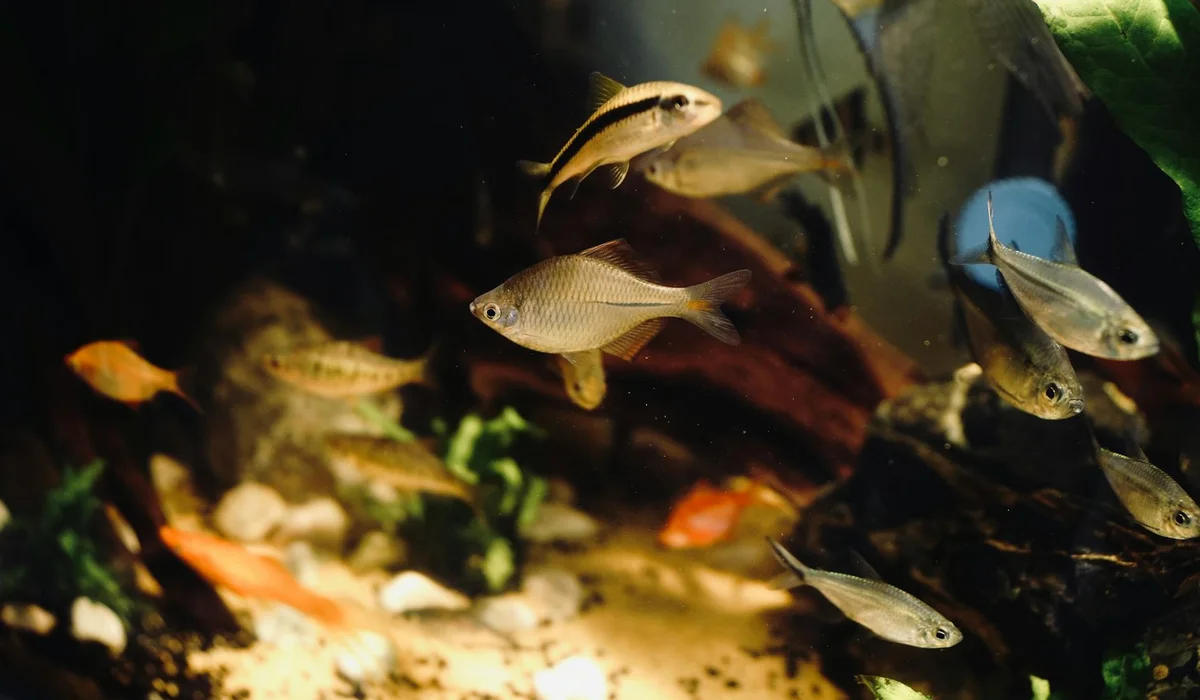
Think of light like a plant’s personality profile-some are laid-back, others are high-energy. Grouping your plants by their light needs is the single easiest way to prevent frustration and create a thriving, balanced tank.
Low Light Champions: The Easy-Going Crew
These plants are the backbone of many beginner and low-tech tanks. They grow slowly, which means less pruning and fewer nutrient demands. They won’t carpet or turn shocking red, but their reliable, graceful growth brings a deep, natural tranquility to your aquascape.
- Java Moss: A forgiving, carpeting moss for rocks and driftwood.
- Cryptocorynes (Crypts): Beautiful, broad-leafed plants that come in greens, reds, and browns.
- Vallisneria: Creates tall, flowing grassy backgrounds that sway in the current.
- Amazon Sword: A classic, hardy centerpiece plant with large, striking leaves.
Java Fern & Anubias: The Attached Wonders
These two are in a special league. You must never bury their thick, horizontal stems (called rhizomes) in the substrate, or they will slowly rot and die. Instead, use a dab of super glue gel or cotton thread to attach them to rocks or driftwood. Their roots will eventually latch on naturally. This makes them incredibly versatile for hardscaping.
Medium Light All-Stars: The Lush and Balanced Group
This is the sweet spot for many hobbyists wanting vibrant, full growth without extreme equipment. With medium light, you’ll see noticeably faster growth, better coloration, and can explore a much wider plant library. This is where injected CO2 starts to become very beneficial, but isn’t always an absolute requirement if you manage nutrients carefully.
- Hygrophila species: Fast-growing stem plants like Temple Plant that help combat algae.
- Ludwigia Repens: Develops gorgeous orange and red hues under good conditions.
- Java Fern ‘Windelov’: A fancy, ruffled variant of the classic low-light plant.
- Water Wisteria: A feathery, fast-growing plant that can be rooted or floated.
High Light Demanders: The Needy But Gorgeous Showpieces
These plants are the prima donnas of the aquarium world. To keep them healthy and colorful, high light must be paired with a full nutrient regimen and almost always requires pressurized CO2 injection. Without this balance, you’ll invite relentless algae outbreaks. The reward, however, is an aquascape with breathtaking density, vivid reds, and intricate detail.
- Red Ludwigia (L. arcuata): Demands high light and nutrients for its fiery red color.
- Rotala species (like ‘Hra’ or ‘Macrandra’): Delicate stem plants with stunning pink and red hues.
- Dwarf Baby Tears (Hemianthus callitrichoides ‘Cuba’): The famous but challenging foreground carpet.
Carpeting Plants: Creating that Green Lawn
A lush foreground carpet is a dream for many. Most true carpeting plants (not mosses) are high-light demanders because they need intense energy to grow horizontally and densely. They require frequent trimming to encourage lateral spread and prevent them from growing vertically. Patience is key-it can take months for a carpet to fully fill in.
Choosing and Setting Up Your Aquarium Lights
Now that you know your plants, let’s talk hardware. The right light, set up correctly, makes all the difference between a plant that merely survives and one that truly shines.
Step 1: Match Your Light to Your Plant Goals
First, be honest about what you’re growing. A full high-tech carpet tank needs a powerful LED or T5 fixture. A tank of Anubias and Java Fern does not. Look for lights that list PAR (Photosynthetically Active Radiation) values at different depths-this is the most accurate measure of usable light for your plants, not just lumens or watts. A light strong enough for high-light plants at the substrate level in a 20-inch tall tank is a very different beast from one just for low-light plants.
Step 2: Install and Dial In Your Photoperiod
Consistency is more important than marathon sessions. I always recommend using an inexpensive digital timer for your lights-it’s a non-negotiable hack for stability and algae prevention. Start with a photoperiod of 6-8 hours daily. If algae appears, reduce the time by an hour. If plants seem stunted, you can increase it slightly. Never exceed 10 hours. A siesta period (splitting the light cycle) is an old technique, but I’ve found a single, consistent block works just fine for most systems.
LED vs. T5 Fluorescent: A Modern Comparison
| Feature | LED Lighting | T5 Fluorescent |
|---|---|---|
| Energy Use & Heat | Runs very cool, highly energy-efficient. | Runs hotter, uses more electricity. |
| Lifespan | Long (50,000+ hours). Bulbs rarely need replacing. | Bulbs degrade and must be replaced yearly for consistent output. |
| Control & Spectrum | Often feature customizable intensity and sunrise/sunset timers. | Spectrum is fixed by the bulb type; requires separate timer for on/off. |
| Coverage | Can have focused “spot” effects; choose fixtures with good spread. | Provides extremely even, shadow-free light across the tank length. |
| Best For | Most modern setups, especially where custom color or dimming is desired. | Plant-only or very shallow tanks where even, intense coverage is key. |
For 90% of hobbyists today, a good full-spectrum LED is the best choice due to its efficiency, low heat, and long-term cost savings. The gentle hum of a T5 fixture has its charm, but the technology has largely been surpassed for general home aquarium use. Still, many hobbyists wonder: which light is best— LED vs fluorescent vs halide? The best option depends on tank depth, coral or plant needs, and budget.
The Light-Algae Balance: Keeping Your Waters Clear
Think of your aquarium light as the sun for your underwater garden; just like in nature, too much sunshine can lead to problems, while the right amount makes everything thrive. Getting this balance wrong is the single most common reason I see tanks overtaken by fuzzy green algae instead of lush, healthy plants. This is the core idea behind controlling algae in a planted aquarium. When you balance light with your plant needs, you curb algae while helping your plants thrive. Algae spores are always present, waiting for an opportunity, and excessive light is like rolling out the red carpet for them. Your goal is to starve the algae while feeding your plants, which hinges entirely on duration, intensity, and the specific needs of your planted landscape.
I learned this the hard way with my first high-tech tank, watching a beautiful carpet of dwarf hairgrass become shrouded in a film of green slime within a week. The key is to remember that algae is a simpler organism than your plants; it can capitalize on light and nutrients much faster when conditions are imbalanced. You’re not just growing plants; you’re managing an entire micro-ecosystem where light is the primary driver of energy.
Spotting the Signs of Too Much Light
Your tank will tell you when the lights are on too long or too bright—you just need to know what to look for. The first and most obvious sign is a rapid algae takeover, often starting as a dusty film on the glass or a green sheen on your substrate and decorations. But plants give you clues too. They might look stressed instead of vibrant. Cloudy or discolored water can have several causes, from nutrient imbalances to bacterial blooms. Knowing these water-color cues helps you pinpoint what to fix.
- Algae Types: Spot algae on glass (green dust algae), hair algae on plant leaves, or black beard algae on hardscape all point to excess light, often coupled with nutrient imbalances.
- Plant Stress: Look for leaves that are unusually pale, yellowing, or have brown, burnt tips. Some stem plants may grow excessively long gaps between leaves as they stretch unnaturally.
- Water Clarity: The water itself might take on a greenish tint (green water algae bloom), which is a definitive red flag that your photoperiod is far too long for the biological filtration to handle.
- Livestock Behavior: Even your fish can react. Species that prefer dimmer conditions, like many bottom dwellers, may become more reclusive and hide constantly if the light is overwhelming.
If you see these issues, don’t panic. Scrubbing the glass constantly is a losing battle; you must address the root cause by adjusting your light schedule and intensity. I’ve found that cutting the photoperiod by 2-3 hours is often the fastest way to see improvement.
Finding the Sweet Spot
Dialing in the perfect light level is a process of observation and subtle tweaks. Start low and slow-it’s always easier to add more light later than to recover from an algae invasion. For a typical planted tank, I begin with a 6-hour photoperiod and increase it only if the plants show signs of needing more, like slow growth or poor coloration.
- Match Light to Plant Types: Group your plants by need. Low-light plants like Java Fern or Anubias can thrive on 6-8 hours of moderate light. High-light carpeting plants may need 8-10 hours of more intense output.
- Use a Timer Religiously: Consistency is everything. A plug-in digital timer prevents human error and gives your tank a stable day-night cycle, which reduces stress for everyone.
- Consider Intensity Adjustments: If your light has adjustable brightness, use it. Many LED units allow you to ramp up and down. Start at 50-60% intensity and observe for two weeks before making any changes.
- Balance with Nutrients and CO2: Light, fertilizers, and carbon dioxide are a trio. Increasing light without providing enough nutrients or CO2 simply feeds algae. If you boost light, ensure your fertilization and CO2 injection (if used) are adequate to let plants outcompete pests.
- The White Paper Test: A simple hack: hold a piece of white paper against the front glass at the substrate level. If you can easily read text on it, the intensity is likely sufficient for most low-to-mid light plants.
Remember, every tank is unique. Your “sweet spot” is discovered through patient weekly check-ins, noting plant growth and any new algae spots, then making small, incremental adjustments. The reward is that moment when your water is crystal clear, your plants are pearling with oxygen, and your fish display their best colors under the perfect glow.
FAQs
What is aquarium plant lighting?
Aquarium plant lighting refers to the artificial light source designed to support photosynthesis in aquatic plants. For beginners, this is where a quick guide to PAR and spectrum helps you choose lighting that matches your plants’ needs. In other words, understanding PAR/PPFD and spectrum is a core part of a beginner’s guide to aquarium lighting. It involves providing the right spectrum, intensity, and duration to mimic natural conditions, ensuring plants grow healthily without promoting algae. Key factors include PAR/PPFD for usable light and color temperature (Kelvin) for optimal growth and visual appeal.
What should an aquarium plant lighting guide include?
A comprehensive lighting guide should explain how to match light levels to different plant types-low, medium, and high-light-based on their needs. It must cover technical terms like PAR and spectrum, offer setup tips for photoperiods and fixtures, and provide strategies to balance light with nutrients and CO2 to prevent algae.
How do I determine the correct light intensity for my plants?
Identify your plants’ light requirements by categorizing them as low, medium, or high-light species, as each group thrives under specific PPFD ranges. Consider your tank’s depth, as light diminishes underwater, and use a light with adjustable settings or known PAR values to achieve the right intensity at the substrate level. Different types of aquarium lights have different uses. LEDs are adjustable and energy-efficient, while high-output fluorescent fixtures provide stronger penetration for deeper or brighter setups.
What are the basic steps to properly light aquarium plants?
Start by selecting a full-spectrum LED or T5 fixture that suits your plant goals and tank dimensions. Set a consistent photoperiod of 6 to 10 hours daily using a timer, and adjust based on plant growth and algae presence. Always balance light with adequate fertilization and CO2 injection if needed, to support plant health over algae. This is part of a complete set-up guide for aquarium lighting. In the rest of this guide, you’ll learn how to install, position, and calibrate your lights for best plant growth.
Lighting Your Path to a Thriving Tank
Tailor your light intensity and duration to your specific plants, using their growth and color as your best guide. This simple, watchful approach prevents algae and ensures each plant gets the energy it needs to flourish.
Your commitment to proper lighting shows a deep care for the entire aquatic life in your charge. Every tank is a living lesson, so embrace the journey of learning and adjusting to keep your underwater world healthy and bright. Lighting needs differ between freshwater and saltwater setups. Freshwater tanks typically benefit from lighting that supports plant growth, while saltwater tanks—especially corals—often require spectrum-rich, higher-intensity lighting.
Further Reading & Sources
- Lights- Planted Aquarium LEDs – DustinsFishtanks
- r/PlantedTank on Reddit: Is premium lighting worth it?
- How to Choose Lights for Planted Aquarium. – Modern Aquarium
- Lighting Requirements for a Planted Aquarium – Buce Plant
- Planted Tank LED
Lia is an expert in aquarium and pet fish care. Having worked in the marine industry and having cared for multiple pet fish, she has acquired first hand expertise on aquarium care, maintenance and setup. She always brings her practical expertise and science to help solve any aquarium related queries.
Aquatic Plants