
Aquascaping Secrets: The 7 Core Principles for a Breathtaking Underwater Garden
Hello fellow aquascapers, I know that feeling of staring at your tank, wanting to create a stunning underwater landscape but not knowing where to begin.
You’re not just filling a tank with plants; you’re crafting a living work of art, and these core principles are your roadmap to a truly spectacular result.
This guide will walk you through the essential design rules that transform a simple setup into a natural masterpiece. You’ll learn all about:
- Mastering the Golden Ratio and Rule of Thirds for perfect composition.
- Choosing and contrasting plant textures, sizes, and colors.
- Creating an incredible illusion of depth and perspective in a shallow box.
- Strategically placing your focal point to draw the eye.
- The art of using negative space for a clean, powerful look.
- Achieving a sense of balance and scale that feels just right.
- My go-to list of essential tools that make the job easier.
I’ve been building and maintaining planted tanks for decades, learning these principles through trial, error, and the joy of watching countless aquascapes mature over time. If you’re ready to start, here’s a straightforward step-by-step guide to creating an aquascape planted aquarium. I’ll walk you through practical, easy-to-follow steps you can execute at home.
1. Start with the Rule of Thirds and the Golden Ratio
Think of your aquarium’s front glass as a picture frame. To create a scene that feels naturally beautiful to our eyes, we borrow a principle from photography and painting: the Rule of Thirds.
Imagine two equally spaced horizontal lines and two vertical lines drawn across your tank, dividing it into nine equal squares. The four points where these lines intersect are your composition’s power spots.
Placing your most eye-catching feature-a magnificent piece of driftwood, a unique stone, or a dense group of colorful plants-at or near one of these intersections instantly creates a compelling focal point.
Visualizing the Grid in Your Tank
- Your main hardscape element (like a dragon stone) should occupy roughly one-third of the tank’s length.
- The tallest plant in your scape should reach toward one of the upper intersections.
- Leave the remaining two-thirds of the space more open, using lower-growing plants to guide the viewer’s eye.
This approach feels dynamic and engaging. It mimics the asymmetry we find in nature, unlike a perfectly centered layout. A centered, symmetrical design can feel formal and static, which works well for a very minimalist “Iwagumi” style with a single, powerful rock formation. For most nature-inspired aquascapes, however, the off-center balance of the Rule of Thirds is your best friend.
The Golden Ratio is a more complex, spiraling pattern of proportion (roughly 1:1.618) found throughout nature. In practice, you can use it by placing your focal point about 62% of the way across the tank’s length, which often aligns beautifully with one of the Rule of Thirds intersections. Starting with the simpler Rule of Thirds grid will get you fantastic results right away.
2. Master the Artistic Elements: Form, Line, and Texture
A truly captivating aquascape plays with artistic elements the way a painter uses a palette. By thoughtfully combining Form, Line, and Texture, you add layers of depth that make your aquarium a living piece of art.
Defining the Core Elements
- Form: This is the overall shape and mass of your plants and hardscape. Is it round, tall and spiky, or low and carpeting?
- Line: This refers to the visual flow created by your hardscape. A piece of driftwood can create a graceful S-curve, while stacked stones can form a powerful, diagonal line that implies movement.
- Texture: This is the visual “feel” of a plant’s leaf surface or a stone’s roughness. Texture is created by contrasts-juxtaposing fine, feathery leaves with broad, solid ones.
Categorizing Your Aquascaping Materials
Plants by Form
- Tall & Spiky: Vallisneria, Swords
- Rounded & Bushy: Hydrocotyle tripartita, Pogostemon helferi
- Carpeting (Low): Dwarf Hairgrass, Monte Carlo
- Rosette (Star-shaped): Cryptocorynes, Aponogeton
Hardscape by Line
- Curving Lines: Spiderwood, Manzanita Driftwood
- Angular Lines: Seiryu Stone, Lava Rock
- Horizontal Lines: Slate, Ohko (Dragon Stone) when placed flat
Plants by Texture
- Fine Texture: Cabomba, Rotala ‘H’ra’, Christmas Moss
- Medium Texture: Bacopa, Ludwigia repens
- Coarse/Bold Texture: Anubias, Amazon Frogbit, Java Fern
The real magic happens when you deliberately combine contrasting forms and textures next to each other. Place the fine, wispy leaves of Cabomba behind the broad, dark green leaves of an Anubias. The contrast makes each plant’s characteristics pop.
This combination creates a visual rhythm that guides the viewer’s gaze on a journey through your aquascape. Your hardscape establishes the primary lines and structure, while your plants fill in the space with a rich tapestry of forms and textures. I often start by securing my hardscape to create a strong “skeleton” of lines, then I “paint” in the details with my plant choices, focusing on how their shapes and surfaces will interact.
3. Create Illusions of Depth with Foreground, Midground, and Background
Think of your aquarium like a stage for a play. You want to draw the viewer’s eye into the scene, making a 12-inch deep tank feel like a vast, underwater landscape. This is where the magic of layering comes into play.
Mastering the Substrate Slope
Depth starts from the ground up. A flat, level bed of gravel looks unnatural. In nature, the land rises and falls. By building a slope, you add instant dimension.
- Plan Your Layout: Decide where you want the highest point of your slope. The back of the tank is traditional, but a slope from one side to the other can also be dynamic.
- Build a Foundation: Use a cheaper, inert substrate or even lava rock to build up the base of your slope. This saves money and creates a stable structure.
- Add Your Main Substrate: Pour your nutrient-rich aquasoil or decorative gravel over the foundation. Aim for a gentle slope, going from about 1-2 inches in the front to 4-6 inches in the back.
- Secure the Slope: To prevent the slope from flattening over time, you can use supporting stones or plastic dividers hidden beneath the substrate.
Planting for Perspective
Choosing the right plants for each layer is what sells the illusion. Your goal is to make objects appear farther away by using smaller textures and finer leaves.
Foreground Plants (The Carpet)
These are your tiny stars, placed right up against the glass.
- Dwarf Hairgrass (Eleocharis parvula): Creates a beautiful, lawn-like carpet that sways gently with the flow.
- Dwarf Baby Tears (Hemianthus callitrichoides ‘Cuba’): A demanding but stunning choice that forms a dense, bright green mat.
- Monte Carlo (Micranthemum tweediei): An easier alternative to Dwarf Baby Tears with slightly larger, round leaves.
The secret to a lush foreground is patience, high light, and a steady supply of CO2 to encourage lateral growth.
Midground Plants (The Focal Points)
This layer bridges the gap and often holds your most eye-catching specimens.
- Anubias Nana Petite: A slow-growing, hardy plant that can be attached to rocks or driftwood.
- Cryptocoryne Wendtii: Available in many colors, this plant adds beautiful, flowing texture and is very adaptable.
- Bucephalandra: Offers incredible variety in leaf shape and color, perfect for creating detail on hardscape.
Background Plants (The Backdrop)
These tall, fast-growing plants hide equipment and complete the scene.
- Rotala Rotundifolia: A stem plant that can develop beautiful pink and red hues under strong light.
- Vallisneria: Sends out long, ribbon-like leaves that create a stunning, flowing forest effect.
- Amazon Sword (Echinodorus): A classic, robust plant with large, broad leaves that provides great shelter for fish.
The Role of Hardscape
Your rocks and driftwood are not just decorations; they are tools for depth. Place larger, more detailed pieces in the midground. As you move toward the back, use smaller, less detailed versions of the same rock or wood to mimic how objects appear smaller with distance. Tilt the grain of your driftwood so it points toward a single focal point, guiding the eye inward. The result is a tank that feels deep, cohesive, and alive.
4. Choose Your Layout Style: Nature Aquarium, Iwagumi, Dutch, and Biotope
Your aquascape is an expression of your personal taste. While the principles of design are universal, they are applied differently across distinct artistic styles. Picking a style gives you a clear roadmap for your creative journey.
| Style | Philosophy | Key Elements | Difficulty |
|---|---|---|---|
| Nature Aquarium | Recreate an idealized terrestrial landscape (mountains, forests, valleys) underwater. | Asymmetry, the Golden Ratio, strong focal points, lush plant growth. | Intermediate |
| Iwagumi | Japanese minimalism focusing on the serene arrangement of stones. | Odd number of stones (usually 3), a single carpeting plant, extreme simplicity. | Advanced |
| Dutch | A “planted tank” first, emphasizing color, texture, and arranged plant groupings. | No hardscape, terraced planting (street rows), strict color contrast. | Advanced |
| Biotope | Scientific replication of a specific geographic habitat for fish and plants. | Authentic substrate, water parameters, hardscape, and species from one location. | Beginner to Advanced |
A Closer Look at Each Style
Nature Aquarium
Pioneered by Takashi Amano, this is the most popular style today. It feels wild and natural but is carefully composed. You’ll often use Seiryu Stone or Spider Wood to create the “bones” of the landscape, paired with a diverse mix of stem plants, mosses, and carpets. It’s a forgiving style for beginners because its “wild” nature can hide minor imperfections.
Iwagumi
Iwagumi is deceptively simple. The placement of each stone is critical, following strict rules to create balance and harmony. The iconic plant is almost always a single species of carpet, like Dwarf Hairgrass or Monte Carlo. This style is challenging because any algae or imbalance is immediately visible. It requires expert-level tank maintenance.
Dutch Style
This style is all about the plants, treating them like flowers in a garden. Look for vibrant, contrasting colors with plants like Rotala Macrandra (red) positioned next to Limnophila Aromatica (green/purple). It demands a deep understanding of plant nutrition, pruning, and high-light/CO2 systems. The discipline needed makes it an advanced endeavor.
Biotope Aquarium
This style is for the hobbyist who loves ecology and authenticity. You are recreating a specific piece of the world, like a blackwater stream in the Amazon or a rocky lake in Malawi. The focus is on accuracy, using only leaf litter, driftwood, and fish species found in that exact environment. The difficulty depends on the biotope you choose, making it accessible to all levels.
For a beginner, a Nature Aquarium or a simple Biotope offers the most creative freedom and room for learning. An advanced hobbyist might be drawn to the disciplined perfection of a Dutch layout or the minimalist challenge of an Iwagumi. If you’re weighing Dutch, Nature, and Iwagumi, which style is right for you? We’ll compare their traits to help you decide.
Select and Position Your Hardscape: Rocks and Driftwood
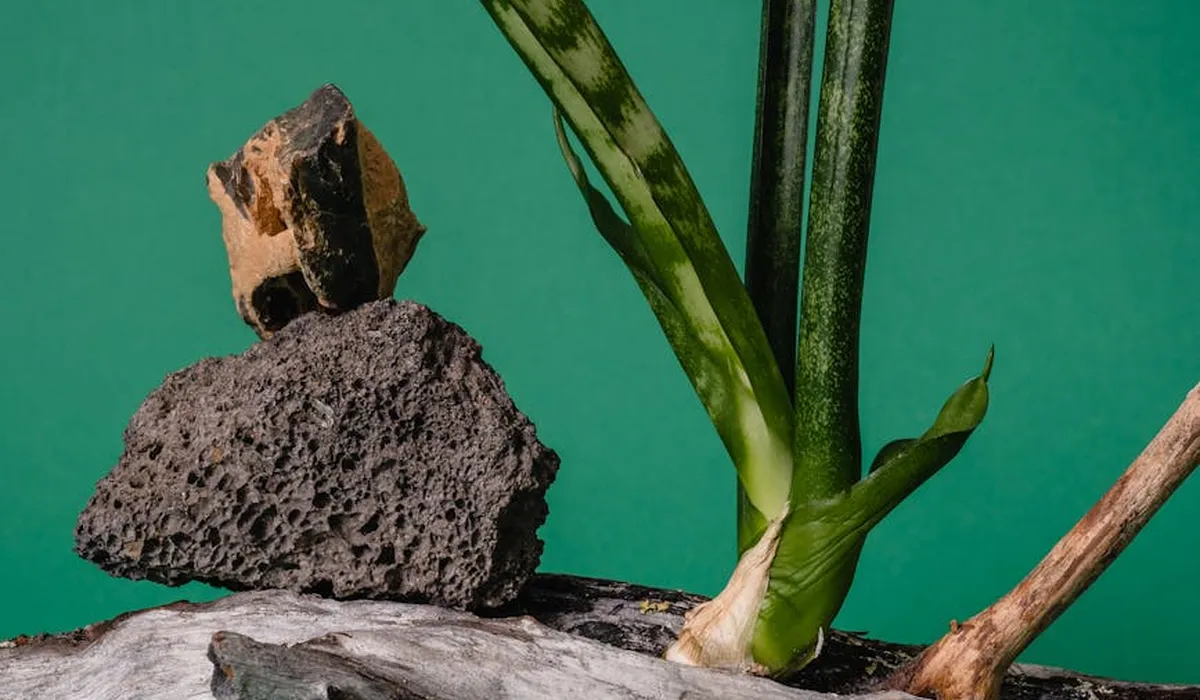
Your hardscape forms the skeleton of your aquascape. Getting this foundation right makes everything else fall into place beautifully. Think of your rocks and wood as the permanent sculptures around which your living garden will grow.
Guidance for Rock Selection:
Not all rocks are created equal. Some will quietly alter your water chemistry, so choosing the right type is your first critical decision.
- Common aquascaping rocks include Seiryu Stone, which has dramatic, sharp gray and white veins, and Dragon Stone, known for its rusty color and deep, textured holes. Lava rock is another popular, lightweight option.
- Seiryu stone can raise your water’s pH and general hardness (GH), making it better for fish that prefer harder, more alkaline water. Dragon Stone and lava rock are mostly inert, meaning they won’t significantly change your water parameters, which is ideal for soft water species.
Arranging them takes a practiced eye. I always try to use the “rule of thirds,” placing my most striking rock just off-center for a more dynamic look. To create a truly natural appearance, angle your rocks so their natural strata lines all run in the same direction, as they would in a real landscape. Secure heavier rocks directly on the tank bottom, not on top of the substrate, to prevent shifting and potential glass cracks.
Guidance for Driftwood Selection:
Driftwood adds warmth, structure, and a sense of age to your aquascape. To prepare clean driftwood for your aquarium, rinse and scrub away dirt and loose bits, then soak to remove tannins. This helps ensure it sinks and won’t stain the water. My favorite piece of Spiderwood took two weeks of soaking before it stayed submerged!
- Spiderwood is prized for its intricate, branching limbs, while Mopani wood is denser, often two-toned, and sinks much faster. Malaysian driftwood is another heavy, dark option.
- Almost all wood will leach tannins, turning your water a tea-like color. If you want crystal-clear water, you must pre-soak it. I weigh mine down in a bucket, changing the water daily until it stops staining.
Use a long, flowing piece of wood to create a powerful line that guides the viewer’s eye across the tank. Driftwood’s textured surface is the perfect anchor for epiphyte plants like Anubias and Java Fern; just use a dab of super glue gel or some cotton thread to attach them. This creates an instant “aged” look, as if the plants have been growing there for years.
Build a Living Palette with Plant Selection and Color Harmony
This is where your aquascape truly comes to life. Think of yourself as a painter, but your brushes are plants and your canvas is the water.
Guidance:
- Always group plants by their growth speed and care needs. For a low-tech tank (moderate light, no CO2 injection), stick with slow-growing, hardy plants like Java Fern, Anubias, and most Cryptocorynes. For a high-tech setup, you can explore fast-growing stems like Rotala and demanding carpets like Dwarf Hairgrass.
- A sea of green is lovely, but a pop of red or purple creates incredible depth and focus. I use plants like Alternanthera reineckii ‘Mini’ or Ludwigia repens as my accent colors. Place these colorful plants in small groups near your main focal point to draw attention without overwhelming the scene.
One of the biggest mistakes I see beginners make is planting too sparsely. Algae is an opportunist that thrives in tanks with low plant competition. By planting heavily from day one, you give your desired plants a major head start in the battle for nutrients, starving out nuisance algae before it can get a foothold. A densely planted tank is not just beautiful; it’s a stable, healthy ecosystem. That’s one of the eight common planted-tank pitfalls that can turn a healthy tank into an algae farm. Avoiding these pitfalls helps prevent algae blooms.
7. Support Your Vision with Substrate, Lighting, and CO2
Think of your substrate, light, and CO2 as the life support system for your artistic vision. They work together to fuel plant growth, which in turn stabilizes your entire miniature world. Getting this trio right is what transforms a tank from a pretty picture into a thriving, living ecosystem.
Guidance for Substrate:
The ground beneath your hardscape is far from an afterthought. Your choice dictates what you can grow and how much work you’ll have later. Inert substrates like sand or gravel are stable and budget-friendly, but they provide zero nutrition, forcing you to feed your plants through root tabs and liquid fertilizers for their entire life. Nutrient-rich planted tank soils, like those from popular brands, are powerhouses. They soften water, lower pH, and pack a buffet of nutrients that can feed root-heavy plants for a year or more before depleting.
- Inert (Sand/Gravel): Durable, affordable, sustainable. Best for hardscape-focused tanks, certain fish like cories, or when using easy plants. Requires supplemental root feeding.
- Active (Planted Soil): Fuels lush growth, buffers water chemistry. Ideal for demanding carpets and red plants. It will break down over several years and typically lowers pH.
To create those beautiful sloping landscapes, you need enough material. Here’s my go-to method: measure your tank length and width in inches. Decide your desired average depth (e.g., 2 inches at the front, 4 inches at the back = 3 inch average). Multiply Length x Width x Average Depth (in inches). Divide that number by 20. This gives you a rough estimate in pounds of substrate needed. Always buy an extra 10-15% for good measure.
Guidance for Lighting:
Light is your tank’s sun, and just like the real sun, too much or too little causes problems. PAR (Photosynthetically Active Radiation) is the measure of useful light that hits your plants. Low-light plants (Anubias, Java Fern) thrive under lower PAR, while carpeting plants and red species demand high PAR, but that intensity also invites algae if other factors are out of balance. For beginners, understanding the PAR spectrum is a quick guide to choosing the right light. Aim for a unit that delivers the blue and red wavelengths plants use for photosynthesis, not just white brightness. Start with a photoperiod of 6-8 hours. Use a simple plug-in timer from day one; consistency is key for your plants and helps prevent algae blooms. The gentle morning glow and evening fade of a timed light also feels more natural than flipping a switch.
Guidance for CO2 and Nutrients:
In a sealed tank, carbon dioxide (CO2) is often the most limited resource for plants. Adding it is like giving them a superpower, accelerating growth and improving color. A DIY yeast system (sugar, yeast, water in a bottle) is a fun, cheap way to experiment, but it’s inconsistent and hard to regulate. For any serious planted tank, a pressurized CO2 system with a regulator, solenoid (hooked to your light timer!), and diffuser is the reliable gold standard, letting you dial in the exact amount. If you’re ready to set up a CO2 system for your planted aquarium, map out the components and install them to achieve stable, controllable CO2 delivery.
Plant health boils down to the fertilizer triangle: Macros (NPK – Nitrogen, Phosphorus, Potassium), Micros (trace elements like Iron), and Carbon (CO2). If one is missing, growth stunts. Yellowing older leaves often signals a Nitrogen deficit. Pale new growth with green veins points to an Iron (Micro) shortage. Balancing this triangle is the secret to avoiding algae and achieving that lush, vibrant growth.
8. Add Life: Choosing Fish and Invertebrates for Your Scape
This is the moment where your underwater garden truly comes alive. The right livestock will complement your design, not dismantle it. You want guests who appreciate the scenery, not bulldozers that rearrange it.
Guidance:
Your plant choices should guide your fish choices. Delicate stems and fine carpets need peaceful, small residents.
- Peaceful Plant-Friendly Fish: Ember Tetras, Chili Rasboras, Endler’s Livebearers, and Hatchetfish are brilliant, active choices for the upper water column. For the middle and bottom, consider a school of Otocinclus (the ultimate gentle algae eater), Pygmy Corydoras, or a peaceful centerpiece like a Honey Gourami.
- Bioload balance is everything in a planted tank. The old “inch per gallon” rule is useless here. A heavily planted tank can support more life because the plants are actively consuming waste, but start incredibly small-a single school of 6-8 small fish in a 10-gallon is a perfect beginning. Overstocking is the fastest way to cloud your water, spike parameters, and watch your careful balance unravel.
- Don’t forget the clean-up crew! Neocaridina shrimp (like Cherry Shrimp) are delightful algae grazers that come in every color. Nerite snails are legendary for their ability to clean glass and hardscape of algae without ever reproducing in freshwater. They’re the unsung maintenance crew that keeps the shimmer in your scenery.
9. The Ongoing Art: Maintenance for a Thriving Aquascape
Think of your aquascape not as a finished painting hung on the wall, but as a living, breathing garden. Its beauty is sustained not by a single act of creation, but by a consistent, gentle rhythm of care that keeps the ecosystem in balance. This routine is where you connect with your tank, noticing subtle changes and preventing small issues from becoming big headaches.
Your Weekly Wellness Check
Set aside 30 minutes each week for this simple checklist. Consistency here is far more effective than sporadic, heavy interventions.
- Water Testing: Don’t guess-test. I check my parameters every Saturday morning. Focus on pH, KH (carbonate hardness), and nitrates. This tells you the story of your water’s stability and when a water change is truly needed.
- Fertilizer Dosing: If you have demanding plants, a regular, light dosing schedule beats an occasional heavy pour. I dose a comprehensive liquid fertilizer after my weekly water change to replenish what I’ve removed. This mimics a gentle, consistent rainfall of nutrients that plants can rely on.
- Pruning Techniques: Use sharp, dedicated aquascaping scissors. For stem plants, trim much lower than you think, just above a leaf node, to encourage bushy, dense growth. Trim carpeting plants like a lawn to prevent lower sections from dying and detaching.
- Glass Cleaning: A simple magnetic algae scraper or a razor blade (for glass only) makes quick work of the viewing panes. Doing this weekly prevents algae from gaining a foothold and keeps that crystal-clear view you worked so hard for.
The Monthly Deep-Dive Routine
Once a month, go a bit further. This is about supporting the machinery and foundations of your scape.
- Filter Cleaning: Never use tap water! Rinse filter sponges and media in a bucket of water you’ve removed from the tank during your water change. You want to wash away clogging debris, not the vital beneficial bacteria that call the filter home.
- Substrate Vacuuming: Carefully hover the gravel vacuum over the surface of the substrate, especially in open areas. Avoid digging deeply into the substrate around plant roots to prevent disturbing their delicate structures and releasing trapped gases.
- Hardscape Algae Scrubbing: For rocks and driftwood, a stiff-bristled brush (used only for the aquarium) works wonders. Remove hardscape pieces during a water change for easy scrubbing, or brush them in place if they’re too large to move.
Troubleshooting Common Algae Invaders
Algae is a sign, not a sentence. Each type points to a specific imbalance in your aquarium’s triangle of light, nutrients, and CO2.
- Spot Algae (Green spots on glass & leaves): This classic nuisance often indicates phosphate imbalance or too much light for the plant mass present. Try reducing your photoperiod by an hour and ensure you’re not overfeeding.
- Hair Algae (Thread-like green strands): Frequently a sign of fluctuating CO2 levels or an imbalance between nitrogen and phosphorus. Check your CO2 system for consistency and review your fertilization routine-a stable environment is the ultimate hair algae deterrent.
- Black Brush Algae (BBA – Dark tufts on edges): The stubborn scourge. It strongly suggests poor, inconsistent CO2 distribution or low CO2 levels relative to your light intensity. Improve water flow around affected areas, ensure your CO2 is on an hour before lights on, and manually remove what you can.
FAQs
How do you select substrate and hardscape for an aquascape?
Your substrate choice depends on your plant goals. Inert sand or gravel is budget-friendly but requires root tabs, while active aquasoils provide nutrients and buffer water for demanding plants. Select hardscape like rocks and driftwood not just for looks, but for their impact on water chemistry and the foundational lines they create for your design.
What considerations are there for lighting in aquascaping?
Lighting must be matched to your plant selection and controlled to prevent algae. Low-light plants like Anubias need less intensity, while carpets and red plants require high PAR. Always use a timer for a consistent photoperiod of 6-8 hours to provide stability for both plants and livestock.
How does CO2 supplementation affect plant growth and color?
Adding pressurized CO2 is often the key to vibrant growth and intense coloration, especially for red plants. It provides the carbon necessary for photosynthesis, allowing plants to utilize nutrients and light more efficiently. Consistent CO2 levels lead to denser growth and can help suppress algae by promoting robust plant health. CO2 injection in planted tanks isn’t always necessary, but when used, it significantly enhances plant growth.
What are the best practices for plant selection in an aquascape?
Select plants based on your tank’s conditions (low-tech vs. high-tech) and your design style. For a low-tech, no-CO2 aquarium, choose hardy, low-demand species that thrive without supplemental CO2. The best plants for such setups include Anubias, Java Fern, and mosses, which tolerate dim light and nutrient-poor conditions well. Group plants with similar care needs together and use contrasting textures and colors to create depth. For a stable start, plant densely from the beginning to outcompete algae and establish a healthy ecosystem quickly.
Crafting Your Underwater Canvas
Great aquascaping blends artistic vision with a deep respect for the tank’s living inhabitants. Start by sketching your layout, choosing plants and rocks that create depth while leaving ample room for your fish to explore and hide. For beginners, these are among the best low-tech aquascaping techniques: simple layouts and hardy plants that thrive with minimal gear. Keep it simple and observe how nature fills in the rest.
Owning an aquarium is a promise to provide a stable, healthy home for your pets. Keep learning about water chemistry and fish behavior, and you’ll find that every challenge makes you a more attentive and successful aquarist.
Further Reading & Sources
- Getting Started with Aquascaping – Aquascaping Love
- Aquascaping 101: An Aquascaping Technique Guide – Sevenports Nano Aquariums
- Aquascaping Principles, by Birgit Wolfgang | Aquatic Plant Forum
- Aquascaping with the golden ratio – | Aquasabi | Aquasabi – Aquascaping Shop
- A guide to aquascaping the planted aquarium
Lia is an expert in aquarium and pet fish care. Having worked in the marine industry and having cared for multiple pet fish, she has acquired first hand expertise on aquarium care, maintenance and setup. She always brings her practical expertise and science to help solve any aquarium related queries.
Aquascaping