
How Often Should You Feed Your Aquarium Fish? (A Complete Guide)
Published on: December 19, 2025 | Last Updated: December 19, 2025
Written By: Lia Annick
Hello fellow aquarists! That nagging doubt about whether you’re giving your fish too much or too little food is something every tank owner faces. Nailing your feeding schedule is the single easiest way to improve water clarity and fish health overnight.
This complete guide breaks down the science and the routine, covering:
- The core factors that dictate feeding frequency
- Species-specific schedules from bettas to goldfish
- How water temperature directly impacts metabolism
- Visual cues for overfeeding and underfeeding
- Integrating feeding with your weekly tank care
My advice is rooted in years of hands-on experience running complex planted systems and successfully breeding sensitive fish species.
The Heartbeat of Your Tank: Why Feeding Frequency Matters
Think of your feeding schedule as the steady pulse that keeps your aquarium alive and thriving. How often you feed directly influences your fish’s metabolism, which in turn shapes their growth, coloration, and longevity over years. Just like us, fish need consistent, appropriate meals to fuel their daily activities and maintain a robust immune system.
Get this rhythm wrong, and two major problems can creep in. Overfeeding is the silent killer in many tanks, as uneaten food decays and spikes ammonia levels, stressing your fish and clouding your water. On the flip side, underfeeding leads to listless fish, stunted growth, and a weakened defense against disease. Finding the sweet spot isn’t about perfection; it’s a skill you build by watching your tank’s unique life.
Decoding the Dinner Bell: Key Factors That Change Feeding Schedules
There’s no single rule for every aquarium. Your feeding frequency should dance to the tune of several key factors. Observing your fish’s behavior after meals—like their activity level and belly fullness—will always trump a rigid timetable from a book. Pay close attention to individuals; my betta Captain Fin gets feisty at feeding time, while Shadow the corydoras is a shy eater I have to watch for. These signs help you assess whether the aquarium is healthy or unhealthy. Look for steady activity, normal appetite, and clear water as your quick health checks. For more information, check out the best anchor text: aquarium health signs.
Here are the main elements that shift how often you should offer food:
- Fish Species: A carnivore like a betta has a different digestive pace than a herbivorous goldfish constantly foraging.
- Age: Baby fish (fry) need several tiny meals daily, while adults do well with one or two.
- Water Temperature: Warmer water speeds up metabolism, meaning fish in heated tropical tanks often need food more frequently than those in cooler water.
- Tank Size and Stocking Level: A heavily stocked tank pollutes faster, so you might feed smaller amounts more cautiously than in a sparsely populated one.
Your Aquarium Fish Feeding Chart: A Species-by-Species Guide
Use this chart as a starting point, but always adjust based on your own observations. The best schedule is one that leaves no leftovers after a minute or two and keeps your fish actively engaged without bulging bellies.
| Fish Type | Feeding Frequency | Food Type | Personal Notes |
|---|---|---|---|
| Betta Fish (e.g., Captain Fin) | Once or twice daily | High-protein pellets or frozen foods like brine shrimp | I fast my betta one day a week to aid digestion. Their stomach is roughly the size of their eye, so portion control is critical. |
| Goldfish, including Orandas (e.g., Goldie) | 2-3 small meals daily | Plant-based sinking pellets, gel food, and blanched veggies | They are messy eaters! Sinking food helps prevent swim bladder issues and reduces surface gulping. |
| Small Tropical Schoolers (Tetras, Rasboras) | Once or twice daily | Micro pellets or fine flakes | Feed only what they can consume in 30 seconds. Their small size means overfeeding fouls the water incredibly fast. |
| Cichlids (African, South American) | Once daily, or every other day for adults | Cichlid-specific pellets, spirulina flakes for herbivores | Many cichlids are prone to bloating, so I prefer a consistent once-a-day schedule with a fasting day weekly. |
| Bottom Feeders (e.g., Corydoras like Shadow) | Every other day or with main tank feedings | Sinking algae wafers, bottom feeder pellets | They forage at night. Drop a wafer after lights out to ensure they get their share without competition. |
The Golden Rule of Portion Size: How Much is Just Right?

Figuring out the perfect pinch of food is easier than you think. Forget complex measurements—your fish are your best guide. For fry, feeding is even more precise. This complete guide covers first foods and how to introduce them safely.
The “Eye Method”: Your 30-Second Guide
Watch your fish during one focused feeding. Give a small pinch of food and watch the clock. The ideal portion is whatever your entire fish crew can completely eat within 30 to 60 seconds. For slower eaters like Shadow the Corydoras, aim for the 60-second mark to ensure those bottom dwellers get their share.
You’ll see Captain Fin, my Betta, snap up flakes at the surface with gusto, while Goldie the Goldfish happily grubs along the gravel. If food is still drifting down after a minute, you offered too much.
The “No Leftovers” Principle for Pristine Water
Uneaten food is public enemy number one in your tank. It decays, releasing ammonia and fouling the very water your fish breathe. Think of overfeeding like a gas station spill in a small pond; it creates a toxic mess that your filter can’t instantly clean. A “no leftovers” policy is the single easiest habit to protect your aquatic ecosystem and save you from constant water changes.
I learned this the hard way early on. A little extra food seemed generous, but it led to cloudy water and an unexpected algae bloom. Now, I’d rather slightly underfeed one meal than risk polluting their home.
Practical Tips for Perfect Portions
Consistency is key. Guesswork leads to problems, so create a simple system.
- Use a dedicated tool. A tiny spoon, a condiment cup, or even a bottle cap reserved just for fish food removes all doubt.
- Employ a feeding ring for surface foods. This simple floating ring keeps flakes and pellets from scattering across the entire tank, making it easy to see and remove any uneaten bits.
- Soak dry foods for bottom feeders. For wafer or pellet foods meant for catfish, I briefly soak them in a spoonful of tank water before dropping them in. This makes them sink faster right to the spot where Shadow is waiting, preventing them from softening and dissolving mid-water where others can’t reach them.
Your goal is to see satisfied fish, not a single speck of wasted food drifting in the current after mealtime is done. This mindful approach keeps your tank clean, your fish healthy, and your maintenance routine far simpler.
Crafting the Perfect Routine: Schedules, Multiple Meals, and Fasting
Your fish thrive on predictability. Setting a consistent daily feeding time, much like you have your own meal times, reduces stress and creates a healthy rhythm in the tank. I feed my crew at the same hour every morning; Captain Fin is already pacing the front glass, and Goldie is scavenging in anticipation.
The simple act of feeding at a consistent time helps you monitor your fish’s health, as a sudden lack of interest is your earliest warning sign that something might be off.
The Power of Multiple Small Meals
While one or two feedings a day works for many adult fish, some situations demand a more frequent approach. This mimics how many creatures eat in the wild—tiny amounts throughout the day instead of one large feast. This is where the choice between automatic fish feeders and manual feeding comes into play. Weighing the pros and cons and following best practices can help prevent overfeeding and maintain water quality.
Consider multiple small feedings for:
- Fry and Juvenile Fish: Their tiny bodies have fast metabolisms and need near-constant fuel for proper growth. Four to six microscopic feedings per day is not uncommon.
- Dedicated Grazers: Fish like livebearers (guppies, mollies) and some catfish are built to pick at food constantly. Two to three smaller meals better suit their digestive design.
- High-Energy Swimmers: Active species like danios or rainbowfish burn calories quickly and do well with their daily ration split into a morning and evening offering.
For my community tank, I follow a two-meal schedule: a small pinch of flakes in the morning and a sinking wafer or frozen brine shrimp for Shadow and the bottom crew at dusk. Splitting the food this way ensures every fish, from the top to the substrate, gets their fair share without polluting the water with a single large offering.
The Non-Negotiable Fasting Day
This is the most overlooked tool in a fish keeper’s kit. I strongly recommend incorporating one full fasting day per week, where you offer no food at all.
A weekly fast gives your fish’s digestive systems a complete rest, allows their gut to fully clear, and dramatically reduces the organic waste load on your filter and substrate. In nature, fish don’t find a perfect pellet banquet every single day.
Think of it as a reset button. For fish prone to bloating, like fancy goldfish (Goldie gets this!), a 24-hour fast can prevent serious swim bladder issues. Don’t worry-they will not starve. A healthy fish has ample reserves. You’ll often see them foraging on microscopic algae and biofilm in the tank, which is excellent natural behavior.
Always skip feeding if you will be away for a weekend; a healthy aquarium can easily go 48-72 hours without food, but leftover rotting food from an automatic feeder malfunction can crash your tank in hours.
Reading the Signs: Is Your Fish Overfed or Hungry?
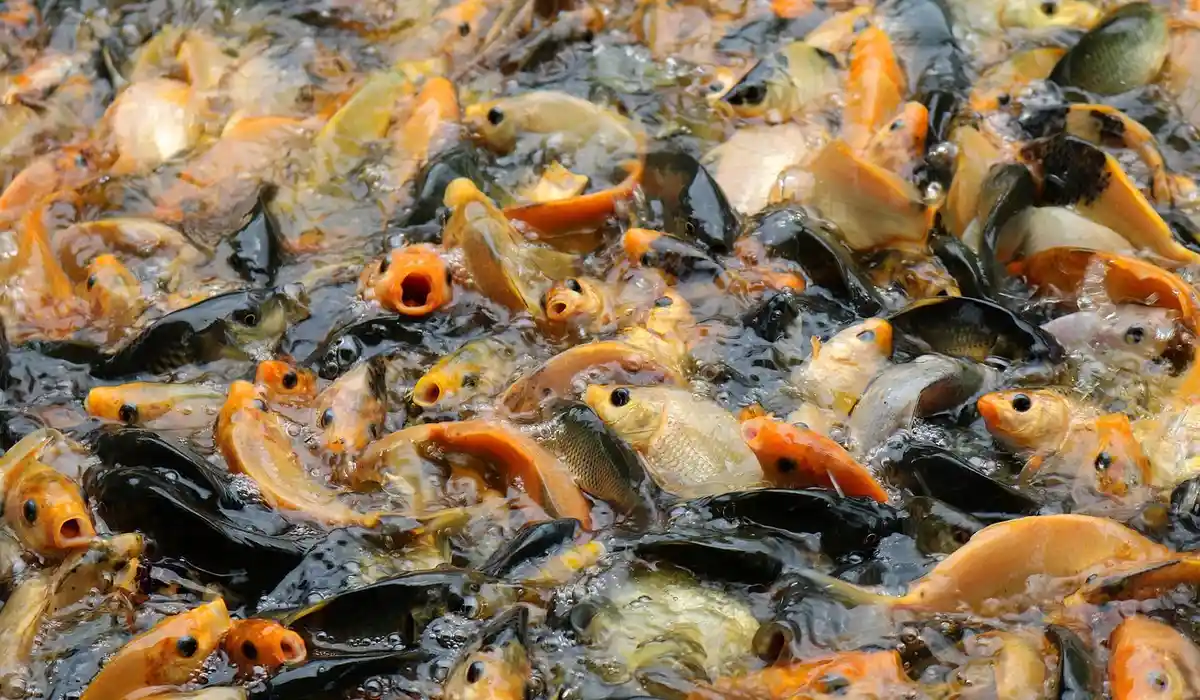
Your aquarium won’t send you a text message, but it communicates constantly through clarity and behavior. Mastering this silent language prevents a cascade of problems, from sick fish to green water nightmares.
Symptoms of Overfeeding
I learned this the hard way with Goldie; her enthusiastic begging convinced me to drop in “just one more pinch.” Overfeeding often starts with good intentions but leads to a polluted, unstable home.
- Physical Signs in the Tank: Cloudy, milky water from bacterial blooms, fuzzy fungus on uneaten food, and sudden green algae coating the glass and decorations.
- Physical Signs in Your Fish: A persistently rounded, bloated belly, and waste trailing from the fish more frequently.
- Behavioral Changes: General lethargy, like Shadow refusing to explore, or a loss of interest in food when it’s offered.
Symptoms of Underfeeding
Seeing Captain Fin’s vibrant colors fade was my wake-up call to not swing too far the other way. Chronic hunger stresses fish, weakening their immune systems and disrupting the tank’s social peace.
- Physical Signs in Your Fish: A sunken or pinched abdomen, visible along the belly line, and a lack of healthy body mass.
- Behavioral Changes: Increased skittishness, constant sifting through substrate for scraps, and frantic, aggressive competition the moment you approach for feeding time.
The Silent Partner in Every Meal: Feeding and Water Quality
That crystal-clear water in your tank isn’t just for show-it’s a direct report card on your feeding habits. Every uneaten morsel becomes a pollutant, decaying and releasing ammonia into your fish’s home. I once overfed my community tank, and the next day, the water had a dull film and Captain Fin’s vibrant colors seemed to dim.
Let’s break down the invisible process. Excess food and fish waste decompose, producing ammonia, which is poisonous. Helpful bacteria in your filter then convert ammonia to nitrite, still toxic. A second group of bacteria change nitrite into nitrate, which is safer but must be removed with water changes. Overfeeding overwhelms this natural cleanup crew, spiking all three levels and turning your aquarium into a stressful environment. It’s like stuffing a small trash can until it overflows. To improve water quality and keep your aquarium healthy for your fish, limit feeding and perform regular water changes. These simple steps help maintain the balance of beneficial bacteria and prevent spikes.
Portion Control Clears the Water
Feeding the right amount is the simplest hack for a healthier tank. When you offer only what your fish eat in two minutes, you slash the waste that taxes your filter. This reduced load lets your filtration system hum along smoothly, maintaining water clarity and stability with less effort. After I measured Goldie’s pellets instead of sprinkling them, her water stayed sparkling for weeks longer between cleanings.
Target feeding species like bottom dwellers is crucial. For Shadow, my Corydoras, I place sinking wafers right near his hiding spot. Precise portioning cuts down on dissolved organics, which directly reduces algae growth and keeps the water phenomenally clear. You’ll notice the difference in how light shimmers through the tank.
Make Testing a Routine Habit
Your eyes can deceive you, but a water test kit tells the truth. Regular testing is non-negotiable, especially when you tweak how much you feed. I use a liquid test kit every Sunday to check ammonia, nitrite, and nitrate—it’s my weekly health check for the aquatic ecosystem. After any feeding adjustment, test again within 72 hours to see the real impact. What do those ammonia readings actually mean for your tank? Zero ammonia is the goal, and any detectable amount signals you should take action.
Follow these steps to stay ahead:
- Test core parameters at the same time each week for consistency.
- If nitrate climbs above 20 ppm, perform a partial water change and scrutinize your feeding portions.
- Always test after introducing new food or changing feeding frequency.
This proactive habit transforms guesswork into confidence, allowing you to fine-tune meals for perfect water quality. It’s the best way to ensure your feeding routine builds a thriving habitat, not a toxic one.
Your Step-by-Step Feeding Ritual for a Healthy Tank
Having a consistent routine transforms feeding from a chore into a rewarding part of your day and is your best tool for monitoring fish health. A proper ritual ensures every fish gets its share and prevents food from fouling your pristine water.
1. Prepare the Measured Portion
Before you even approach the tank, measure out the exact amount of food you plan to give. Use a dedicated small cup or the palm of your hand. This single habit stops the common mistake of over-pouring from the container, which is the root cause of most overfeeding disasters. For my crew, that means a few betta pellets for Captain Fin and a sinking wafer I’ll place specifically for Shadow.
2. Observe Fish Behavior as You Approach
Take a slow moment to look at your tank. Are all fish active and present? Is Goldie already scavenging at the front glass? Is Shadow out from his cave? Their eagerness (or lack of it) when you approach is a vital daily health check; a fish that ignores feeding time is often a fish in trouble. This observation takes seconds but gives you immense insight.
3. Disperse Food Appropriately
Feed your top and mid-water swimmers first. Then, ensure food reaches the bottom dwellers. I drop wafers directly into the thicket of plants where Shadow feels safe. For powders or foods in high-flow tanks, a simple DIY feeding tube-just a piece of airline tubing-lets you deliver food precisely to the substrate without it blowing everywhere. A turkey baster also works wonders for spot-feeding.
4. Watch the Feeding Frenzy for the Full 30-60 Seconds
Don’t walk away! Stay and watch the entire meal. You want to see every fish eat enthusiastically. This brief window is when you confirm that no individual is being bullied away from food and that everyone is capable of catching and swallowing it. Captain Fin might gobble his portion in ten seconds, but Goldie will forage a bit longer.
5. Remove Any Visible Leftovers Immediately
After one minute, scan the substrate and plant leaves. See an uneaten pellet or a full wafer? Use a small net or a siphon hose to remove it right now. Letting organic waste decay in the tank is an open invitation for algae blooms and unstable water parameters. Be ruthless about cleanup; your filter will thank you.
6. Note Your Observations Briefly
This final step is what separates good keepers from great ones. Make a quick mental or physical note. Was someone hiding? Did a new fish eat? Keeping a simple log, even just a few words on your phone, helps you spot subtle behavioral trends over time that are easy to forget. It takes less time than scrubbing algae off the glass later.
Feeding Fish While You’re Away: Vacation and Automatic Solutions
Planning a short trip? Here’s my straight talk: for vacations under seven days, do not feed your healthy adult fish. I used to worry about my betta Captain Fin going hungry, but fish are built for sporadic meals. A brief fast prevents leftover food from rotting and keeps your water crystal clear while you’re gone.
Trips longer than a week, or tanks with young, old, or high-energy fish like Goldie the oranda, require a backup plan. You have two main tools-automatic feeders and slow-release blocks. Let’s weigh them.
Automatic Feeders: Your Programmable Helper
I use a digital auto feeder for my community tank during ten-day absences. It gives peace of mind, but only if you choose wisely. Look for models with fine-tuned portion wheels and secure lids to keep food dry.
- Pros: Precise control over how much and when fish eat; works for pellets, flakes, and even specific diets; maintains routine for responsive fish like Captain Fin.
- Cons: Battery or power failure can leave fish starving; humidity can clog the mechanism; cheap models may dispense inconsistent amounts.
Always select a feeder that lets you set multiple small feedings per day to mimic natural grazing and avoid waste.
Slow-Release Vacation Blocks: The Simple Alternative
These blocks slowly dissolve, releasing food. I tried one years ago and found Shadow the corydoras hiding from the cloudy water it created. They are a gamble.
- Pros: No electricity or batteries needed; very easy to use; inexpensive upfront cost.
- Cons: Often leach phosphates, fueling algae blooms; dissolution rate changes with water flow; many fish, especially picky eaters, ignore them.
If you must use a block, opt for a gel-based type over chalky ones and place it near your filter output for more even dissolution.
Your most critical step? Test everything before you leave. Set up your auto feeder two weeks prior and watch it run for a full day. Check if portions look right for your fish’s size. This rehearsal catches malfunctions and lets you adjust settings, ensuring your aquarium ecosystem stays balanced without you.
## Common Questions
Can a feeding ring help with managing my aquarium fish feeding?
Yes, a feeding ring is an excellent tool for surface-feeding fish. It corrals floating food like flakes in one spot, preventing it from scattering and being pulled into the filter. This makes it much easier to monitor how much is eaten and to remove any leftovers, directly supporting the “no leftovers” principle for cleaner water.
What is an aquarium fish feeding tube used for?
A feeding tube, often just a piece of airline tubing, is used for target feeding. It allows you to deliver food like sinking pellets or powdered fry food directly to specific areas of the tank, such as the substrate for bottom dwellers. This is especially useful in high-flow tanks to prevent food from blowing away before shy fish like catfish can eat it.
Is there an aquarium fish feeding chart calculator I can use?
While online calculators can offer a starting estimate, they cannot replace direct observation of your own tank. The best “calculator” is watching your fish consume all food within 30-60 seconds. Factors like your specific fish’s metabolism, tank temperature, and community dynamics vary too much for a universal formula to be perfectly accurate. Equally important is monitoring water quality with tests for essential parameters like ammonia, nitrite, nitrate, pH, and temperature. Regular water testing helps you translate feeding observations into practical adjustments.
Does aquarium fish feeding time matter during the day?
Consistency matters more than the specific hour. Fish thrive on a predictable routine, which reduces stress. It’s best to feed when you can consistently observe them, as a sudden lack of interest at a usual feeding time is an early warning sign of potential health issues. Many keepers successfully feed once in the morning and once in the evening.
Your Happy, Healthy Feeding Routine
Feed your fish small, measured portions once or twice daily, and always watch how they eat for the best clues. The perfect schedule balances high-quality food with keen observation, tailoring meals to your specific tank’s activity and needs.
Caring for your aquarium is a rewarding journey that extends far beyond the food container. Your commitment to learning about their world—from water chemistry to natural behaviors—is what transforms a simple tank into a thriving aquatic home. Understanding pH and keeping it stable is essential because it directly affects fish health and nutrient uptake. A stable pH reduces stress and helps your aquarium thrive.
Further Reading & Sources
- How Often Do You Feed Fish (and How Much)? | Guide to Feeding Fish – Aquarium Co-Op
- r/aquarium on Reddit: How often does everyone feed their fish?
- Amount of Food to Feed Aquarium Fish
- How Much (and How Often) Should I Feed My Aquarium Fish?
- How often feed fish | The Planted Tank Forum
Lia is an expert in aquarium and pet fish care. Having worked in the marine industry and having cared for multiple pet fish, she has acquired first hand expertise on aquarium care, maintenance and setup. She always brings her practical expertise and science to help solve any aquarium related queries.
Feeding Guidelines