
The Real Math Behind a Thriving Aquarium: Your Guide to Volume & Fish Capacity
Hello fellow fish keepers! You’ve found yourself wondering if your tank is truly big enough for the fish you love, or maybe you’re staring at an empty tank, unsure where to even begin. Getting the numbers right is the single most important step to creating a healthy, stable underwater world.
This guide will walk you through everything you need to know, covering:
Simple formulas for calculating your aquarium’s true water volume
The critical factors that determine your tank’s actual fish capacity
Smart stocking strategies for a balanced and beautiful ecosystem
I’ve learned this through years of running high-tech planted tanks and breeding sensitive fish, where precision is everything.
Diving Into Aquarium Volume Basics
Why Knowing Your Tank’s Volume Is a Big Deal
Getting your tank’s volume right is the difference between a thriving ecosystem and a stressed-out mess. Accurate volume calculations let you dose treatments safely, plan water changes precisely, and avoid overstocking that harms water quality. I learned this the hard way when I misjudged my first tank and saw my fish, like Captain Fin, become lethargic from poor conditions.
Water chemistry hinges on volume for everything from dechlorinator to fertilizer. Even a small error can throw off your entire tank balance, leading to algae blooms or sick fish. Trust me, taking five minutes to measure saves hours of troubleshooting later.
Meet the Measurement Units: Gallons, Liters, and More
You will mainly encounter gallons and liters in the fishkeeping world. US gallons are about 3.785 liters, while UK gallons are roughly 4.546 liters, so always check which one your products use. Most test kits and additives list doses per gallon or liter, making conversions a daily task.
- US gallons: Common in the United States, used for many aquarium supplies.
- Liters: Standard in metric countries and scientific dosing.
- Cubic inches or centimeters: Handy for raw calculations before converting.
I keep a simple conversion chart on my phone because mixing units once caused me to overdose a plant supplement. Sticking to one unit system simplifies your routine and reduces mistakes.
Measuring Your Aquarium Step by Step
Step 1: Gather Your Tools and Measure Dimensions
Start with a flexible tape measure and a notepad. Measure the inside length, width, and height in inches or centimeters for the most accuracy, ignoring the glass thickness. For my rectangular tank, I note these down and double-check to avoid errors. You can then compare these measurements to a standard aquarium dimensions weights guide to estimate water volume and total weight. This helps with stand selection and placement.
- Clear any decorations blocking your view.
- Place the tape snugly against the interior walls.
- Record each dimension to the nearest fraction for precision.
If your tank is already filled, you can estimate from the outside and subtract roughly 10% for glass thickness. Larger tanks typically require thicker glass to withstand pressure, so glass thickness should be matched to tank size. Taking time here ensures your volume math works out right from the start. For smaller tanks, standard panes are usually sufficient, but always verify based on your dimensions.
Step 2: Calculate Volume for Rectangular Tanks
Multiply length by width by height to get cubic units. For example, a 20-inch long, 10-inch wide, 12-inch high tank gives 2400 cubic inches. Then convert to gallons or liters using standard factors.
- To US gallons: Divide cubic inches by 231.
- To liters: Multiply cubic inches by 0.016387, or use centimeters directly (1 cubic cm = 1 ml).
My go-to trick is to use an online calculator after measuring, but knowing the math helps you spot errors. Always round down slightly to account for substrate and decorations that reduce water volume. In my tanks, I subtract about 10-15% for gravel and plants.
Step 3: Tackling Cylindrical and Odd-Shaped Tanks
For cylindrical tanks, measure the radius (half the diameter) and height. Use the formula π × radius² × height, with π as approximately 3.14, to find volume in cubic units. Convert to your preferred unit just like with rectangular tanks.
Bow-front or hexagonal tanks need a bit of creativity. Break them into simpler shapes, calculate each part, and add them together for a close estimate. I once measured a curved tank by filling it with buckets of known volume and counting how many it held.
- For odd shapes, use water displacement: Fill a container to a known level, add the tank water, and note the change.
- Approximate by comparing to a standard shape of similar size.
- Check manufacturer specs if available, as they often list volume.
Don’t let unusual designs intimidate you. A rough volume is better than guessing, and it keeps your fish like Goldie and Shadow in a stable home.
Converting Your Volume Measurements

Switching Between Gallons and Liters Made Simple
You will often see aquariums labeled in gallons or liters depending on where you live or shop. Converting between them is straightforward with a little math. One US gallon equals about 3.785 liters, and one liter is roughly 0.264 US gallons. I keep a mental note of this when comparing tank sizes online or in stores. Memorizing these conversions helps you accurately size up equipment and treatments no matter the unit.
For quick reference, here is a simple table to make conversions easy:
| Gallons | Liters |
|---|---|
| 1 | 3.785 |
| 5 | 18.927 |
| 10 | 37.854 |
| 20 | 75.708 |
When I set up my first tank, I mixed up gallons and liters and ended up with a filter that was too weak. Double-checking your units prevents costly mistakes and keeps your water crystal clear.
Handling Cubic Inches and Centimeters
If you are building a custom tank or using dimensions in inches or centimeters, you will work with cubic measurements. One cubic inch equals approximately 16.387 cubic centimeters. To find volume, multiply length, width, and height in your chosen unit. Calculating volume in cubic units gives you precision for odd-shaped tanks or DIY projects.
For example, a small quarantine tank measuring 12x12x12 inches has a volume of 1,728 cubic inches. Convert that to gallons by dividing by 231 (since 1 gallon = 231 cubic inches), giving you about 7.5 gallons. Here is a step-by-step process:
- Measure length, width, and height in inches or centimeters.
- Multiply them to get cubic inches or cubic centimeters.
- Convert to gallons or liters using standard factors.
I once made a nano tank from a glass container measured in centimeters. Using cubic centimeters helped me nail the water volume for delicate shrimp without guesswork.
Understanding Fish Capacity and Stocking Limits
The Classic One-Inch-Per-Gallon Rule Explained
The one-inch-per-gallon rule suggests that for every gallon of water, you can keep one inch of fish. It is a simple starting point for beginners. For instance, a 10-gallon tank might hold 10 inches of fish total. This rule works okay for small, slim-bodied fish in a basic setup.
But it has big flaws. Fish like my Oranda Goldfish, Goldie, are heavy waste producers despite their size. A 4-inch goldfish can need 20-30 gallons alone. Relying solely on this rule can lead to overcrowding and poor water quality fast.
- Pros: Easy to remember, good for initial estimates.
- Cons: Ignores fish shape, waste output, and behavior.
From my experience, Captain Fin, my Betta, is only 2 inches but demands more space due to his territorial nature. Think of the one-inch rule as a rough draft, not the final plan.
Beyond the Rule: Considering Bioload and Fish Types
Bioload refers to the waste fish produce, which affects ammonia and nitrate levels. A fish like Goldie has a high bioload, needing robust filtration and more water volume. Managing bioload is key to preventing cloudy water and stressed fish.
Different fish types have unique needs. Schooling fish, such as tetras, require groups, which increases space needs. Bottom dwellers like Shadow, my Corydoras, need floor space and hiding spots. Here is what to consider beyond size:
- Activity level: Active swimmers need longer tanks.
- Diet: Fish that eat more often produce more waste.
- Social behavior: Territorial fish need extra room to claim areas.
I learned this the hard way when I overstocked a tank with mixed species. Balancing fish types and bioload keeps your aquarium healthy and vibrant. Choosing the right tank mates reduces fish stress and aggression. It helps keep the tank peaceful and minimizes fights. Always research each species’ full-grown size and temperament before adding them.
Calculating How Many Fish Your Aquarium Can Hold
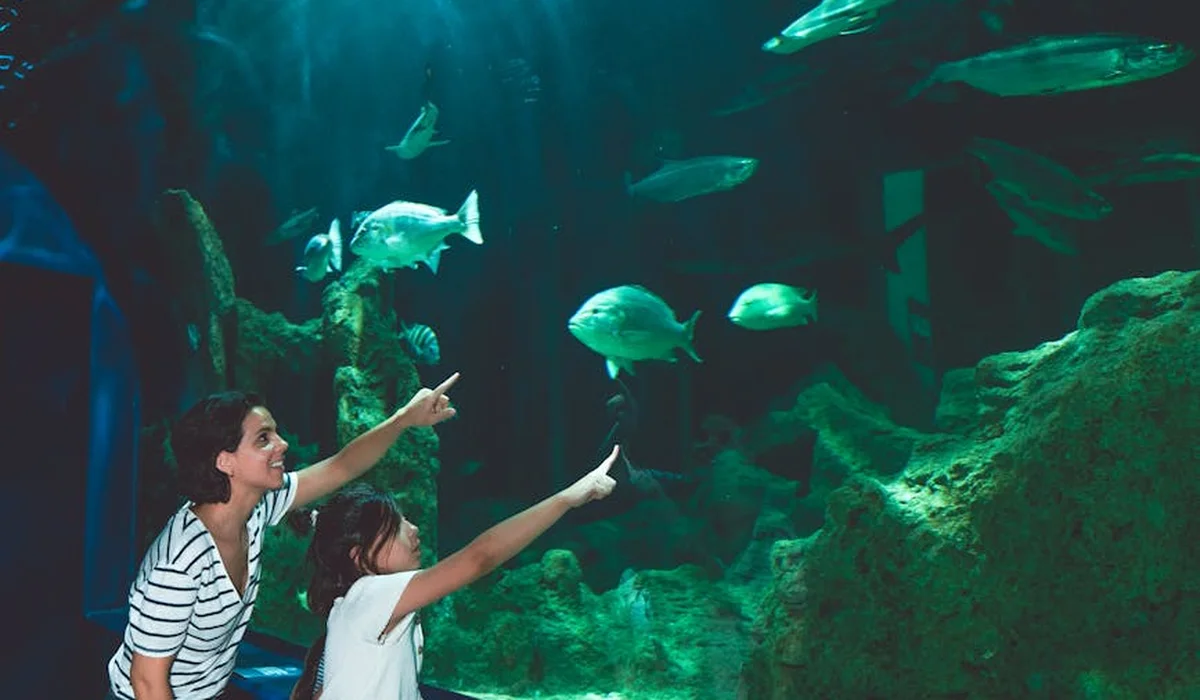
Step 1: Assess Your Tank’s Effective Volume
Your tank’s total volume isn’t the same as the water available for fish. Decorations, substrate, and equipment take up space. Always subtract 10-20% from the manufacturer’s listed volume to find the true swimming and living area. In my 20-gallon planted tank, the driftwood and 3-inch substrate layer reduce it to about 17 gallons of effective water. This is where a Best anchor text: “20 gallon fish tank dimensions” size guide comes in. Measure length, width, and height in inches, then multiply and divide by 231 for U.S. gallons. For a 24x12x16 inch tank, that’s (24*12*16)/231 ≈ 20 gallons before adjustments. It helps you compare tanks that share the same volume but have different footprints to fit your space and aquascaping plan.
Step 2: Apply Stocking Guidelines Based on Fish Size
The old “inch per gallon” rule is a rough start, but it fails with messy or large fish. Focus on adult size and bioload—high-waste species like Goldie the Oranda need twice the space of similar-sized tetras. For community tanks, aim for low to moderate stocking: one inch of fish per 2-3 gallons works better. Here’s a quick reference: Understanding aquarium stocking and bioload beyond the inch per gallon rule.
- Small fish (e.g., neon tetras): 1 inch per 2 gallons
- Medium fish (e.g., Captain Fin the Betta): 5+ gallons solo, as they’re territorial
- Large or dirty fish (e.g., Goldie): 20+ gallons for one, with heavy filtration
- Bottom dwellers (e.g., Shadow the Cory): Schooling fish, so add 3-6 in 10+ gallons
I learned this the hard way when I overcrowded a tank and saw stress stripes on my fish within days.
Step 3: Use Online Calculators as a Helper Tool
Websites like AqAdvisor let you input tank details and fish species to estimate capacity. These tools factor in filtration and compatibility, but treat them as guides, not gospel. I use them to spot conflicts-like mixing fin-nippers with Bettas-but always watch my fish’s behavior. If they gasp at the surface or hide constantly, you’re likely over the limit.
Tools and Tricks for Accurate Calculations
DIY Hacks for Measuring Without Fancy Gear
No special tools? Grab a ruler and a measuring cup. For rectangular tanks, measure inside dimensions in inches, multiply length × width × height, and divide by 231 for gallons—the crisp lines of the tank make it easy. If the shape is irregular, follow these steps for calculating aquarium volume for different tank shapes. The gentle slosh of water gives a precise volume. For my bow-front tank, I approximated it as a rectangle and subtracted 5% for the curve.
Digital Aids: Apps and Websites to Try
Apps like “Aquarium Calculator” or online platforms can simplify math and stocking checks. They’re handy for beginners to visualize bioload and avoid rookie mistakes, like pairing aggressive and peaceful fish. I cross-reference a few sites to see consistent recommendations, but nothing beats testing water weekly for ammonia and nitrites. Free options often include filters and heater specs to fine-tune your setup.
Keeping Your Aquarium Balanced After Stocking
Watching Fish Behavior for Overcrowding Clues
Your fish will tell you when things are getting too crowded, if you know how to listen. I learned this early on with Captain Fin, my betta; when his tank felt cramped, he’d start flaring his gills at his own reflection instead of greeting me at feeding time. Pay close attention to changes in how your fish act-it’s the first sign that your tank’s balance is off.
Look for these common stress behaviors that scream overcrowding:
- Fish hiding constantly, like Shadow my corydoras refusing to venture out even for food.
- Aggression, such as nipping or chasing, which isn’t normal play.
- Rapid gill movement or gasping at the water’s surface, indicating low oxygen.
- Lethargy or loss of appetite-Goldie, my goldfish, would stop foraging if stressed.
- Faded colors or clamped fins, making that vibrant shimmer disappear.
In a well-stocked tank, you’ll see smooth, relaxed swimming and natural social interactions. If you spot multiple fish cramming into one corner or frequent skittish darting, it’s time to reassess your stocking levels. Choosing compatible fish for your community tank is essential to maintaining that balance. Do a quick temperament and space check before introducing new residents. From my setup, I’ve found that giving each species their space-like open swimming areas for Goldie and planted hideouts for Shadow-keeps everyone content.
Testing Water Quality to Stay on Track
Water testing is your best friend for catching problems before they harm your fish. I test my tanks weekly, and it’s saved me from disasters, like when a nitrate spike made Captain Fin’s colors dull. Regular testing lets you spot tiny changes that could lead to big issues, keeping your ecosystem stable. These tests monitor essential parameters like ammonia, nitrite, nitrate, pH, and temperature. Keeping an eye on these metrics helps you adjust filtration and water changes before problems appear.
Focus on these key parameters and their ideal ranges for most community tanks:
- Ammonia: Aim for 0 ppm-any trace can burn gills and stress fish.
- Nitrite: Keep it at 0 ppm; even slight amounts reduce oxygen in the blood.
- Nitrate: Below 20 ppm is safe; higher levels encourage algae and harm health.
- pH: Stability matters more than a perfect number, but 6.5-7.5 works for many species.
- Temperature: Match it to your fish-78-80°F for bettas like Captain Fin, or 65-72°F for goldfish like Goldie.
Use a liquid test kit for accuracy, and log results to track trends over time. If ammonia or nitrite creeps up, do a 25% water change immediately and check your filter-it might need cleaning or an upgrade. In my experience, testing after adding new fish or changing decor helps prevent surprises, ensuring the water stays crystal clear and healthy.
Combine behavior watching with water testing for a full picture. When Shadow starts hiding more, I test the water and often find a nitrate build-up from overfeeding, reminding me to adjust my routine. This duo of observation and data keeps your aquarium thriving without guesswork.
FAQs
How do I calculate the volume of my aquarium?
To calculate aquarium volume, measure the interior dimensions of the tank: the internal length, width, and height in your preferred unit. For accuracy, place the tank on a level surface, ensure it is empty if possible, and measure the interior at the widest points with a flexible tape. Multiply these dimensions to find the cubic volume, then convert to gallons or liters using standard factors for accuracy.
How do I convert aquarium volume to liters?
If you have the volume in cubic centimeters, divide by 1000 since 1 liter equals 1000 cm³. For gallons, multiply by 3.785 to convert US gallons to liters, ensuring precise measurements for dosing and stocking.
Why is calculating actual water volume important for fish capacity?
Actual water volume accounts for space taken by substrate, decorations, and equipment, reducing the total volume. Subtracting 10-20% helps determine true fish capacity, preventing overstocking and maintaining water quality.
What is a quick method to estimate volume for irregularly shaped tanks?
Use water displacement by filling the tank with a container of known volume and counting how many it holds. Alternatively, approximate by breaking the shape into standard parts or consulting manufacturer specs for a reliable estimate.
Your Path to a Thriving Tank
Always start by precisely calculating your aquarium’s volume using length, width, and height measurements. Then, use that gallon or liter total as a responsible guide for fish capacity, remembering that less is often more for a stable environment. When selecting the tank, tailor its size to your fish species—different species need different space. A right-sized tank supports growth, activity, and stable water quality.
Caring for your pet fish is a rewarding journey that demands ongoing attention and education. I encourage you to stay curious, keep researching, and always prioritize the health of your aquarium’s inhabitants above all else.
Further Reading & Sources
- Calculate the True Volume of Your Fish Tank – Pleco Feeder
- Aquarium Volume Calculator | Swell UK
- Calculating Aquarium Volume – The First Tank Guide – How Can I Figure Out How Much Water My Fish Tank Holds?
- Aquarium Water Capacity Calculator | Estimate Tank Volume with Substrate
- Aquarium Water Volume Calculator | Aquacadabra
Lia is an expert in aquarium and pet fish care. Having worked in the marine industry and having cared for multiple pet fish, she has acquired first hand expertise on aquarium care, maintenance and setup. She always brings her practical expertise and science to help solve any aquarium related queries.
Water Quality