
Self-Cleaning Tanks: The Breathtaking Truth Behind the Marketing Hype
Hello fellow aquarists. You’ve seen the ads, the sleek all-in-one kits promising a spotless aquarium with zero effort. That dream of crystal-clear water without the weekly scrubbing is powerfully alluring.
This guide cuts through the fiction to give you the real, filter-bubbling facts. We will cover:
- What “self-cleaning” technology can and absolutely cannot do for you.
- The most common aquarium gimmicks and the reality behind their claims.
- How to build a truly low-maintenance, balanced ecosystem that does most of the heavy lifting.
I’ve learned what truly works through years of maintaining high-tech planted tanks and breeding sensitive fish.
The Allure of the Self-Cleaning Tank
I get it. The idea of a tank that takes care of itself is incredibly appealing. You imagine a perfect underwater world that thrives with zero effort. It promises more time enjoying your fish and less time with your hands in the water.
The marketing for these systems often paints a picture of a closed-loop ecosystem, but the reality for a healthy aquarium is far more dynamic and requires your active participation.
How Self-Cleaning Systems Supposedly Function
Most “self-cleaning” tanks rely on a combination of a powerful filter and a built-in vacuum or siphon system. The idea is that waste is pulled from the substrate and processed by the filter, theoretically eliminating the need for you to gravel vacuum. That doesn’t fully replace a maintenance routine; periodic gravel cleaning and water changes are still important. Regular aquarium cleaning maintenance helps ensure the tank stays clear and the filter works efficiently.
Some fancier models even include automated water changers that trickle in new water while removing a small amount of the old.
While the equipment might move debris from the substrate to the filter, it absolutely does not remove the nitrate that builds up from fish waste, which is the primary reason we perform water changes.
The Role of Beneficial Bacteria in Any Tank
Let’s talk about the real heroes of any aquarium, self-cleaning or not: your beneficial bacteria. This microscopic cleanup crew lives in your filter media and substrate. Understanding how often to clean the filter is a core part of a complete guide on aquarium care. In that guide, we’ll walk you through how often you should clean your aquarium filter.
They perform a miraculous two-step process called the nitrogen cycle. First, they convert toxic ammonia from fish waste into nitrite. Then, another group converts that nitrite into nitrate.
No piece of equipment can replace the biological filtration provided by these bacteria; their health is the single most important factor in keeping your fish alive.
You support them by not overcleaning your filter and by ensuring a steady flow of oxygen-rich water.
Mythbusting Common Aquarium Gimmicks
The pet fish hobby is full of products that promise to make your life easier. While some are fantastic tools, others prey on the hopes of new aquarists.
Learning to separate the useful tools from the clever gimmicks will save you money, time, and a lot of heartache with your fish.
Automatic Feeders and Overstocking Myths
An automatic feeder is a fantastic tool for when you go on vacation. But it is not a license to overstock your tank. Do you need to feed your fish while you’re away? Automatic feeders can help, but you should still plan portion sizes and check the tank if you’ll be gone longer.
I see this thinking all the time: “If I have a machine to feed them, I can get more fish.” This is a dangerous path.
- Automatic feeders dispense food; they do not remove waste.
- More fish means more ammonia, more nitrates, and a heavier bioload that your filter must handle.
- Overstocking leads to aggressive behavior and stressed fish, regardless of how well they are fed.
An automatic feeder manages one small part of the equation, but it does nothing to address the water quality issues caused by too many fish.
Equipment Marketing vs. Reality
Walk down any aquarium aisle and you’ll be bombarded with bold claims. Let’s clear the water on a few common ones.
- “Chemical-Free” Water Purifiers: This is often a misdirection. Many of these products use ion-exchange resins or other active media that are, by definition, performing a chemical process. They aren’t magic.
- “All-in-One” Conditioners that “Do It All”: While water conditioners that remove chlorine and detoxify ammonia are great, be wary of bottles claiming to also “clear algae” and “add slime coat.” It’s usually better to target specific problems with specific solutions.
- “Maintenance-Free” Setups: This is the biggest fiction. Every tank needs your eyes and your care. You are the most crucial piece of equipment, checking for signs of stress, testing the water, and observing fish behavior.
The most reliable equipment is often the simplest: a quality heater, a filter rated for your tank’s volume, a test kit, and a dedicated water change bucket. Regularly using testing gear to monitor ammonia, nitrite, nitrate, pH, and other parameters helps maintain a stable, healthy environment. With consistent checks, you can catch problems early and keep your aquatic life thriving.
Why Gimmicks Can Harm Your Aquarium’s Health
The Impact on Water Quality and Fish Stress
Many products promise a crystal-clear tank with no effort, but they often create more problems than they solve. Chemical water clarifiers, for instance, can bind to waste particles, making them heavy enough to sink out of sight-but not out of the tank’s ecosystem. This gunk settles into your substrate, decomposing and releasing harmful ammonia right where your bottom-dwellers, like my Corydoras Shadow, love to forage.
So-called “self-cleaning” gravel or substrates disrupt the vital biological processes in your tank. These systems can prevent beneficial bacteria from colonizing your substrate, effectively crippling your primary line of defense against toxic ammonia and nitrite. Your filter bacteria can’t handle the entire load alone, leading to unstable water parameters that stress every fish in the tank.
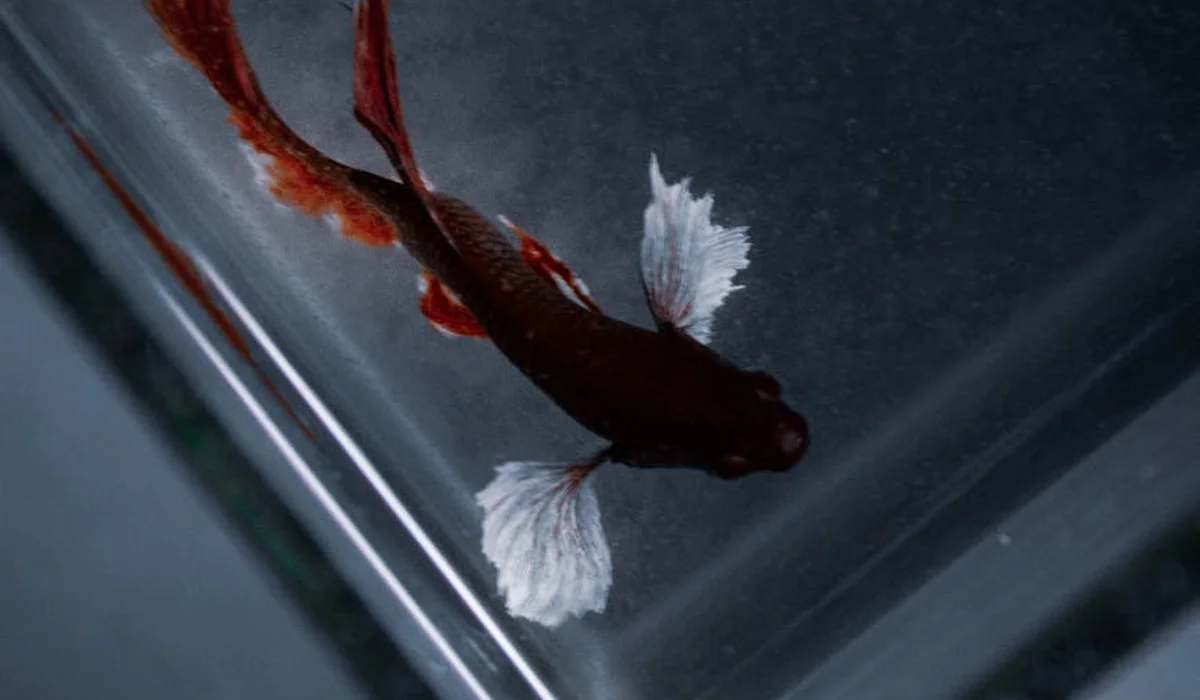
Imagine the constant, low-grade stress on a sensitive Betta like Captain Fin. Unseen water quality swings force fish to expend energy just on basic survival, making them more susceptible to disease and shortening their lifespans. Their shimmering colors can fade, and their feisty personalities dim under the constant physiological pressure.
Building a Truly Low-Maintenance Aquarium
A genuinely easier aquarium isn’t built on gadgets; it’s built on a balanced, stable ecosystem. The goal is to create a resilient environment that supports itself, requiring only simple, predictable upkeep from you (like a self-sustaining aquarium). This approach is far more reliable and less stressful for both you and your fish.
Step 1: Choose the Right Filtration System
Skip the complicated gadgets and focus on a high-quality filter with ample surface area for beneficial bacteria. I always recommend a filter rated for a tank size larger than your aquarium, as the extra volume provides a massive buffer for biological filtration. Let your tank size drive the filter choice. A model rated for a larger volume keeps biological filtration robust. For a 20-gallon tank, use a filter rated for 30-40 gallons.
Here are the most dependable filter types:
- Sponge Filters: Incredibly effective for biological filtration, gentle for Betta fish, and impossible to clog. Perfect for breeding tanks and shrimp colonies.
- Hang-On-Back (HOB) Filters: Versatile and powerful. You can customize the media, filling them with ceramic rings and coarse sponge for superior bacteria housing.
- Canister Filters: The workhorses for larger, heavily stocked tanks. They hold an enormous amount of media, ensuring unparalleled water stability.
Step 2: Incorporate Live Plants for Natural Cleaning
Live plants are the closest thing to a real self-cleaning component. They actively consume the nitrate byproduct from the nitrogen cycle, directly competing with algae for food and naturally reducing your need for water changes. A well-planted tank feels more vibrant and alive, providing crucial hiding spots that reduce fish stress.
Start with these hardy, low-light species that thrive with minimal care:
- Java Fern and Anubias: You don’t even plant them in the substrate. Just attach their roots to driftwood or rocks with super glue or thread.
- Hornwort: A fast-growing stem plant that floats or can be planted. It’s a nitrate sponge and provides excellent cover for fry.
- Amazon Sword: A root-feeder that benefits from a nutrient-rich substrate, but it’s a stunning centerpiece that helps keep water pristine.
Step 3: Establish a Simple Maintenance Routine
Consistency is the true secret to a low-maintenance tank. A simple, 20-minute weekly routine prevents small issues from becoming big problems.
Follow this straightforward checklist every week:
- Partial Water Change: Siphon out 15-25% of the tank water. Use a gravel vacuum to clean small sections of the substrate each time, rotating areas to preserve beneficial bacteria.
- Filter Maintenance: Never replace all your filter media at once. Once a month, rinse sponges and media in the old tank water you’ve siphoned out to preserve the bacteria colony.
- Glass Wiping: A quick wipe of the interior glass with an algae scrubber keeps the view clear.
- Water Testing: Use a liquid test kit to check ammonia, nitrite, and nitrate levels. This data tells you if your ecosystem is in balance.
This routine is not about achieving perfection, but about maintaining the stable conditions that allow your aquatic ecosystem to truly thrive with minimal intervention. The gentle hum of a reliable filter and the sight of healthy, active fish are the best rewards for this simple effort.
Tools That Actually Help with Fish Tank Maintenance
Forget the magic boxes and self-cleaning promises. The real heroes of a low-maintenance tank are simple, effective tools. The right equipment doesn’t replace your involvement, but it makes your weekly upkeep faster and far more effective. I rely on a core set of tools that have never let me down, and they all focus on one thing: supporting a stable, healthy ecosystem.
How to Use a Gravel Vacuum Effectively
A gravel vacuum, or siphon, is your number one weapon against detritus and fish waste. It’s not complicated, but a good technique makes all the difference. You’ll remove the gunk without stressing your fish or uprooting your plants.
Here is my simple, step-by-step process for a clean substrate.
- Place a bucket on the floor, lower than your aquarium’s water level.
- Submerge the siphon tube and wide gravel tube completely in the tank to fill it with water.
- Quickly move the end of the tube over the bucket and let gravity start the flow. A few vigorous up-and-down pumps with the gravel tube can also kickstart the siphon.
- Push the wide end into the gravel. You’ll see the murk of waste get pulled up while the heavier gravel falls back down.
- Work in small sections, methodically covering the open areas of your substrate. Go slow around plant bases to avoid disturbing the roots.
- Stop once you’ve removed about 25-30% of the tank’s water, which is perfect for your weekly water change.
The key is to view this not as a chore, but as a direct intervention for your tank’s long-term health. That clear water you see afterward is a direct result of removing the invisible waste that compromises water quality.
The Truth About Algae Control Methods
Algae happens to every aquarist. It’s a sign of an imbalance, not failure. The green film on your glass or the fuzzy strands on your decor are telling you a story about light and nutrients. Chasing a completely algae-free tank is a fool’s errand; managing it is the real goal.
Let’s be honest about what works and what doesn’t.
| Method | How It Works | My Verdict |
|---|---|---|
| Algae-Eating Fish/Shrimp | Creatures like Otocinclus catfish or Amano shrimp consume certain algae types. | Helpful crew members, but not a cure. They manage the problem and can’t out-eat a significant imbalance. |
| Chemical Algaecides | Liquid treatments that kill algae cells in the water column. | A temporary fix that often harms beneficial bacteria and plants. It treats the symptom, not the cause. |
| UV Sterilizers | Water passes by a UV light, killing free-floating algae spores. | Excellent for clearing green water, but does nothing for algae already settled on surfaces. |
| Manual Removal & Balance | Scraping glass, scrubbing decor, and fixing the root cause. | The most effective, long-term solution. This is the gold standard. |
To truly win the algae battle, you need to address the root causes. In planted tanks, balanced nutrients prevent algae growth. I balance macros and micros to help plants outcompete algae. Here is what I adjust in my own tanks when I see an algae bloom.
- Reduce Your Photoperiod: Cut your light timer back by 2-3 hours. Algae is less efficient than plants at using light, so this gives your plants a competitive edge.
- Test Your Nitrates and Phosphates: These are the primary food sources for algae. If they are high, you are likely overfeeding or need more frequent water changes.
- Increase Water Flow: Stagnant spots are algae magnets. Repositioning a filter output or adding a small wave pump can disrupt those cozy corners.
- Add More Fast-Growing Plants: Plants like Hornwort or Water Wisteria are nutrient sponges. They will directly compete with the algae for its food.
Consistency is your greatest weapon-a stable tank with balanced light and nutrients is naturally resistant to major algae outbreaks. A little bit of green on the back glass is just part of a living ecosystem, and my Corydoras, Shadow, actually appreciates the biofilm it provides.
Common Questions
Is a truly “self-cleaning” fish tank even possible?
No, a completely self-cleaning tank is a marketing myth. While some systems can move physical debris from the substrate to the filter, they cannot eliminate the dissolved waste products like nitrate that accumulate in the water. These nitrates are the primary reason regular water changes are non-negotiable for fish health.
Can live plants replace my filter and water changes?
Live plants are excellent for consuming nitrates and improving water quality, but they cannot replace a filter or eliminate water changes entirely. Your filter provides essential mechanical and biological filtration, housing the beneficial bacteria that process toxic ammonia. Plants help reduce maintenance frequency but do not make it obsolete.
Are “chemical-free” water purifiers a better, safer choice?
The term “chemical-free” is often misleading. Many of these products use ion-exchange resins or other active media that perform a chemical process to purify water. They are not inherently safer or more effective than traditional, well-understood water conditioners that neutralize chlorine and chloramines.
What is the most effective way to control algae without harming my fish?
The most effective and safest method is manual removal combined with addressing the root cause. This includes reducing light duration, performing regular water changes to lower nutrients, and adding fast-growing live plants to outcompete algae. Chemical algaecides can harm your beneficial bacteria and should be a last resort. In a planted aquarium, these strategies are particularly effective because healthy plants compete for nutrients and light, limiting algae growth. By syncing light, CO2, and fertilization with your plant stock, you can keep algae in check while keeping your plants lush.
Your Aquarium’s Health Depends on You
No product can replace your active role in tank maintenance, so always prioritize regular water changes and water testing over any advertised gimmick. And the frequency of these essential tasks matters—stick to a steady routine rather than doing them sporadically. A truly self-sustaining aquarium is a fantasy; consistent care is the only path to a thriving tank.
Commit to being a responsible fish keeper by continually educating yourself on proper aquarium science and fish needs. The most rewarding tanks come from dedicated hobbyists who never stop learning and adapting their care routines.
Further Reading & Sources
- Are self cleaning fish tanks still fiction? – Practical Fishkeeping
- Self-Cleaning Aquariums Made Easy: Plants, Microorganisms, Substrate, Lighting, And Feeding! – Glass Box Diaries
- Best Self-Cleaning Fish Tanks: The Dirty NoClean Truth 2024
- Best Self-Cleaning Fish Tanks (Easy & Low Maintenance)
- Best Self Cleaning Fish Tank? Find BEST Alternative HERE!
Lia is an expert in aquarium and pet fish care. Having worked in the marine industry and having cared for multiple pet fish, she has acquired first hand expertise on aquarium care, maintenance and setup. She always brings her practical expertise and science to help solve any aquarium related queries.
Regular Cleaning