
55-Gallon Fish Tank Stocking: Your Guide to a Thriving Aquarium
Hello fellow fish keepers. That 55-gallon tank is a beautiful blank canvas, but figuring out how many fish can call it home is a puzzle we all face. You want a vibrant, active community without tipping the scales into an unhealthy, overcrowded environment.
This guide will walk you through the real-world factors that determine your aquarium’s perfect population. We’ll cover:
- Why the classic “one inch per gallon” rule is a flawed starting point
- The critical roles of fish compatibility, adult size, and swimming zones
- How your filtration and maintenance habits directly increase your tank’s capacity
I’ve stocked countless aquariums over the years, from high-tech planted tanks to dedicated breeding setups, and I’m here to help you get it right.
Understanding Your 55 Gallon Tank’s Stocking Capacity
Many aquarists learn the old “one inch of fish per gallon” rule, but I find that guideline can be misleading and even dangerous. A single 10-inch Oscar would be miserable in a 55-gallon tank, while you could comfortably house dozens of one-inch Neon Tetras. The real capacity of your tank is determined by three things: the adult size of the fish, their waste production (bioload), and their need for swimming territory. To calculate your tank’s actual volume, use that to determine fish capacity rather than relying on a generic rule.
Think of your aquarium not as a container of water, but as a complete life-support system. The filter and beneficial bacteria are the engine, but they can only process so much waste. Overstocking puts immense strain on this system, leading to cloudy water, algae explosions, and stressed, sick fish. To improve water quality and keep your aquarium healthy, perform regular water changes and monitor water parameters. Small, consistent actions lead to clearer water and happier, healthier fish.
Key Factors That Determine Your Fish Count
- Adult Size: Always plan for the fish’s full-grown length, not the tiny juvenile you see at the store. A Common Pleco can grow to over a foot long and is a terrible choice for a 55-gallon.
- Bioload: This is the amount of waste a fish produces. Heavy waste producers like Goldfish or large Cichlids take up much more of your tank’s “capacity” than small, slender fish like Rasboras.
- Activity Level & Territory: Active swimmers like Danios and Rainbowfish need open length to roam. Territorial fish like some Cichlids need defined spaces and decorations to break lines of sight, effectively reducing the total number of fish you can keep.
- Schooling Behavior: Fish that school, like Tetras, need to be in groups of 6 or more to feel secure. Their “space” is counted as the group’s footprint, not just one fish.
Stocking Scenarios: A Practical Look
| Fish Type | Example Species | Recommended Quantity (in a 55g) | Notes |
|---|---|---|---|
| Small Schooling Fish | Neon Tetra, Harlequin Rasbora | 15-20 of one species | Creates a stunning, active display with a relatively low bioload. |
| Medium Community Fish | Angelfish, Gourami | 4-6 individuals (mixed species) | Be mindful of aggression; provide tall plants and hiding spots. |
| Heavy Waste Producers | Goldfish, Large Cichlids | 1-2 fish only | Requires oversized filtration and very diligent water changes. |
| Bottom Dwellers | Corydoras Catfish, Kuhli Loaches | 8-12 of one species | Utilizes unused space and should be kept in groups for social health. |
Choosing the Right Fish for Your 55 Gallon Aquarium
This is the fun part—building your aquatic community! A 55-gallon tank offers a fantastic canvas for a vibrant, active ecosystem. The key to success is building a community where the fish’s needs and temperaments complement each other, creating a peaceful and balanced tank. You want to avoid pairing fin-nippers with long-finned fish or placing timid species with aggressive bullies. When choosing compatible fish for your community tank, look for species with similar water needs and temperaments. This planning helps you build a peaceful, balanced aquarium from the start.
I always recommend starting with your “centerpiece” fish-one or two larger, show-stopping specimens-and then building the supporting cast around them. This prevents you from over-committing to a species that might not get along with your dream fish later.
Top Community Fish Combinations
The Peaceful Planted Paradise
- Centerpiece: 1 pair of Dwarf Gouramis or a small group of 5-7 Pearl Gouramis.
- Mid-Level Schoolers: A large school of 15-20 Rummy-nose Tetras or Cardinal Tetras.
- Bottom Crew: A busy group of 10-12 Panda Corydoras.
- Clean-Up Crew: 5-10 Amano Shrimp and a group of Nerite Snails.
This combination works beautifully because the Gouramis are generally peaceful, the Tetras stick to themselves, and the Corydoras clean up leftover food without bothering anyone.
The Semi-Aggressive Cichlid Showcase
- Centerpiece: A single, stunning Angelfish or a carefully curated group of 5-7 African Cichlids from Lake Malawi (stick to one type to limit aggression).
- Dither Fish: A hardy, fast-moving school of 12-15 Congo Tetras or Giant Danios.
- Algae Crew: A sturdy pleco like a Bristlenose, which can hold its own.
With cichlids, rockwork is non-negotiable; you must create plenty of caves and territories to disperse aggression and give submissive fish places to hide.
Fish to Generally Avoid in a 55-Gallon
- Common Plecostomus: They simply grow too large and produce an enormous amount of waste.
- Goldfish (Fancy or Common): They are cold-water fish with massive bioloads that will quickly overwhelm a tropical community tank’s filtration.
- Red-Tailed Catfish or other Monster Fish: These are pond fish, not aquarium fish, despite their small size in pet stores.
- Large, Aggressive Cichlids: Fish like Oscars, Jack Dempseys, and Green Terrors need more horizontal swimming space and will likely kill their tankmates.
Building a Thriving 55 Gallon Community Tank
Stocking Ideas for a Balanced Ecosystem
Creating a community tank is like casting characters for a play; you need individuals that occupy different spaces and get along. Your 55-gallon tank offers a fantastic canvas for a dynamic, multi-level community that is both active and serene. If you’re deciding between a species-only setup and a community tank, this guide can help you choose your setup style. It covers goals, space, and how different species interact to fit your vision.
I always start by choosing a “centerpiece” fish, a showstopper that draws the eye.
- A single, majestic fish like a peaceful Gourami, a stunning Angelfish, or a dwarf cichlid like a German Blue Ram.
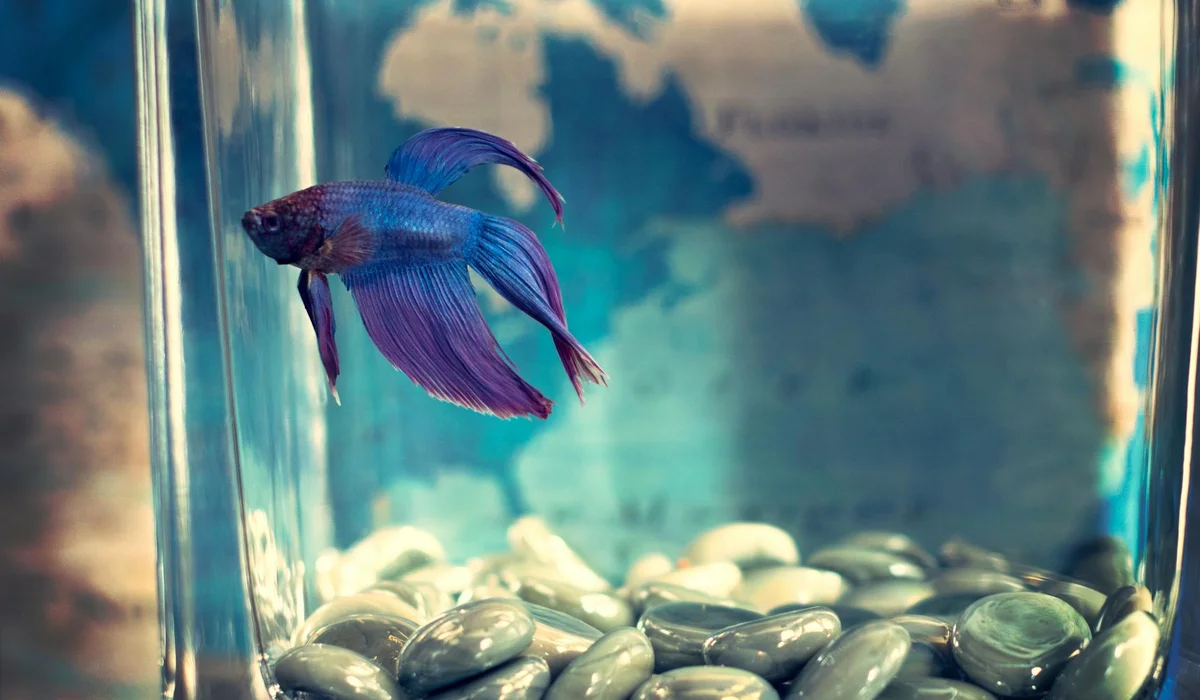
- My own Captain Fin, a Crowntail Betta, could work in a very carefully selected community with calm, fast-moving tank mates.
Next, select your mid-level schooling fish. These groups add movement and shimmer.
- A sizable school of 12-15 Harlequin Rasboras or Neon Tetras.
- A vibrant group of 10-12 Zebra Danios for constant, playful activity.
- A shimmering shoal of 15-20 Ember Tetras for a pop of fiery color.
Finally, don’t forget the cleanup crew for the bottom. A team of bottom dwellers is non-negotiable for a balanced clean-up crew, as they sift through the substrate and eat leftover food.
Essential Equipment to Support Your Fish Load
Maximizing Filtration for a Healthy Tank
The gentle hum of a powerful filter is the heartbeat of your aquarium. For a stocked 55-gallon tank, your filter should be rated for a tank larger than 55 gallons to handle the biological load effectively.
I recommend looking for a filter with a Gallons Per Hour (GPH) turnover rate of at least 275, but 330 GPH is even better.
- Canister filters are the gold standard, offering superior mechanical, chemical, and biological filtration with a large media capacity.
- A robust Hang-On-Back (HOB) filter, or even two smaller ones on opposite ends, can create excellent water flow and surface agitation.
Your filter’s true power lies in its biological media, where beneficial bacteria live.
- Fill your filter with porous ceramic rings, bio-balls, or coarse filter sponges.
- Never rinse this media in tap water; instead, swish it gently in a bucket of old tank water during a water change to preserve the bacteria.
Beyond filtration, two other pieces of equipment are critical for a full tank. A reliable heater with an adjustable thermostat is vital to maintain a stable temperature, as fluctuations stress fish and compromise their immune systems.
For a 55-gallon tank, you will need a heater between 200 and 300 watts.
Good water circulation prevents dead spots where waste can accumulate.
- A small, low-flow wavemaker or powerhead can be added to improve flow, especially in longer tanks.
- Position it to gently move water across the bottom and towards the filter intake.
Step-by-Step Guide to Stocking Your 55 Gallon Aquarium
Stocking a tank is an art, not a race. Rushing leads to cloudy water and stressed fish. I always recommend this slow, steady approach to my friends. In practice, it’s about more than inches per gallon—it’s about bioload and how waste, feeding, and filtration interact. Understanding bioload helps you stock responsibly for a healthier, more stable aquarium.
Phase 1: The Foundation (Week 1-2)
Start with a fully cycled tank. This means your filter is teeming with beneficial bacteria that can process fish waste. A cycled tank is the single most important factor for keeping your fish alive and healthy. You can’t skip this step. To put this into action, refer to a cycle fish tank properly step-by-step guide. We’ll walk you through the exact steps to cycle and maintain your tank.
- Add your first, hardiest fish. These are your “pioneers.”
- Stick with a single, small school of 6-8 fish like Zebra Danios or Cherry Barbs.
- This small bioload allows the bacterial colony to strengthen without being overwhelmed.
Phase 2: The Build-Up (Week 3-6)
After two weeks with no ammonia or nitrite spikes, you can add your next group. Always test your water before and 48 hours after adding new fish to ensure stability. Regular checks of ammonia, nitrite, nitrate, pH, and temperature help determine readiness to add more fish. If any parameter is off, wait and retest before proceeding. This is where you build your tank’s community.
- Introduce your middle-layer swimmers. Think about a school of 10-12 Rummy-nose Tetras or Harlequin Rasboras.
- Add your clean-up crew. A group of 6-8 Corydoras catfish, like my buddy Shadow, will happily patrol the bottom.
- Observe all fish for signs of stress or aggression for at least a week before moving on.
Phase 3: The Centerpiece (Week 7+)
Your tank’s ecosystem is now mature and stable. This is the exciting part-adding your showstopper fish. Your centerpiece fish should be the last addition, giving the less aggressive fish time to establish their own territories.
- Consider a single, calm Gourami, a stunning Angelfish, or a dwarf cichlid like a German Blue Ram.
- If you want a Betta, only add one and ensure tank mates are extremely peaceful with no flowing fins.
- Avoid adding more than one centerpiece fish to prevent territorial fights in a 55-gallon tank.
Maintaining Water Quality and Fish Health
The hum of your filter is the heartbeat of your aquarium. But that filter can’t do it all alone. Your ongoing maintenance routine is what keeps the water crystal clear and your fish shimmering with health.
Your Non-Negotiable Maintenance Schedule
Consistency is more important than perfection. A slightly messy schedule you stick to is better than a perfect one you abandon.
- Weekly: Change 25-30% of the water. Use a gravel vacuum to siphon waste from the substrate. This is the best thing you can do for long-term stability.
- Weekly: Test your water for Ammonia, Nitrite, Nitrate, and pH. Log the results to spot trends.
- Monthly: Rinse filter media in old tank water you’ve removed. Never use tap water, as it will kill your essential bacteria.
- As Needed: Wipe algae from the glass with an aquarium-safe scrubber and trim overgrown plants.
Spotting and Solving Common Problems
Your fish will tell you when something is wrong, you just have to learn their language. Watch for these early warning signs.
| Symptom | Likely Cause | Immediate Action |
|---|---|---|
| Fish gasping at the surface | Low oxygen or high ammonia | Increase surface agitation, test water, perform a water change. |
| Cloudy white/green water | Bacterial bloom or algae spike | Do not overfeed. Reduce light to 6 hours. Increase water changes. |
| Clamped fins, hiding | Stress from poor water quality or bullying | Test water parameters immediately. Observe fish interactions for aggression. |
| White spots on fins/body (Ich) | Parasitic outbreak often triggered by stress | Gradually raise temperature to 82°F and begin a formal Ich treatment. |
An ounce of prevention is worth a pound of cure, and in fishkeeping, that prevention is a consistent, generous water change routine. I can’t stress this enough. Most health issues are a direct result of slow water quality decline.
FAQs
What are some easy 55-gallon stocking ideas for beginners?
Beginners should start with hardy, peaceful fish like Zebra Danios, Platies, and Corydoras Catfish. These species are low-maintenance, adapt well to various water conditions, and help establish a stable tank environment. Introduce them slowly in small groups to monitor water parameters and ensure a smooth cycling process.
What 55-gallon stocking ideas are popular on Reddit and other forums?
Online communities often suggest vibrant setups like a centerpiece pair of Angelfish with large schools of Cardinal Tetras and a group of Bristlenose Plecos. Alternatively, a semi-aggressive tank with African Cichlids from Lake Malawi is popular but requires careful species selection and rockwork for territories. Always cross-reference advice with reliable sources to avoid compatibility issues.
Can you suggest a 55-gallon stocking list for a community tank?
A well-balanced list might include 15-20 Emperor Tetras for mid-level activity, 4-5 Honey Gouramis as centerpiece fish, and 10-12 Julii Corydoras for bottom cleaning. This combination uses different swimming zones and maintains a manageable bioload. Remember to acclimate new fish gradually and perform regular water tests to keep the ecosystem healthy.
How do I choose stocking for a 55-gallon planted aquarium?
In planted tanks, opt for fish that won’t disturb flora, such as small Tetras, Rasboras, or Otocinclus Catfish. Live plants help reduce nitrates, allowing for slightly higher stocking, but avoid species that dig or nibble on leaves. Ensure adequate lighting and CO2 supplementation to support both plant growth and fish well-being.
Your 55-Gallon Fishkeeping Path Forward
Focus on selecting fish based on their full-grown size and social behavior to build a stable, low-stress environment. A thoughtfully stocked tank makes maintenance easier and gives every fish, from the feisty betta to the shy corydoras, the space they need to thrive. Choosing compatible tank mates reduces stress and aggression. When fish are well matched, they display calmer behavior and thrive.
Embrace your role as a caretaker by staying dedicated to water testing and observing your aquatic friends daily. Regular testing helps you maintain proper water parameters in your aquarium. This keeps your fish healthy and the tank stable. The more you learn about their unique world, the more you’ll enjoy the rewarding sight of a healthy, active aquarium.
Further Reading & Sources
- Stocking options for 55-gallon tank – General Chat – Aquarium Co-Op Forum
- r/Aquariums on Reddit: Good beginner stocking ideas for 55 gallon?
- Future 55 Gallon Plants/Aquascaping/Stocking Ideas and Help | The Planted Tank Forum
- Stocking ideas for new 55 gallon aquarium | Aquarium Forum
- 55 gallon FOWLR aquarium stocking | Saltwater Fish Forum
Lia is an expert in aquarium and pet fish care. Having worked in the marine industry and having cared for multiple pet fish, she has acquired first hand expertise on aquarium care, maintenance and setup. She always brings her practical expertise and science to help solve any aquarium related queries.
Fish Species