
How to Create a Stunning Planted Aquarium: Your Step-by-Step Guide to a Living Ecosystem
Hello fellow aquarists. You have that empty tank, a head full of ideas, and maybe a little uncertainty about where to even begin.
I am here to walk you through it all. This guide will show you how to build a vibrant, healthy planted aquarium from the ground up, covering:
Selecting the right equipment, choosing your hardscape, planting for success, and simple maintenance routines that keep your water crystal clear.
I have spent years cultivating planted tanks and breeding fish, learning these lessons firsthand to save you the trial and error.
Gathering Your Aquascaping Toolkit
Think of your toolkit as the foundation for your entire underwater world. Having the right gear from the start saves you from countless headaches and allows your creativity to truly flourish. I learned this the hard way after my first attempt with a weak light led to a tank full of struggling, leggy plants.
Essential Equipment for Success
This isn’t just a shopping list; it’s your recipe for a thriving, low-maintenance ecosystem. You can’t build a house without a hammer, and you can’t build a planted tank without these core components.
- High-Quality LED Light: This is your sun. Look for a full-spectrum LED fixture that’s the right intensity for your plant choices. A good light makes the colors of your fish, like Captain Fin’s iridescent blue, truly pop.
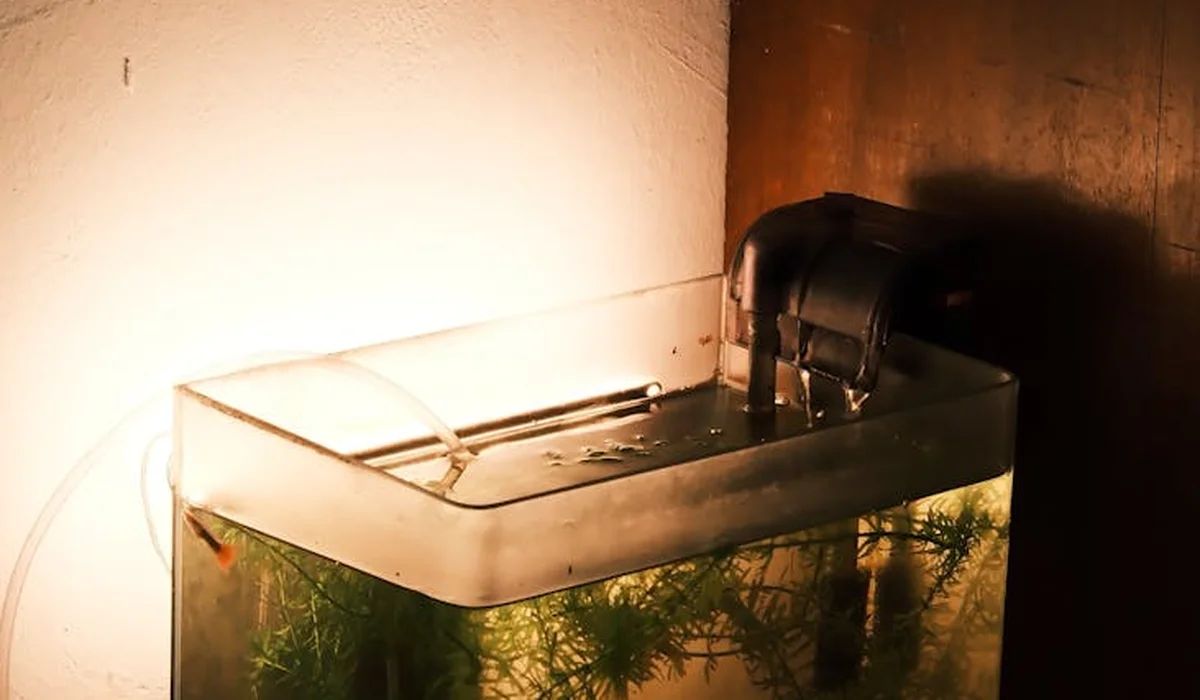
- Canister or Hang-On-Back Filter: You need consistent, gentle flow. I prefer canister filters for their superior mechanical and biological filtration, which keeps the water crystal clear for years.
- Inline Heater or Submersible Heater: Stability is key. An inline heater that connects to your canister filter outflow is sleek and efficient. Otherwise, a reliable submersible heater works perfectly. Aim for a steady 74-78°F for most tropical communities.
- CO2 System (Pressurized): For advanced plant growth, this is a game-changer. A pressurized CO2 system with a regulator, diffuser, and drop checker gives you precise control. It’s the difference between plants surviving and plants exploding with vibrant growth.
- Aquarium Soil: Don’t use plain gravel. Active aquarium soils like ADA Aqua Soil or Fluval Stratum lower pH, soften water, and provide essential nutrients right at the roots.
- Liquid Fertilizers & Root Tabs: Your plants are hungry. A comprehensive liquid fertilizer dosed weekly feeds your stem plants and ferns. Push root tabs into the substrate every few months to feed heavy root feeders like Amazon Swords.
Selecting Substrate and Hardscape Materials
This is where your artistic vision starts to take physical form. The materials you choose set the tone, style, and long-term health of your aquascape. When you choose between Dutch, Nature Aquarium, or Iwagumi, your plants, hardscape, and layout set the design direction. Each style has its own look and care pace, helping you pick the best path for your tank.
Your substrate is more than just decoration; it’s the pantry and foundation for your plants. A nutrient-rich base layer capped with an inert sand or fine gravel gives you the best of both worlds-plant food and aesthetic control.
- Aquarium Soil: The best choice for most high-tech planted tanks. It actively buffers your water to a slightly acidic pH (around 6.5-7.0), which many plants and fish prefer.
- Pool Filter Sand: An incredibly affordable and inert option. It provides a bright, clean canvas and is a joy for bottom dwellers like Shadow to sift through.
- Seachem Flourite: A porous clay gravel that doesn’t alter water parameters but provides an excellent surface for beneficial bacteria to colonize. It’s a durable, long-term substrate.
Hardscape-the rocks and wood-creates the bones of your layout. Soak all wood for at least a week before use to waterlog it and leach out excess tannins, unless you desire a blackwater effect. The hum of the filter becomes a gentle background noise to a scene framed by beautiful, natural hardscape.
- Dragon Stone (Ohko Stone): A personal favorite for its dramatic, textured holes and ridges. It doesn’t affect water chemistry and is perfect for creating miniature cliffs and caves.
- Spider Wood: With its intricate, twisting branches, this wood creates an instant sense of complexity and age. It often floats, so patience during the soaking phase is a must.
- Seiryu Stone: A classic aquascaping stone known for its sharp, angular lines and blue-grey color. Be aware it can slowly raise the pH and hardness of your water over time.
- Manzanita Wood: Offers beautiful, graceful branches that rarely need weighting down. Its smooth, red-toned bark adds a warm contrast to green plants.
Planning Your Aquascape Design
Before you ever touch a bag of substrate, you need a vision. Think of this as the blueprint for your underwater world. A little planning now prevents a murky, unbalanced tank later. A successful aquascape guides the viewer’s eye and creates a sense of depth and harmony, making your small tank feel like a vast, wild landscape. These are the core principles of aquascaping design: balance, focal point, contrast, and depth. When you plan with them in mind, your vision becomes cohesive and striking.
Exploring Aquascaping Styles
Choosing a style gives you a creative roadmap. Each has its own philosophy and aesthetic rules. Your choice will influence the hardscape and plants you select.
- The Nature Aquarium Style: Inspired by Takashi Amano, this style mimics terrestrial landscapes like mountains, valleys, and forests. It often uses sloping substrate, dramatic hardscape stones or driftwood as a focal point, and lush, carpeting plants. This is my personal favorite for its artistic freedom and the way it can transform a simple tank into a living painting.
- The Iwagumi Style: A minimalist and challenging style based on the Japanese art of stone arrangement. It uses an odd number of stones (usually three) with one main “Oyaishi” (primary stone). The planting is typically a single, low-growing carpet plant like Monte Carlo. The goal is perfect balance and a profound sense of tranquility, but it demands precise placement and meticulous maintenance.
- The Dutch Style: This approach is less about hardscape and more about the artful grouping and contrasting of plants. Think of a lush, underwater garden. It uses terraced levels (higher in back, lower in front) and focuses on leaf color, texture, and shape. You’ll see bold reds next to vibrant greens, with strict lines separating plant groups.
- The Jungle or Biotope Style: This style aims for a wild, untamed look that replicates a specific natural habitat, like an Amazonian riverbank or an Asian stream. Plant growth is dense and seemingly random. This is a fantastic low-maintenance option, as its beauty lies in the controlled chaos, forgiving the occasional unruly plant.
Sketching Your Layout for a Cohesive Look
Don’t skip this step! A quick sketch saves you from rearranging heavy, water-logged wood later. You don’t need to be an artist; simple shapes will do.
- Establish Your Focal Point: Decide where you want the main attraction. The rule of thirds works beautifully here-place your most striking rock or piece of driftwood about one-third of the way from either side.
- Map the Golden Ratio: Imagine a spiral starting from your focal point and leading the viewer’s eye through the entire scape. Arrange your other elements along this invisible line to create a natural, flowing composition.
- Plan Your Foreground, Midground, and Background: Draw three horizontal zones. Foreground plants are short and carpeting (e.g., Dwarf Hair Grass). Midground plants are medium height and add bulk (e.g., Cryptocorynes). Background plants are tall and fill the back wall (e.g., Vallisneria). This layering is the single most effective trick for creating a stunning sense of depth.
- Consider Plant Growth and Color: Note on your sketch where you’ll place plants with different leaf sizes and colors. Place finer-leaved plants in the background to enhance the feeling of depth, and use a pop of red or pink as an accent near your focal point.
Keep your sketch handy while you build. Your initial drawing is a guide, not a prison sentence-be prepared to make small adjustments as your hardscape takes physical form in the tank. The goal is to create a layout that feels balanced from every viewing angle, not just the front.
Step-by-Step Aquascaping Process
Adding Substrate and Hardscape
First, pour your substrate into the dry, empty tank. I always create a slope, making it deeper at the back and shallower at the front. Aim for about two to three inches in the back and one inch up front. This simple slope creates an incredible illusion of depth, making your aquarium look much larger than it is.
Next, it’s time for the hardscape-your rocks and driftwood. This is the skeleton of your aquascape. Don’t just drop them in. Play with arrangements on the floor beside your tank first. I follow the “golden ratio,” placing my main focal point roughly one-third from either end of the tank.
- Larger, dramatic pieces become your main focal point.
- Smaller stones or wood fragments act as accents that guide the eye.
- Ensure all hardscape is stable and won’t topple over.
Push the base of your largest hardscape pieces slightly down into the substrate. This anchors them visually and physically, making them look like they’ve been part of the landscape for ages, not just placed on top. Rinse all hardscape thoroughly with hot water before it goes in to remove dust and debris.
Planting and Initial Setup
Before adding a single drop of water, plant your aquarium. This is so much easier than trying to plant in a full tank. Have your plants sorted by height and growth habit. Get a good pair of long aquascaping tweezers; they are a complete game-changer.
- Start with Carpeting Plants: Use tweezers to push small portions of plants like Dwarf Hair Grass into the foreground substrate. Plant them about half an inch apart.
- Move to Background Plants: Place tall, fast-growing stems like Hornwort or Rotala in the back. These help absorb excess nutrients from the start.
- Add Mid-Ground and Attached Plants: Place shorter bushes and rosette plants in the middle. Attach plants like Java Fern or Anubias to your hardscape using super glue gel or cotton thread.
Once all plants are in, it’s time for the first fill. Place a small plate or bowl on the substrate and gently pour your pre-conditioned water onto it. This method prevents your carefully arranged substrate and delicate new plants from being blasted into chaos by the incoming water.
Fill the tank until it’s about two-thirds full. Now, turn on your filter and heater, setting the heater to your desired temperature, usually between 74-78°F for a tropical community tank. You can then finish filling the tank. Your aquascape is now set, and the essential biological filtration has officially begun its silent, vital work. Add a bacterial starter culture to give the cycle a significant head start. Expect some initial cloudiness; it will settle within a day.
Filling and Cycling Your Planted Tank
Water Addition and Equipment Activation
You’ve got your hardscape set and your plants are in. Now for the moment that truly brings it all to life-adding the water. This isn’t just about filling a container; it’s about creating the aquatic environment.
Place a small plate or a clean plastic bag on top of your substrate. Pour your water slowly onto this surface. This simple trick prevents your carefully arranged sand and soil from becoming a murky disaster, keeping your water crystal clear from the very first drop. I always use room temperature water that has been treated with a quality dechlorinator.
Once the tank is filled, it’s time to wake up the ecosystem. Turn on your filter and heater. You should immediately see water flowing and hear the gentle hum of the filter. Set your heater to your target temperature, typically between 76-80°F for a tropical community tank.
If you are using CO2 injection, turn that system on as well, setting a slow bubble rate. Activating all your equipment at once allows the tank’s parameters to stabilize together, creating a harmonious environment for the cycle to begin. Let everything run for 24 hours before moving to the next step to ensure all equipment is functioning properly.
Understanding the Nitrogen Cycle
This is the single most important process you will manage in your aquarium. Think of it as cultivating an invisible, living cleaning crew made entirely of beneficial bacteria. In aquarium cleaning maintenance, these microbes do the heavy lifting by breaking down waste. Regular monitoring helps keep the system balanced and the water clear.
Here is the simple breakdown of the nitrogen cycle in a new tank:
- Fish waste, excess food, and decaying plant matter produce ammonia. This is highly toxic to fish.
- Beneficial bacteria (Nitrosomonas) grow in your filter and substrate. They consume the ammonia and convert it into nitrite. Nitrite is also very toxic.
- A second type of bacteria (Nitrobacter) then develops. These consume the nitrite and convert it into nitrate. Nitrate is far less toxic and is consumed by your live plants.
A tank is “cycled” when it has built up large enough colonies of both bacteria to process ammonia all the way to nitrate before it can harm your fish. This process doesn’t happen overnight; it typically takes 4 to 8 weeks. So, how long does it take to cycle a fish tank? Usually about 4–8 weeks, though the exact duration can vary with tank size, filter setup, and how you manage water changes.
To start the cycle, you need to introduce an ammonia source. I prefer using a pinch of fish food every other day. As it decomposes, it releases ammonia and feeds the bacteria. You must test your water every few days with a liquid test kit.
You will see a predictable pattern: an ammonia spike, followed by a nitrite spike, and finally, the rise of nitrates. Your cycle is complete when you can add your ammonia source and test 0 ppm ammonia and 0 ppm nitrite 24 hours later. Only then is your tank ready for its first, carefully selected, inhabitants.
Maintaining Your Aquascape for Long-Term Health
Routine Care and Fertilization
Your planted tank is a living ecosystem that thrives on regular attention. I stick to a simple weekly schedule to keep the water crystal clear and my plants growing strong.
Start with a 25% water change every seven days using a gravel vacuum. This routine removes fish waste and excess nutrients before they cause problems. To perform a water change without shocking your fish, use dechlorinated water that matches the tank temperature. Add it slowly to minimize stress.
- Test key water parameters: aim for 0 ppm ammonia, 0 ppm nitrite, and less than 20 ppm nitrate.
- Keep pH stable between 6.5 and 7.5 for most common aquarium plants.
- Maintain temperature in the 72-78°F range to support both fish and plant metabolism.
Fertilization is like serving a balanced meal to your plants. I dose liquid fertilizers right after water changes when nutrient levels are lowest.
- Use a comprehensive liquid fertilizer that includes both macros (nitrogen, phosphorus, potassium) and micros (iron, manganese).
- For heavy root feeders like swords, push root tabs into the substrate every three months.
- Always follow the product’s dosage instructions-over-fertilizing can trigger algae blooms.
Watch how your plants respond over time. Yellowing leaves often mean they need more iron, while slow growth suggests a lack of nitrogen.
Pruning and Algae Management
Pruning keeps your aquascape looking intentional and healthy. I use sharp, clean scissors to trim stems just above a leaf node for bushier growth.
- Trim fast-growing plants like hornwort weekly to prevent them from blocking light.
- Remove any dead or melting leaves promptly to maintain water quality.
- For carpeting plants, give them a “haircut” every two weeks to maintain density.
Algae appears when there’s an imbalance in light, nutrients, or CO2. Reducing your photoperiod to 6-8 hours daily is the first step I take against algae.
Different algae types need specific approaches. Green spot algae on glass often means low phosphate, while hair algae suggests excess nutrients.
| Algae Type | Common Cause | Solution |
|---|---|---|
| Brown Diatoms | New tank syndrome, silicates | Increase water changes, add more plants |
| Green Water | Too much light, nutrient spikes | Blackout for 3 days, clean filter |
| Black Beard | CO2 fluctuations, low flow | Spot treat with hydrogen peroxide, adjust CO2 |
Introduce algae eaters like nerite snails or amano shrimp as a natural cleanup crew. These little helpers graze constantly, keeping surfaces clean without chemicals. Many hobbyists consider shrimp among the best cleaners for algae, thanks to their steady grazing that helps control film algae and diatoms.
Balance is everything in a planted tank. When I see algae starting, I check my fertilization schedule and light timer before anything else. Even a slight imbalance can encourage algae growth.
## Common Questions
How do I start aquascaping as a beginner?
Begin by choosing a simple, low-maintenance style like the Jungle style, which is more forgiving. Focus on using easy-to-grow plants and a basic hardscape layout that follows the rule of thirds. The most important step is to plan your design with a simple sketch before you add any water to your tank. Also consider whether you’re building a species-only vs community tank guide, since that decision will guide your setup style. A species-only approach often suits a simple Jungle layout, while community tanks may benefit from extra planning for compatibility and diverse inhabitants.
What is the best way to use rocks in an aquascape?
The key is to create a natural-looking, stable structure that follows established design principles. Use an odd number of main stones and place your largest, most dramatic rock as the primary focal point. Always push the base of your rocks slightly into the substrate to anchor them visually and ensure they won’t shift over time.
Can I change the aquascape in an established tank?
Yes, but you must do so carefully to avoid disturbing the beneficial bacterial balance and stressing your fish. Make changes gradually, working on one section at a time during a regular water change. Be prepared for a temporary bacterial bloom or cloudiness as the tank re-stabilizes after the rearrangement. If you’ve added new fish, acclimate them slowly to the tank water before releasing them. After a water change, give existing fish a moment to adjust to the updated water conditions to reduce stress.
What are the key considerations for a 10-gallon aquascape?
Scale is the most critical factor; choose smaller hardscape materials and petite plant species to prevent the tank from looking crowded. Use substrate sloping and strategic plant placement in the background to create a powerful sense of depth. Opt for a small, gentle-flow filter to avoid overwhelming the limited water volume with strong currents.
Your Living Artwork Awaits
Start with patience, build a strong foundation with your substrate and hardscape, and choose plants that match your light and dedication level. The real magic happens when you let the tank mature, balancing light and nutrients to let your underwater garden truly flourish. Once established, it’s essential to learn how to grow and propagate aquarium plants successfully to maintain a vibrant and healthy setup.
Remember that you are creating a home for living creatures, and their health depends entirely on the stable environment you provide. Stay curious, keep testing your water, and never stop learning from your tank and fellow hobbyists.
Further Reading & Sources
- How to Set Up a Low Tech Planted Aquarium for Beginners – Aquarium Co-Op
- Planted Aquariums: Complete Guide for Beginners | SevenPorts
- Recommendations for a Planted Aquarium
- Step-by-Step Guide For Starting an Epic Planted Tank – DustinsFishtanks
- Step-by-step Guide to Setting Up a Planted Aquarium
Lia is an expert in aquarium and pet fish care. Having worked in the marine industry and having cared for multiple pet fish, she has acquired first hand expertise on aquarium care, maintenance and setup. She always brings her practical expertise and science to help solve any aquarium related queries.
Aquascaping